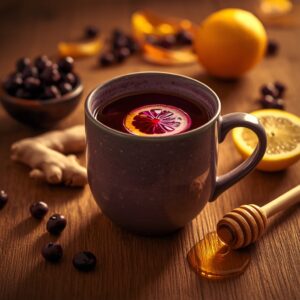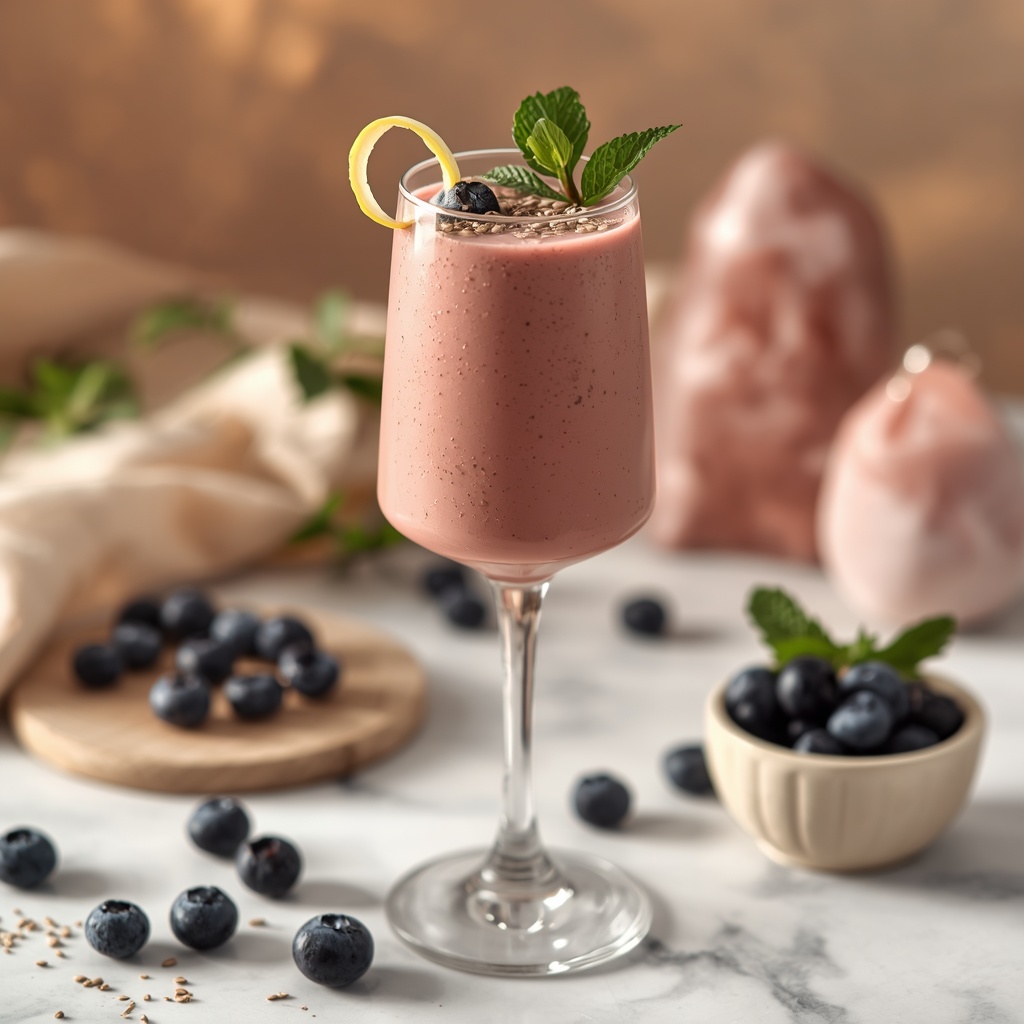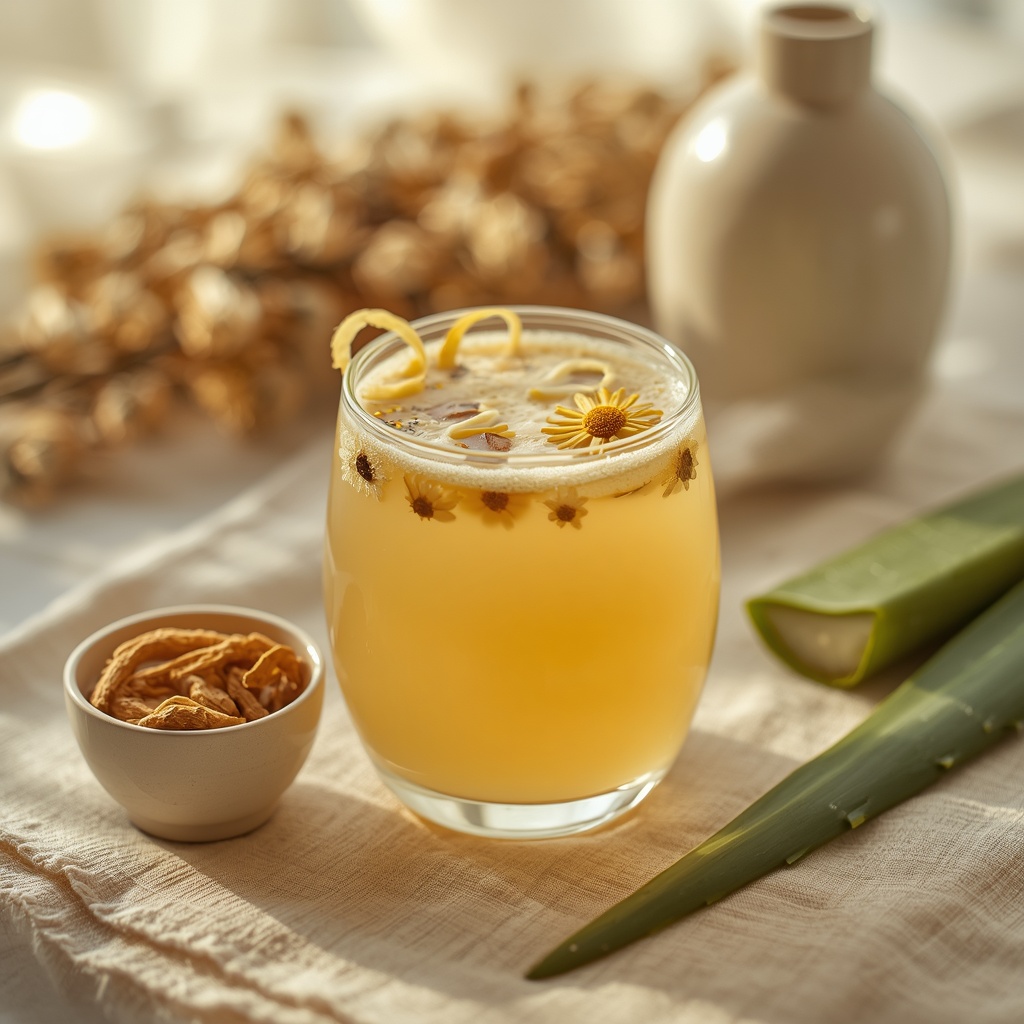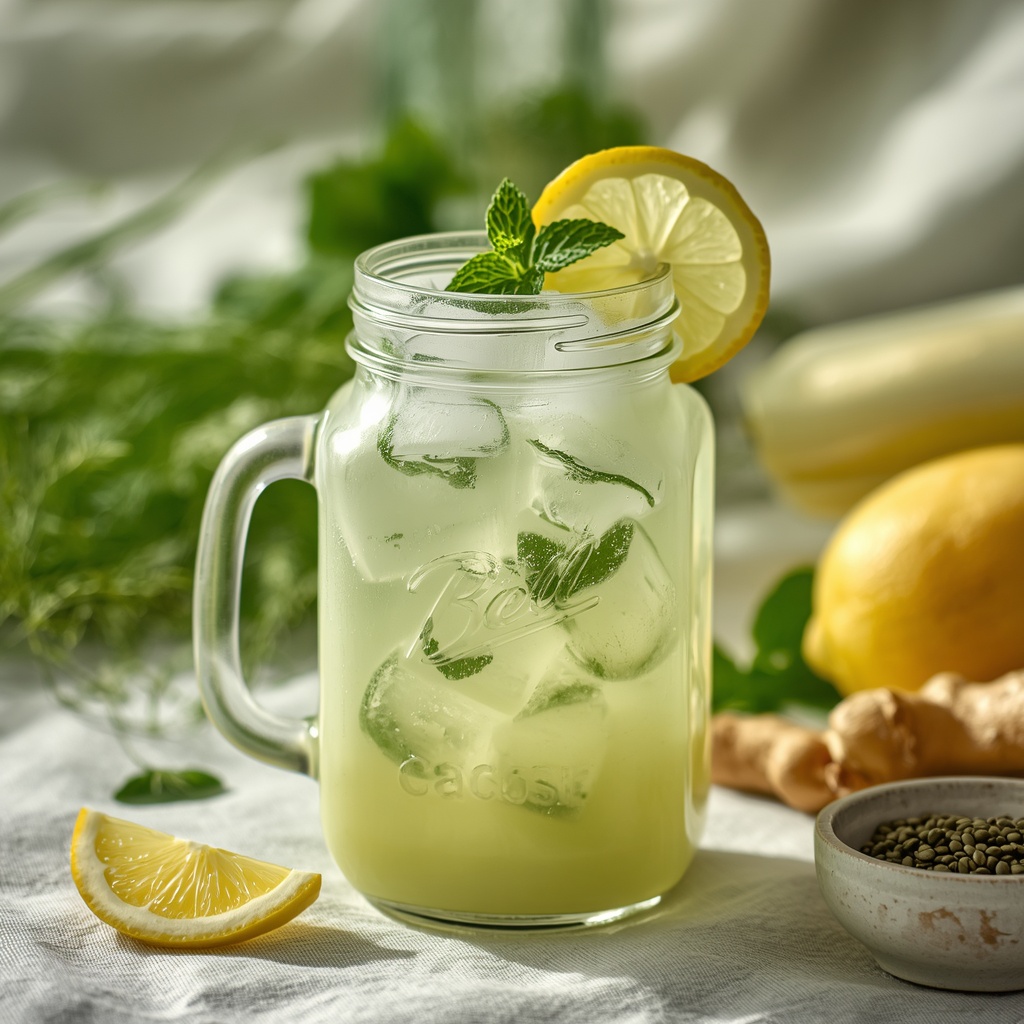
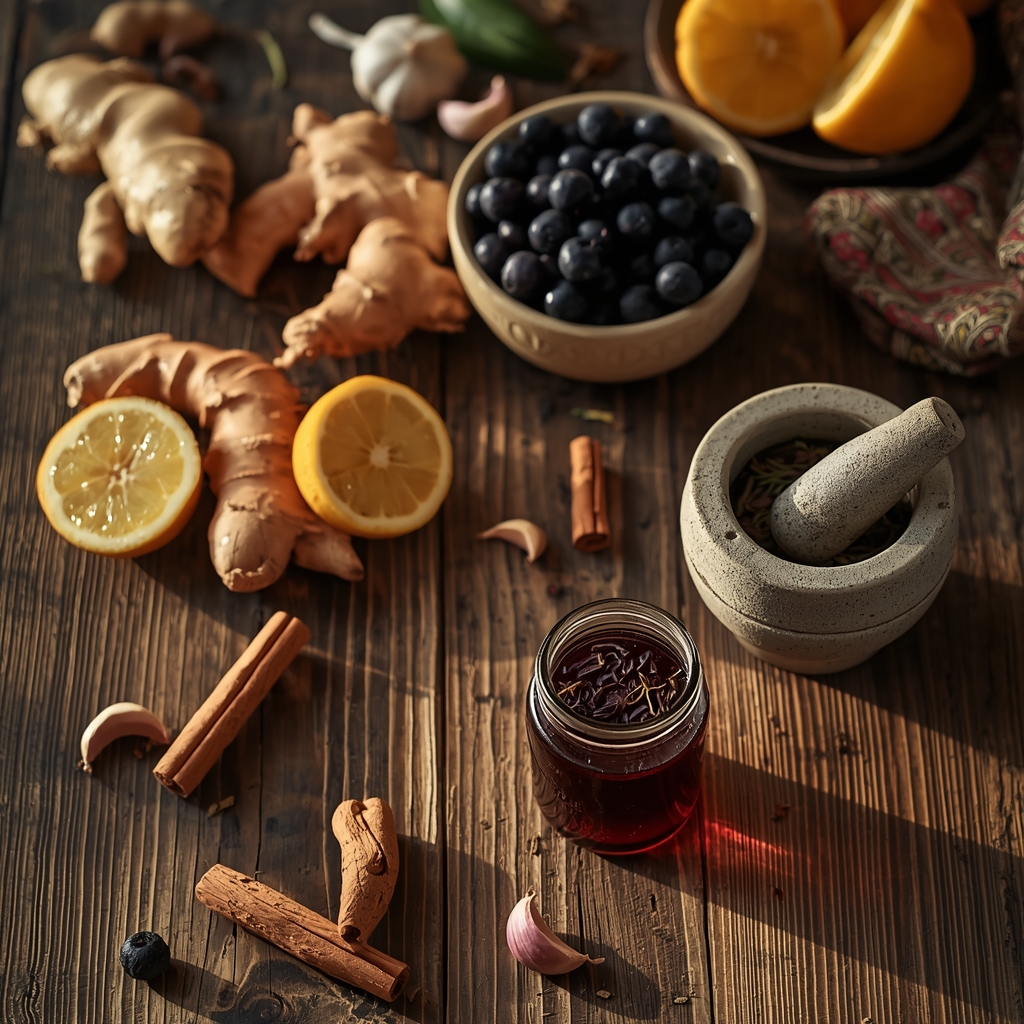

When you wake up two pounds heavier the week before your period and no one can explain why — this sip was built for that exact morning.
| ⏱ Prep 4 min | 👥 Serves 1 | 💚 Goal Fluid balance support | ⭐ Difficulty Easy |
There is a specific kind of bloating that does not show up on any blood test. It is not from salt. It is not from a missed workout. It cycles — predictable but unwelcome — usually in the second half of the menstrual cycle, between days 21 and 28. Your rings get tight. Your shoes feel different. The scale jumps three pounds overnight, then quietly drops again the day your period starts. Doctors often call it “just water retention” and move on.
It actually has a name: cyclic idiopathic edema. It predominantly affects pre-menopausal women, it tracks with hormonal fluctuations, and the standard medical answer — prescription diuretics — frequently makes the cycle worse over time. This rosy-amber sip takes the gentler path: dandelion leaf, hibiscus, parsley, magnesium glycinate, and B6 (P5P) — a combination that supports the body’s own fluid-shifting machinery instead of forcing it.
The Tea Mothers and Grandmothers Already Knew
Long before clinical trials looked at apigenin or P5P, the women of southern Europe and North Africa had a quiet ritual: a strong infusion of dandelion leaf or parsley sipped through the last week before the period. In Lebanese kitchens it was “chay al-baqdounes.” In rural Provence, it was simply “la tisane d’avant.” Different leaves, same instinct.
What modern phytochemistry has done is name the active compounds — and confirm something the grandmothers could not have known on paper: the flavone apigenin in parsley, the taraxacum in dandelion, and the P5P form of B6 actually share complementary mechanisms in the kidneys and the lymphatic system. They don’t dump electrolytes the way prescription loop diuretics do. They nudge the body to release the fluid it is hoarding, slowly and without rebound. This sip is the modernized, dosed-out version of that quiet tradition — a five-ingredient infusion that respects what the female body has been doing on its own for thousands of cycles.
Why This Cocktail Works (According to Science)
Each ingredient acts on one specific axis of fluid balance — and the doses stay deliberately mild, because the body’s own kidneys are doing 95% of the work.
- Dandelion leaf (Taraxacum officinale): The Journal of Alternative and Complementary Medicine has described dandelion leaf as a documented mild diuretic that, unlike pharmaceutical loop diuretics, appears to be potassium-sparing — meaning you don’t trade fluid loss for cramps and fatigue.
- Magnesium glycinate (300 mg): A trial in Acta Obstetricia et Gynecologica Scandinavica reported that magnesium reduces a cluster of premenstrual symptoms — including fluid retention — likely through aldosterone modulation and smooth muscle relaxation.
- Vitamin B6 as P5P (50 mg): Cochrane reviews summarized in the BMJ have repeatedly shown B6 has a modest but real effect on premenstrual fluid balance. The active P5P form skips the conversion step the liver would otherwise have to do.
- Parsley apigenin: The Journal of Ethnopharmacology has documented apigenin’s mild diuretic effect — likely through aquaporin and Na/K-ATPase modulation in the renal tubules. This is the molecular fingerprint behind the grandmother’s tisane.
| 💡 Did You Know? Cyclic idiopathic edema can shift up to 4–5 pounds of body weight across a single cycle in some women — entirely water, entirely temporary. The frustrating part isn’t the weight; it’s how often the symptom is dismissed. Naming it (cyclic idiopathic edema) is often the first step toward managing it kindly. |
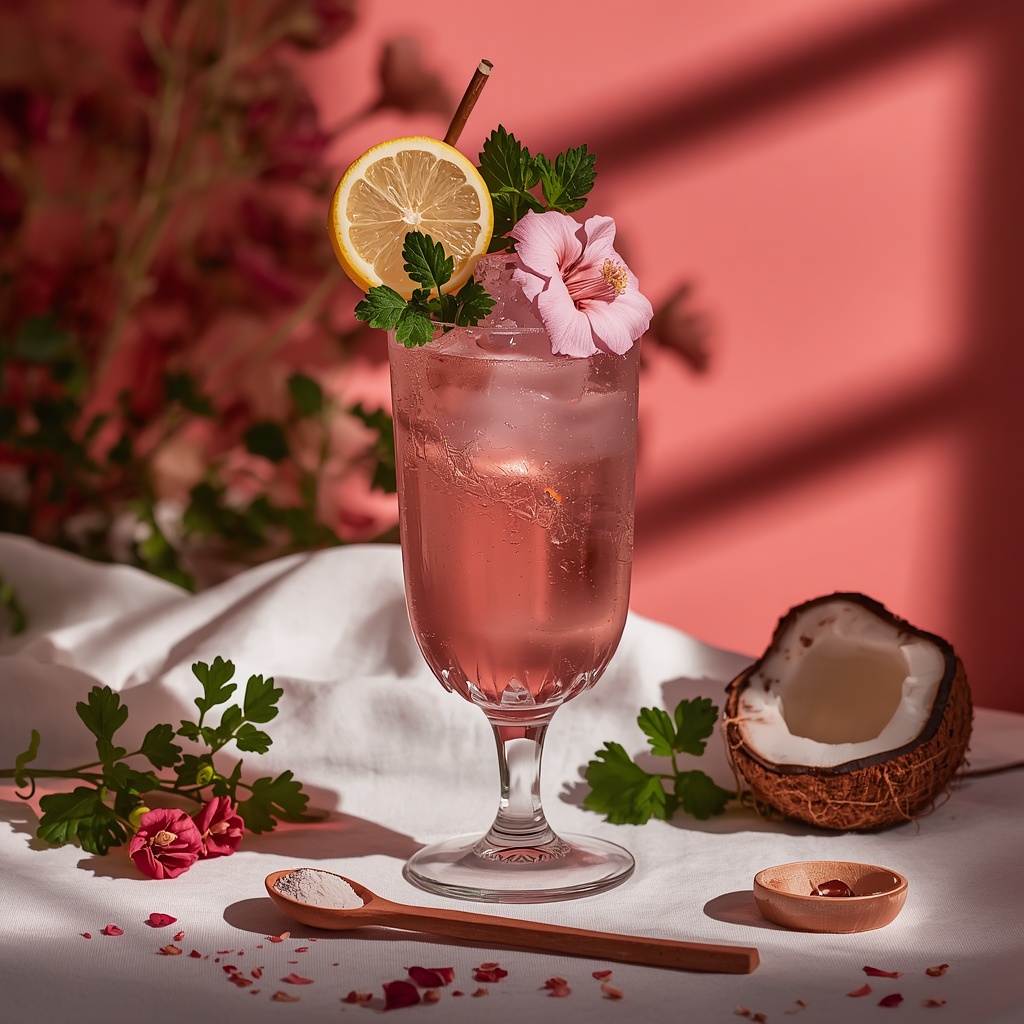
Recipe: Cycle Flow Bloom
Ingredients
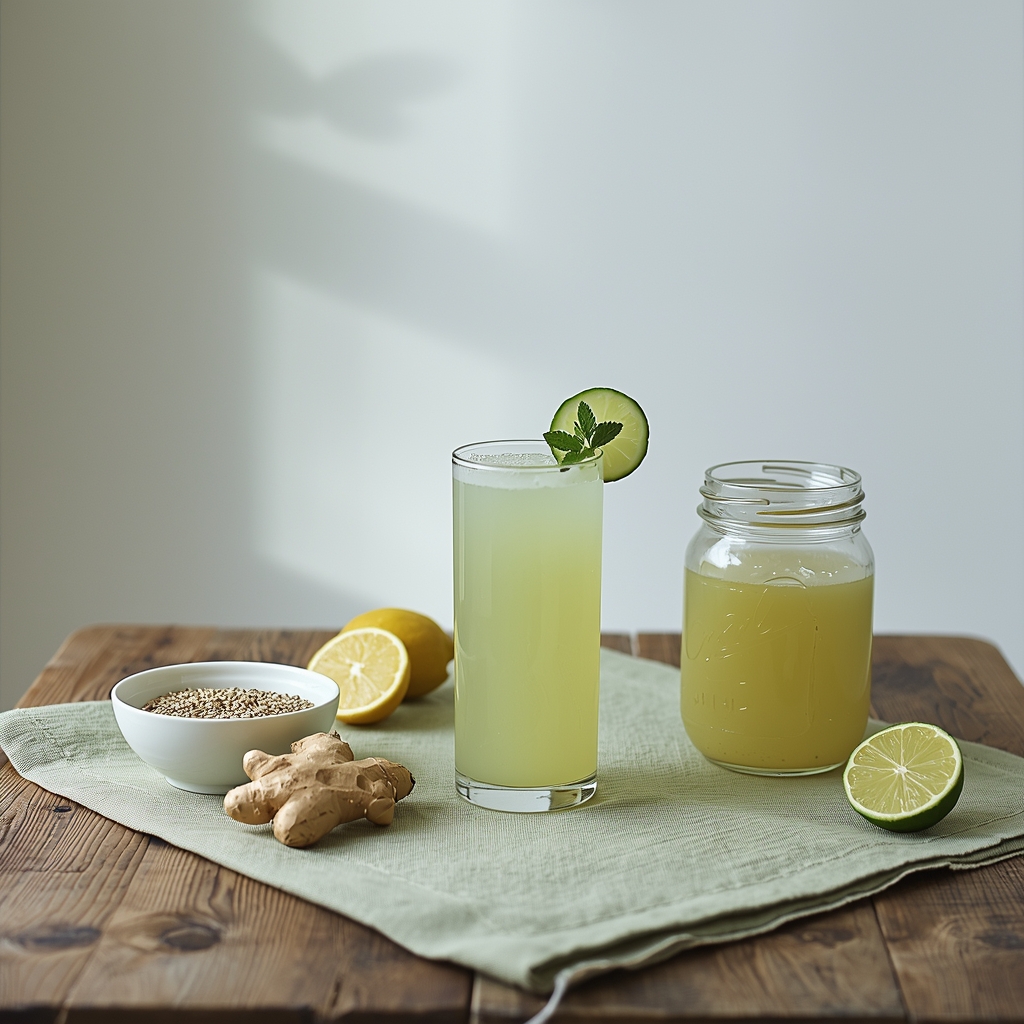
- 8 oz brewed dandelion leaf tea (1 bag steeped 8 minutes, then chilled 5 minutes)
- 1 oz brewed hibiscus tea (1 bag steeped 6 minutes, cooled)
- 2 oz unsweetened coconut water
- 300 mg magnesium glycinate (powder or opened capsule)
- 50 mg P5P (active vitamin B6, opened capsule)
- 1 tsp finely chopped fresh parsley
- 1 tbsp fresh lemon juice
- 1 drop liquid stevia (optional)
- For garnish: a single hibiscus flower or a lemon coin
Instructions
- Brew the dandelion. Steep one tea bag in 10 oz of hot water for 8 full minutes — long enough to extract the bitter taraxacum compounds. Strain, refrigerate 5 minutes, and reserve 8 oz.
- Brew the hibiscus separately. Steep a small batch (1 bag in 4 oz hot water, 6 minutes), cool it, and reserve 1 oz. The hibiscus is for color and a soft tartness — small dose, big visual impact.
- Combine the tea base. In a 10 oz glass, pour in the dandelion tea, the coconut water, and the cooled hibiscus.
- Add the actives. Stir in the magnesium glycinate, the P5P, the chopped parsley, the lemon juice, and the optional stevia. Whisk gently until the magnesium is fully dissolved.
- Sip mid-afternoon. Drink slowly, ideally between 2 and 5 PM, every day during the fluid-retention phase of your cycle (typically days 21–28). Track your morning weight and ring fit across one full cycle.
| 💡 Tip Don’t fight the bitterness of the dandelion — it’s part of the medicine. The bitter flavor signals your kidneys to start working, even before the pharmacology kicks in. If it feels too sharp, add another splash of coconut water rather than more sweetener. |
Variations
| 🌿 Strict sugar-free | Already minimal as written — skip the stevia entirely; the hibiscus carries the flavor. |
| 🥛 Vegan | Already 100% plant-based. |
| ❄️ Iced | Adapts beautifully — drink it fully chilled with a single ice cube. |
| 💪 Boosted | Add 200 mg horse chestnut extract for additional venous-lymphatic support, especially helpful if your edema is concentrated in the lower legs. |
Try It Across One Full Cycle
Don’t judge this sip by a single afternoon — it works on a hormonal timeline, not a daily one. Drink it through the back half of one full cycle, log your morning weight and how your rings feel, and let the data tell you whether your version of cyclic idiopathic edema responds.
📌 Save this recipe on Pinterest for later — it tends to come up exactly when you need it.
| ⚠️ Disclaimer: This article is for informational and educational purposes only and does not constitute medical advice. It is NOT intended to diagnose, treat, cure, or prevent any disease. Edema can also be a symptom of cardiac, renal, hepatic, thyroid, or venous disease — get persistent or sudden swelling evaluated by a physician. Do not combine this sip with prescription diuretics, lithium, or potassium-sparing medications without medical supervision. Always consult a qualified healthcare professional before making dietary changes, especially during pregnancy, breastfeeding, or active medical treatment. |