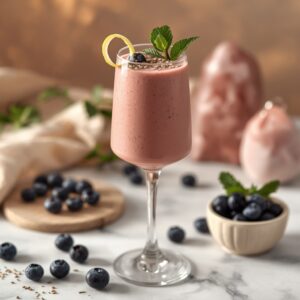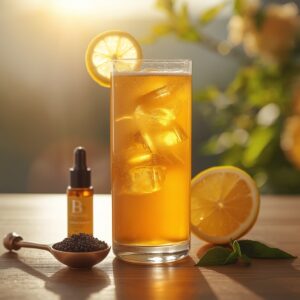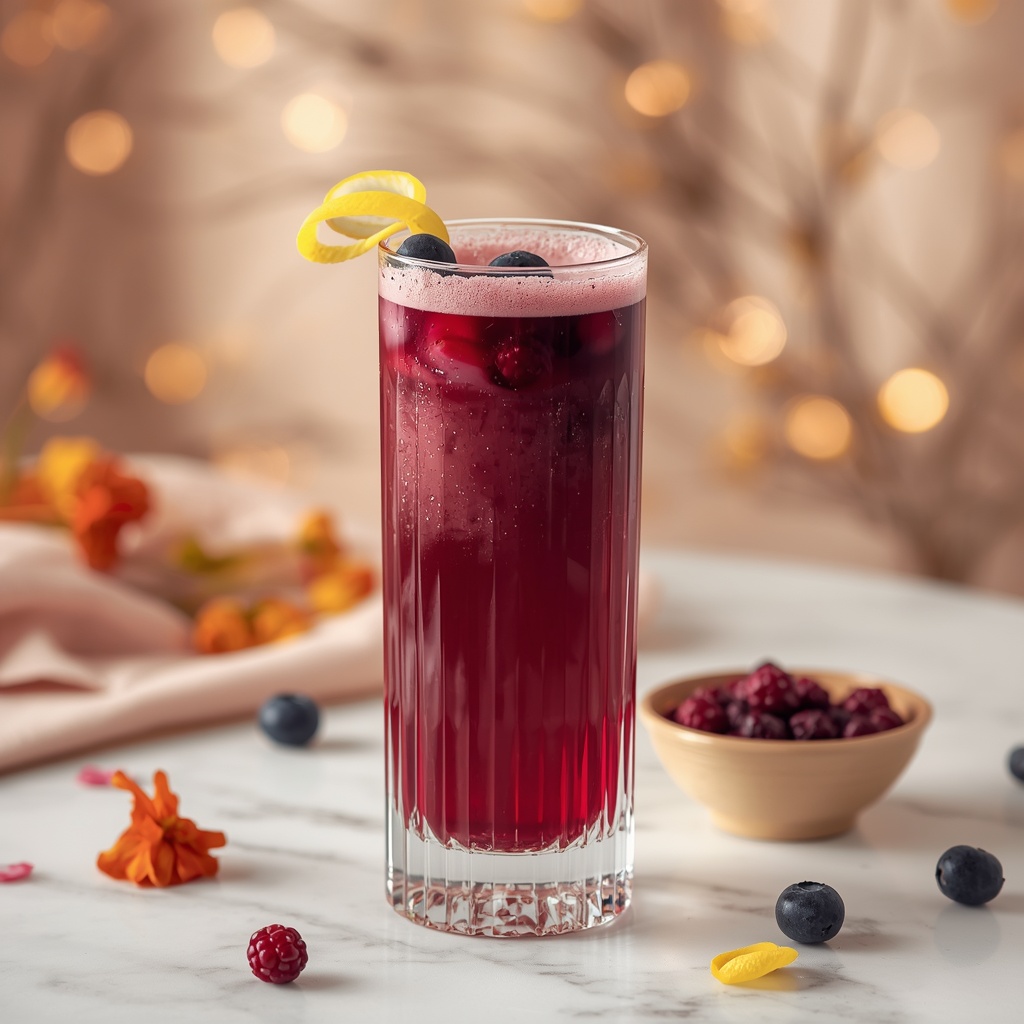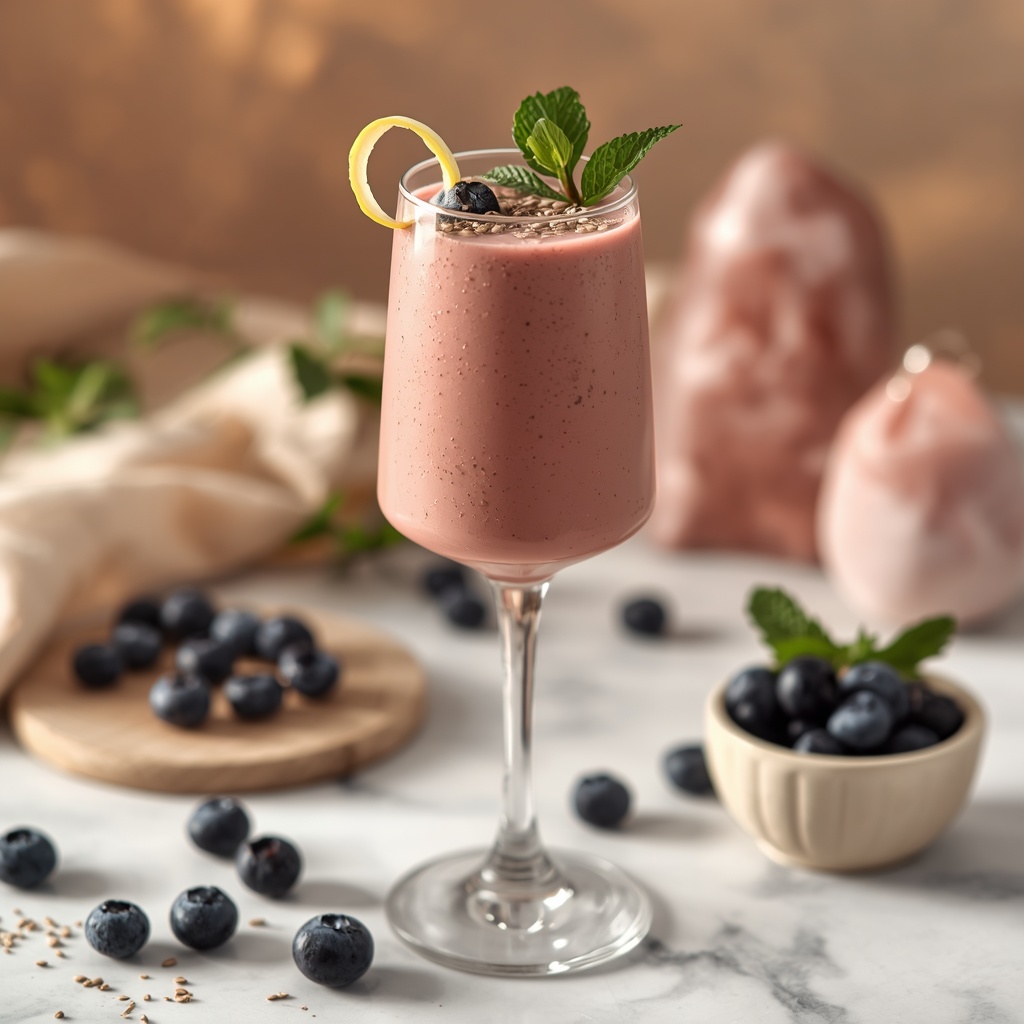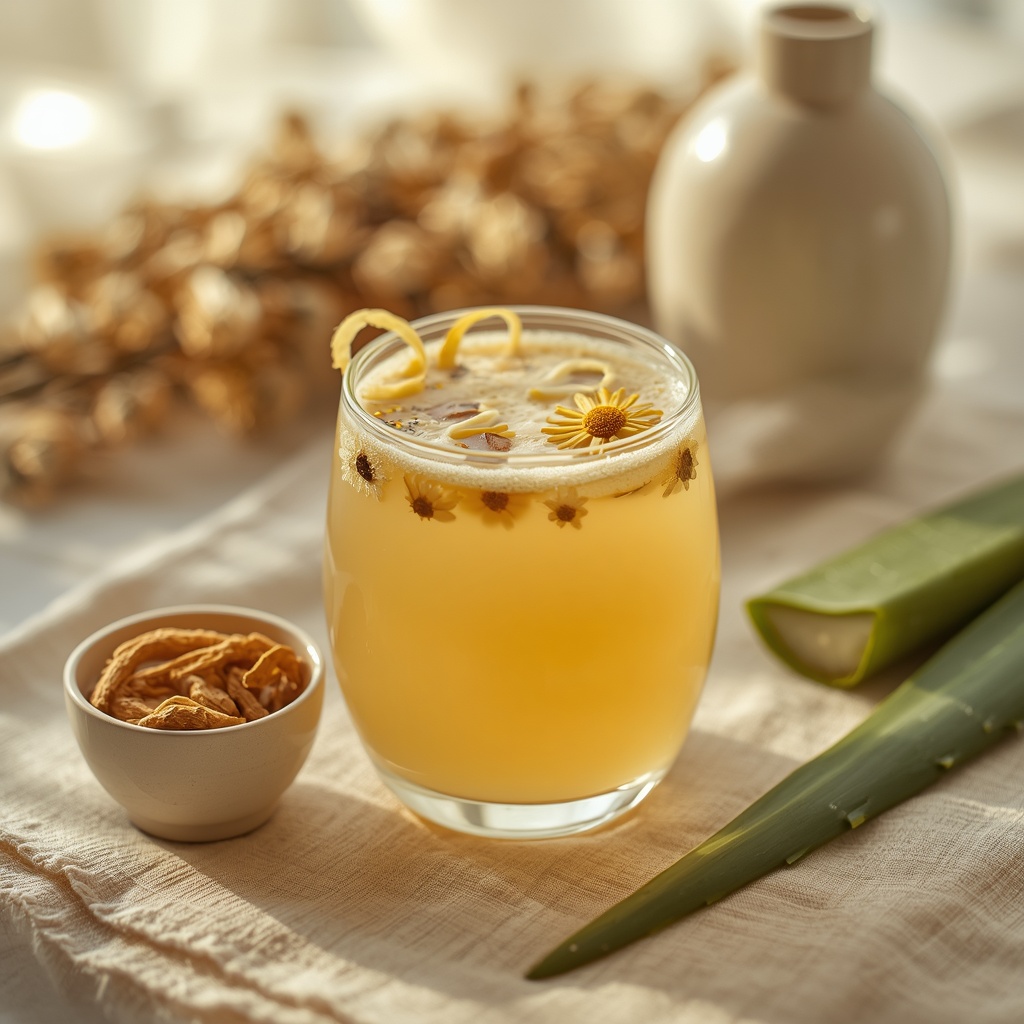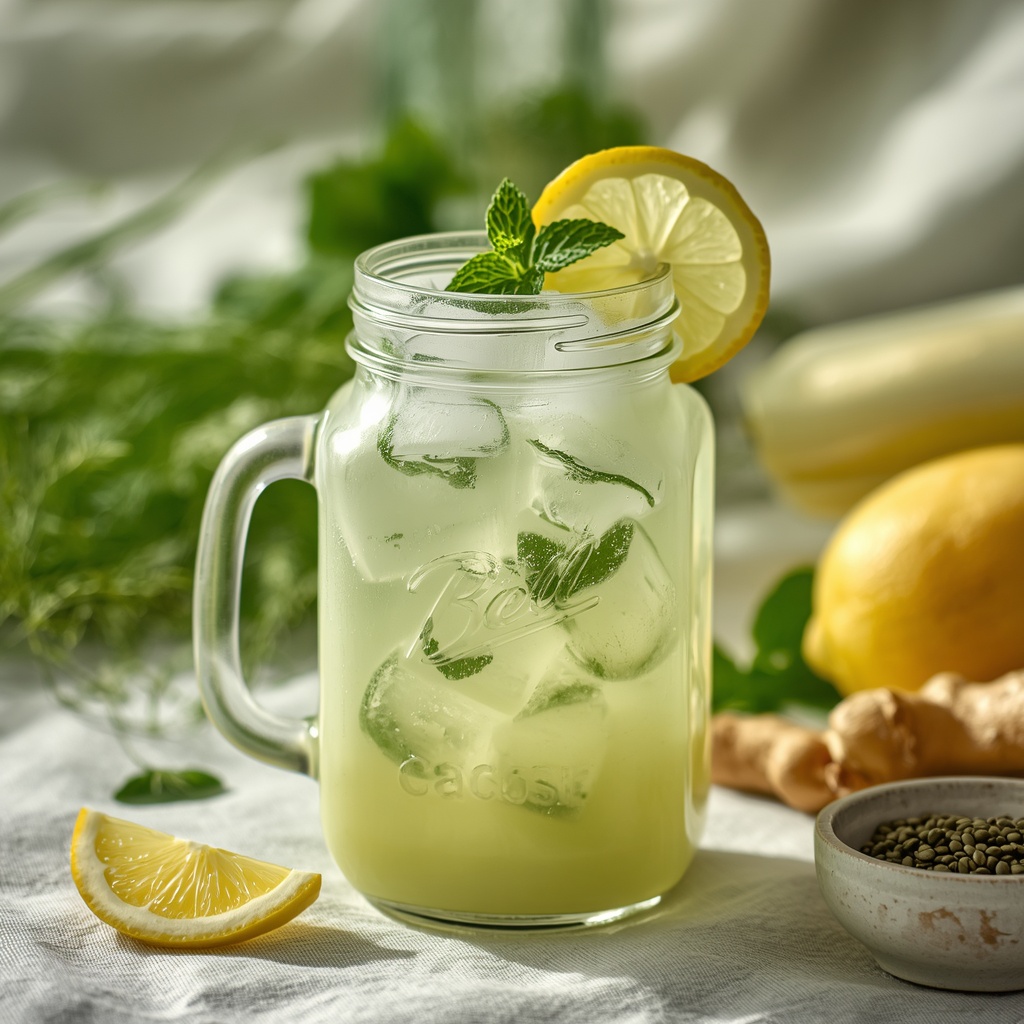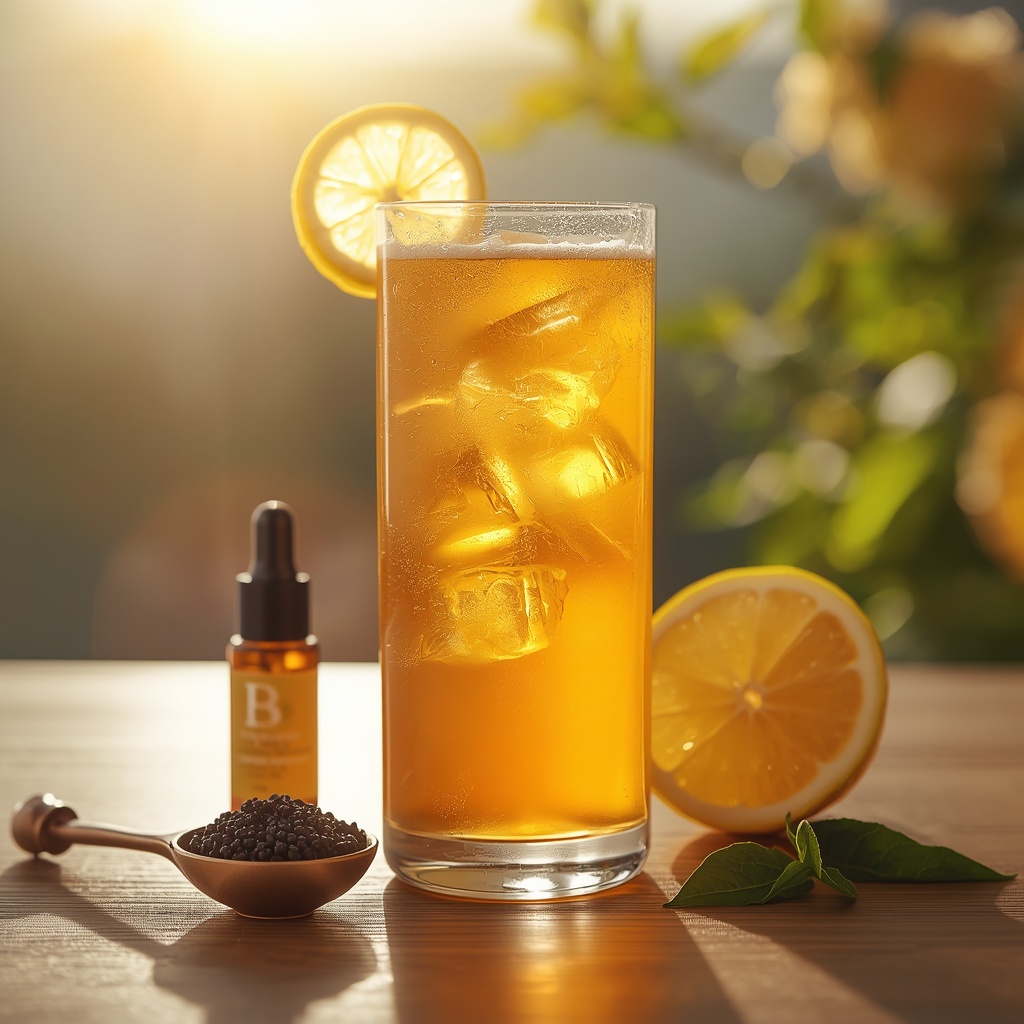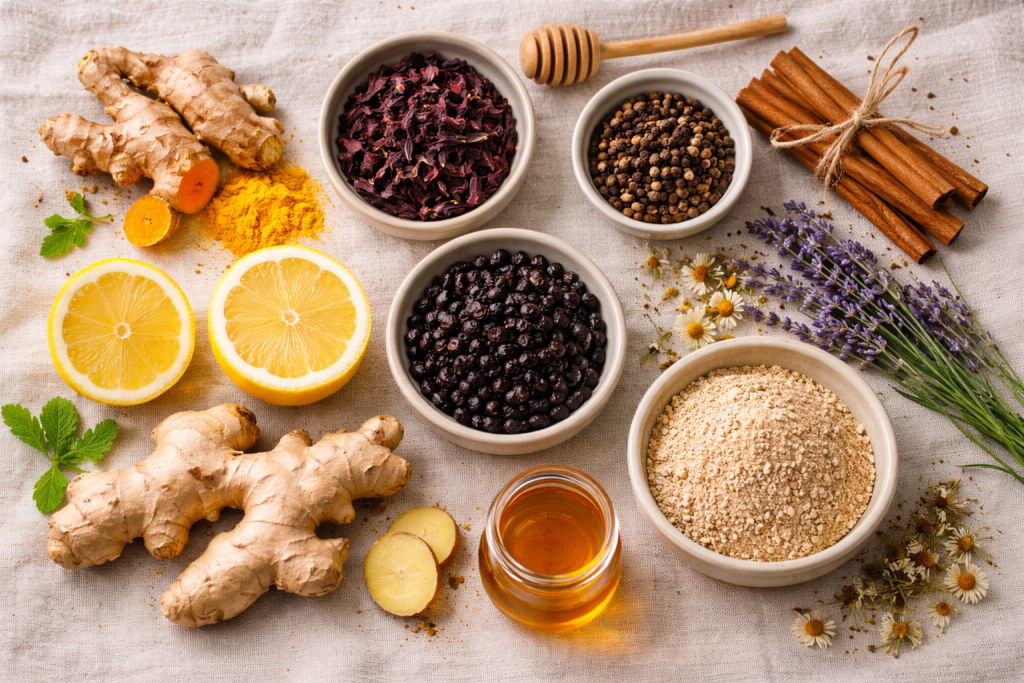
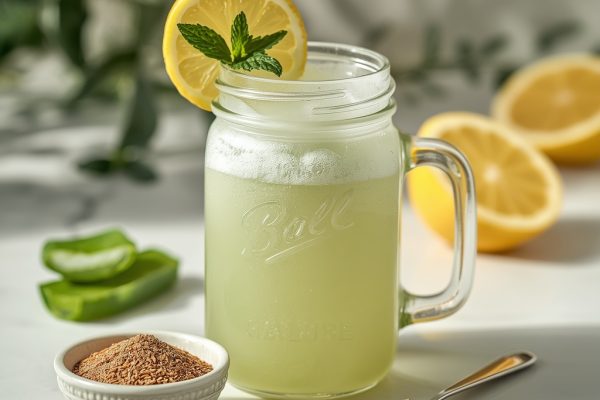
If you’ve already tried more fiber, more water, and three different probiotics — and you’re still spending twenty minutes wondering why nothing comes out — this sip was built for that exact morning.
| ⏱ Prep 3 min | 👥 Serves 1 | 💚 Goal Smooth-muscle & outlet support | ⭐ Difficulty Easy |
There is a kind of constipation that the standard advice — eat more fiber, drink more water, walk more — actively makes worse. It’s called pelvic floor dyssynergia, or anismus, and it affects roughly one in three people with chronic constipation who have already tried the obvious fixes. The problem isn’t transit. The stool reaches the rectum on time. The problem is that the pelvic floor muscles contract instead of relaxing the moment the body tries to evacuate. More bulk fiber in this scenario doesn’t help. It piles up against a closed door.
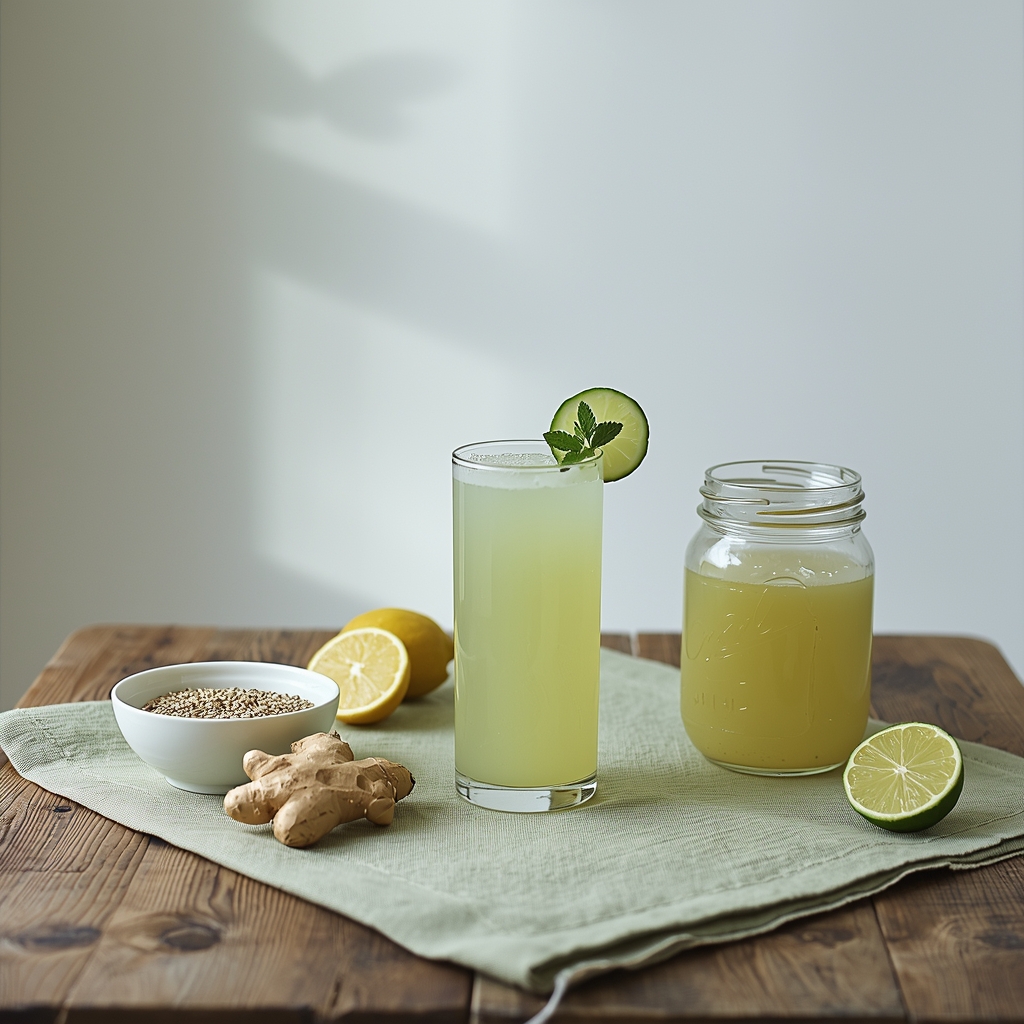
Biofeedback therapy is the gold-standard treatment, and nothing in a glass replaces it. But this pale green morning sip is the supportive companion drink most pelvic floor specialists wish their patients had: magnesium citrate to soften without stimulating, partially hydrolyzed guar gum (PHGG) to give stool a silky form instead of bulk, glycine to support smooth-muscle relaxation, decolorized aloe vera, and ground flax. Together, they make the door easier to open — gently — while biofeedback teaches the door how to open on its own.
What Pelvic Floor Therapists Have Been Quietly Recommending
Walk into a pelvic floor physical therapy clinic — the kind staffed by specialists who treat anismus, vaginismus, and post-childbirth dyssynergia — and you’ll notice something that doesn’t show up in textbooks: the after-care sheets often include a soluble-fiber drink, magnesium, and a glycine recommendation. Not on the official prescription pad. Just penciled in as “what helps most of my patients.”
The reason is simple. Therapists who work with the outlet kind of constipation see the same pattern over and over: bulk-forming fiber (psyllium, wheat bran) makes their patients worse, while the silkier soluble fibers (PHGG, partially hydrolyzed guar gum) make their patients better. They learned this empirically — long before the World Journal of Gastroenterology and other journals started publishing the supporting trials. This sip is the codified version of that quiet clinical wisdom — the drink that pairs naturally with the biofeedback work, instead of fighting against it.
Why This Cocktail Works (According to Science)
Each ingredient was chosen for a specific reason most generic constipation drinks miss: outlet-type constipation needs the opposite of bulk.
- Magnesium citrate (400 mg): The Cleveland Clinic describes magnesium citrate as a gentle osmotic agent — it draws water into the stool without triggering the cramping pattern of stimulant laxatives like senna. For dyssynergia, that distinction matters: stimulants force a closed door, osmotics simply soften what’s behind it.
- PHGG, partially hydrolyzed guar gum (1 tsp): A trial published in the World Journal of Gastroenterology found that PHGG improves stool form and consistency without adding bulk — exactly the texture profile that a tight pelvic floor can actually pass.
- Glycine (2 g): Magnesium Research has documented glycine as an inhibitory neurotransmitter that supports smooth-muscle relaxation. For a pelvic floor stuck in contraction mode, even a modest signal toward relaxation is meaningful.
- Ground flaxseed and aloe: Flax adds gentle lubrication; decolorized aloe vera adds mild osmotic support without the aloin (the harsh laxative compound found in raw aloe). Together they round out the texture without bulk.
| 💡 Did You Know? Bulk-forming fiber — like psyllium husk or wheat bran — is excellent for slow-transit constipation, but can make outlet-type constipation distinctly worse. If your usual fiber routine “makes it harder to go,” that’s a clue your constipation may live in the pelvic floor, not the colon. A specialist consult and a defecography can confirm. |
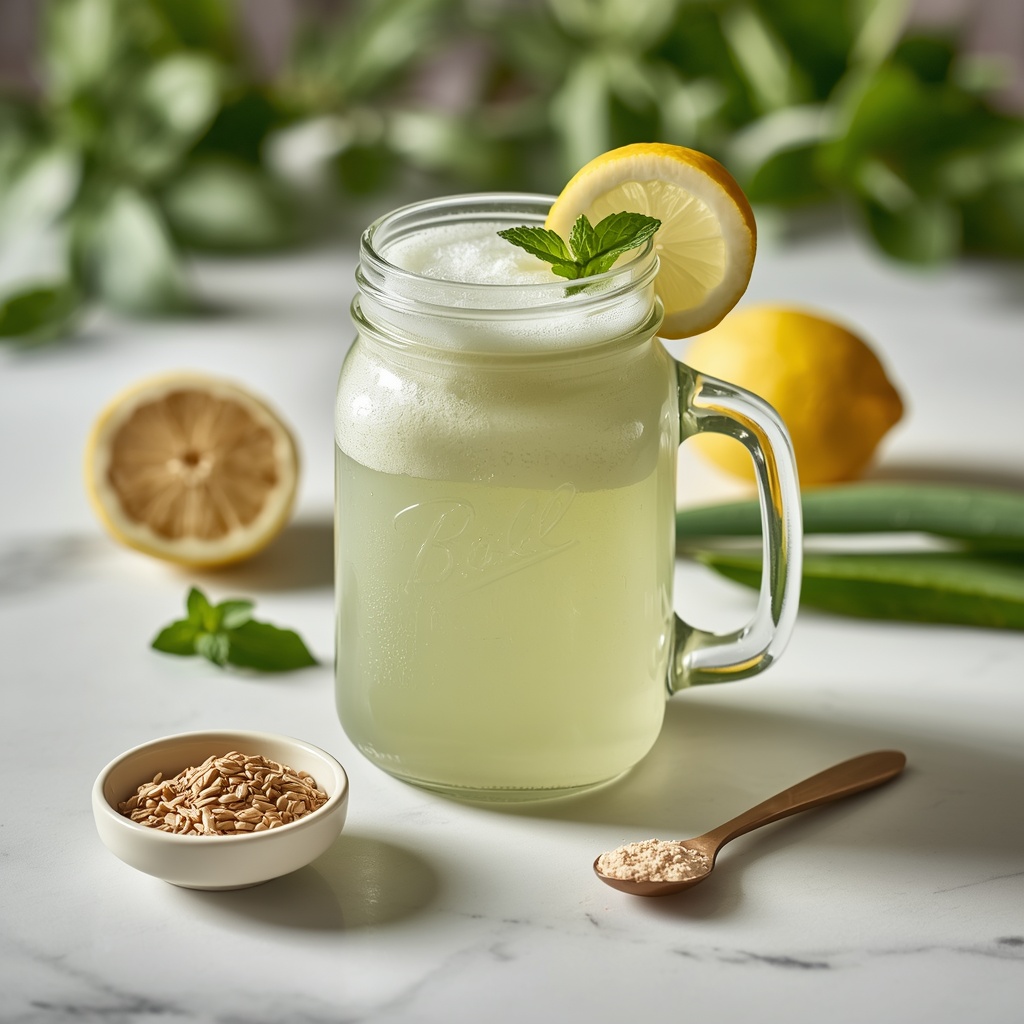
Recipe: Pelvic Release Tonic
Ingredients
- 8 oz filtered water (room temperature)
- 400 mg magnesium citrate powder
- 1 oz decolorized aloe vera juice (look for “inner leaf, decolorized” — no aloin)
- 1 tsp PHGG (partially hydrolyzed guar gum) powder
- 1 tbsp ground flaxseed (freshly ground if possible)
- 1 tsp fresh lemon juice
- 2 g glycine powder
- 1 drop liquid stevia (optional)
- For garnish: a thin lemon coin
Instructions
- Pour 8 oz of room-temperature filtered water into a 10 oz glass. Avoid ice — cold water can briefly tighten the pelvic floor exactly where you want it to soften.
- Add the magnesium citrate powder. Stir thoroughly until fully dissolved — usually about 30 seconds.
- Add the aloe vera, the PHGG, the ground flax, and the lemon juice. Whisk vigorously for another 30 seconds. The PHGG will create a silky, slightly thickened texture — that’s the goal.
- Stir in the glycine and the optional stevia. Whisk one last time. The drink should look pale, slightly cloudy, and smooth.
- Drink upon waking, on an empty stomach. Pair it with your daily biofeedback exercises and a brief 5-minute walk afterward — both significantly increase the chance of a comfortable bowel movement within 30–90 minutes.
| 💡 Tip This drink is an adjunct, not a replacement. If you suspect anismus or pelvic floor dyssynergia, ask your gastroenterologist about anorectal manometry and a biofeedback referral — the drink supports the therapy, but it’s the therapy that re-trains the door to open. |
Variations
| 🌿 Strict sugar-free | Already minimal as written — skip the stevia entirely. |
| 🥛 Vegan | Already 100% plant-based. |
| ❄️ Iced | Adapts well, but use a single ice cube only — avoid an ice-cold base. |
| 💪 Boosted | Add 1 tsp prune juice concentrate (natural sorbitol) for more pronounced outlet patterns. Useful for travel mornings or after restrictive eating phases. |
Try It For Four Weeks Alongside Pelvic Floor Therapy
This is not a drink that works on a single morning. It works in tandem with the slow re-training of the pelvic floor — typically 4 to 6 weeks of daily use alongside biofeedback exercises. Track stool form (using the Bristol Scale) and your subjective ease of evacuation. Most users see the texture change first, then the ease.
📌 Save this recipe on Pinterest for later — outlet constipation is a topic people search quietly.
| ⚠️ Disclaimer: This article is for informational and educational purposes only and does not constitute medical advice. It is NOT intended to diagnose, treat, cure, or prevent any disease. Persistent constipation, blood in stool, unintentional weight loss, or sudden bowel changes require evaluation by a gastroenterologist. Do not use this sip if you have severe kidney disease, intestinal obstruction, or are on potassium-sparing or magnesium-affecting medications without medical supervision. Always consult a qualified healthcare professional before making dietary changes, especially during pregnancy, breastfeeding, or active medical treatment. |