What a German RCT found when it pitted butterbur head-to-head against cetirizine — and the four-pillar stack that surrounds it.
| ⏱ PREP 5 min | 👥 SERVES 1 | 💚 GOAL Seasonal Allergy Antihistamine Support | ⭐ DIFFICULTY Easy |
In 2002, a randomized trial published in the BMJ did something the herbal medicine field rarely sees: researchers pitted butterbur — the European wildflower used since the Middle Ages for headaches and inflammation — directly against cetirizine, the active ingredient in Zyrtec. The result, after two weeks in 125 patients with seasonal allergic rhinitis: comparable symptom relief, without the drowsiness that older antihistamines drag with them.
That single trial reframed how some allergists think about layered approaches. Around butterbur, three more validated allies — quercetin (mast cell stabilizer), bromelain (sinus anti-inflammatory), and stinging nettle (RCT-supported for rhinitis) — form a four-pillar stack. Sixty million Americans live with seasonal allergies. The elixir below rebuilds the European antihistamine tradition for the American kitchen — with one critical safety note about butterbur sourcing.
Why This Cocktail Works (According to Science)
Three core ingredients carry the weight of this elixir. Here’s what each is doing inside your body, and the research that supports it.
Butterbur (Petadolex, PA-Free) — Petasins
Inhibits leukotriene and histamine release — comparable to cetirizine in trials, without sedation.
Source: BMJ, 2002 — head-to-head RCT
Quercetin + Bromelain — Flavonoid + proteolytic enzyme
Quercetin stabilizes mast cells (the cells that release histamine); bromelain reduces sinus inflammation and improves quercetin absorption.
Source: Journal of Allergy and Clinical Immunology; Phytomedicine
Stinging Nettle — Nettle leaf bioactives
Reduces allergic rhinitis symptoms — a traditional remedy with modern RCT validation.
Source: Phytotherapy Research
| 💡 Did You Know? Butterbur leaves were once so large that medieval European butter-makers used them to wrap fresh butter on hot days — which is how the plant got its English name. |
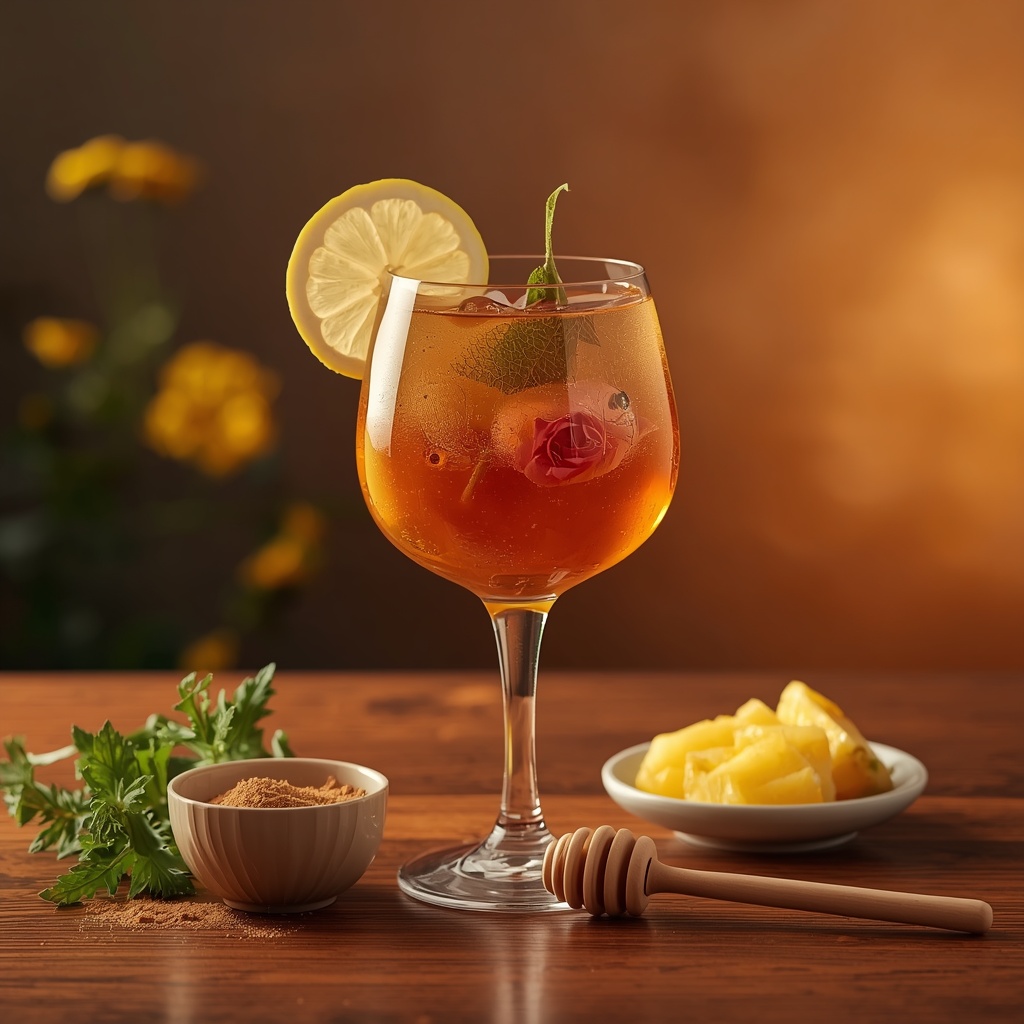
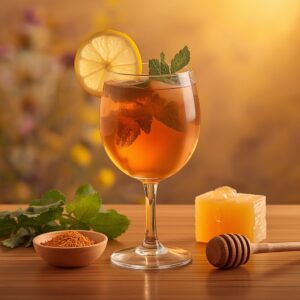
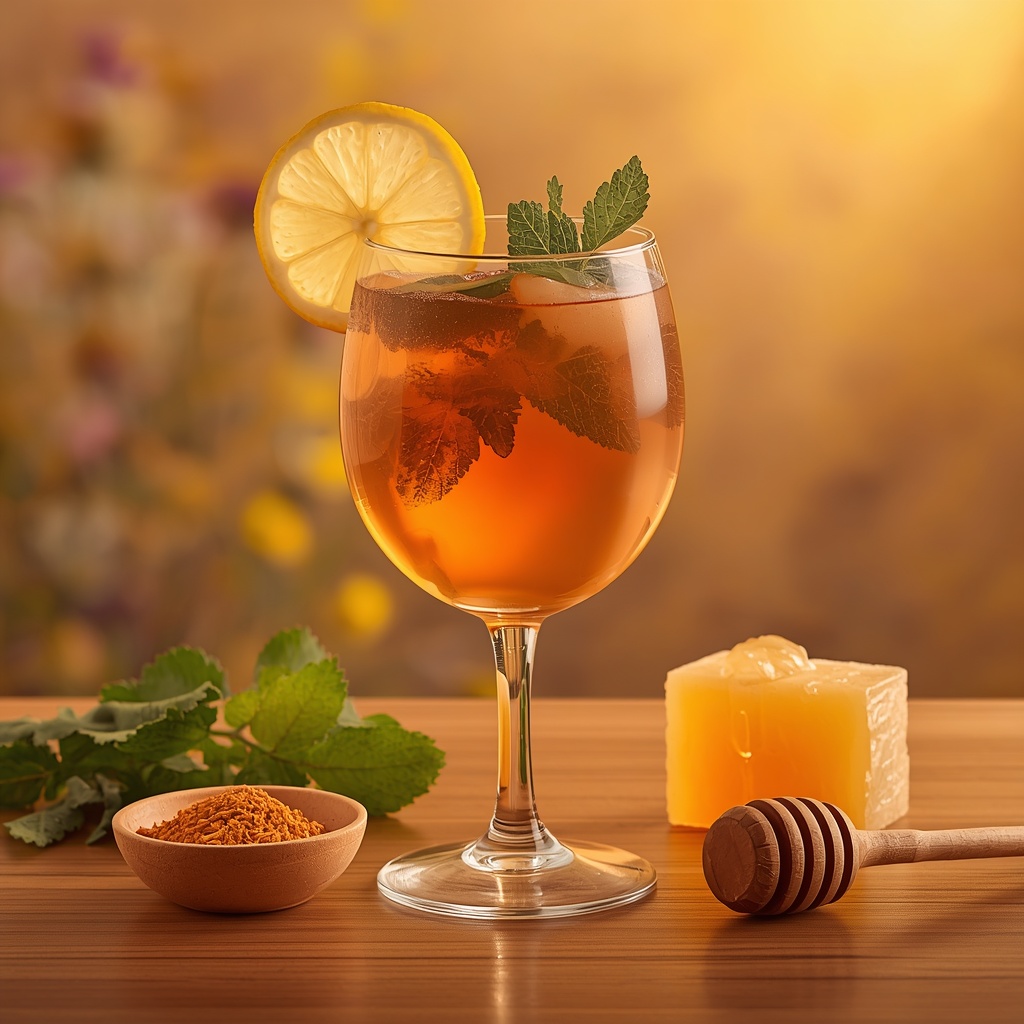
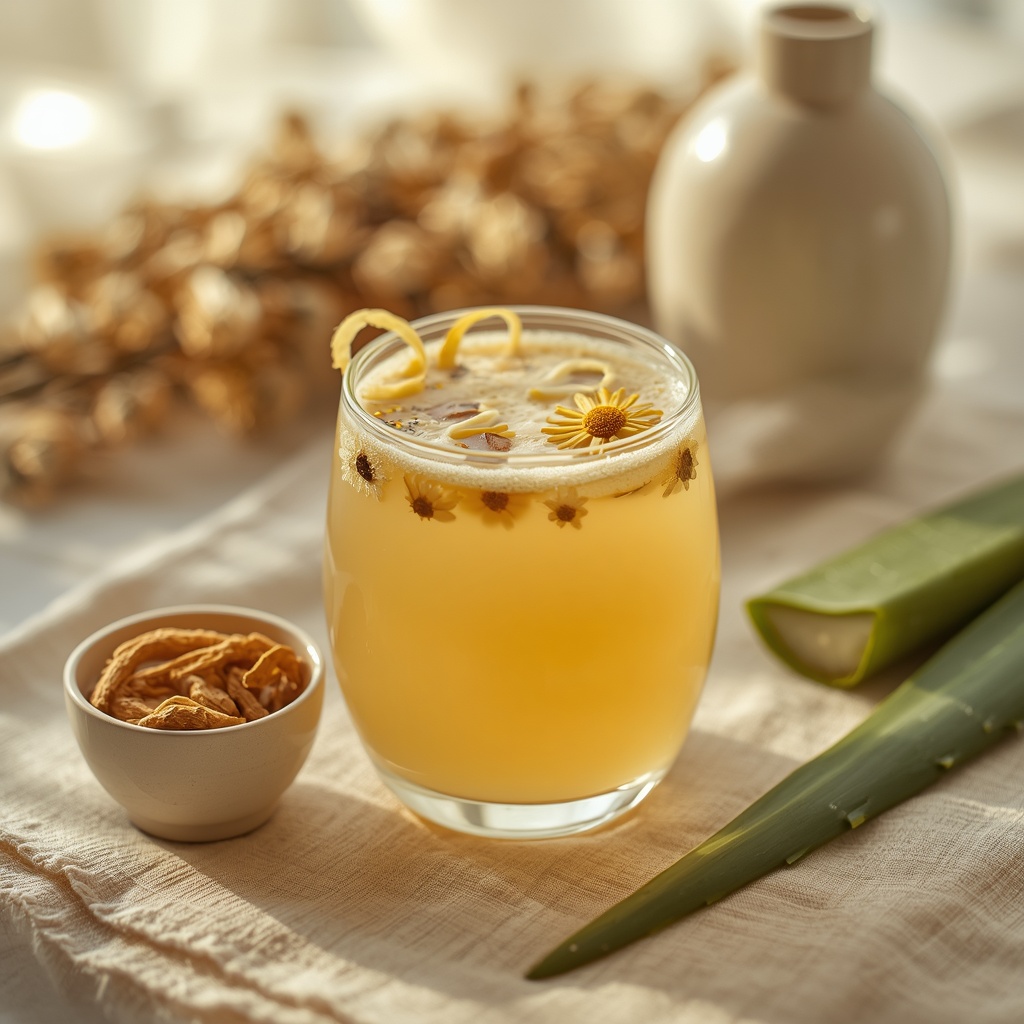
Recipe: Pollen Peace Bloom
| ⏱ PREP 5 min | 👥 SERVES 1 | 💚 GOAL Seasonal Allergy Antihistamine Support | ⭐ DIFFICULTY Easy |
Ingredients
- 6 oz cooled nettle leaf tea
- 2 oz filtered water
- 500 mg quercetin powder
- 500 mg bromelain (2400 GDU) capsule, opened
- 75 mg butterbur (Petadolex PA-FREE) capsule, opened
- 500 mg liposomal vitamin C capsule, opened
- ½ tsp local raw honey
- 1 tsp lemon juice
- 1 drop liquid stevia (optional)
- For garnish: a single fresh herb sprig (chamomile or nettle leaf)
Instructions
- Steep 2 nettle tea bags in 8 oz hot water for 12 min. Strain, cool 5 min, reserve 6 oz.
💡 Tip: Use ONLY PA-free butterbur (Petadolex brand). Wild butterbur contains pyrrolizidine alkaloids that are liver-toxic. This is non-negotiable.
- In a 10 oz glass, combine the cooled nettle tea with the filtered water and lemon juice.
- Add the quercetin, opened bromelain capsule, opened PA-free butterbur capsule, and opened liposomal vitamin C.
- Add the local raw honey and stevia drop. Whisk gently until the honey dissolves.
- Drink mid-morning during allergy season. Start 4-6 weeks before peak pollen and continue daily through the season for prophylactic mast cell stabilization.
| ✅ Safety & Coherence: CRITICAL: Use only PA-free butterbur (Petadolex) — wild butterbur contains liver-toxic pyrrolizidine alkaloids. Compatible with cetirizine, loratadine, fexofenadine if also taken. |
Variations
| 🌱 Honey-free vegan | Skip honey — use 1 drop monk fruit. |
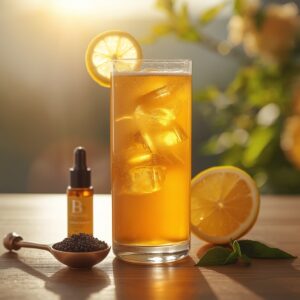
| ❄️ Iced | Adapts well — pour over ice for hot allergy days. |
| 💪 Boosted (advanced) | Add 1 tsp local pollen powder — gradual desensitization approach, small dose only. |
Try It Tonight
Start this 4-6 weeks before your local pollen peak. Mast cell stabilization is a marathon, not a sprint — pre-load the stack and the season feels different.
📌 Save this recipe on Pinterest for later — your future self at 3 PM will thank you.
| ⚠️ Disclaimer: This article is for informational purposes only and does not constitute medical advice. Always consult a qualified healthcare professional before making dietary changes, especially if you have a medical condition, are pregnant, breastfeeding, or taking medications. |