


What endurance athletes and runners with stubbornly low heart rates have been quietly sipping — long before cardiologists started writing about it.
| ⏱ Prep 4 min | 👥 Serves 1 | 💚 Goal Gentle heart-rate support | ⭐ Difficulty Easy |
If your resting heart rate sits in the high 40s and your doctor has used the words “borderline bradycardia” — but stopped short of recommending a pacemaker — you already know how few wellness drinks were built for you. Most cardiac “healthy” recipes assume the opposite problem: a heart racing too fast. They lean on hibiscus, magnesium, beet juice — ingredients designed to slow things down. For the symptomatic but stable slow heart, that’s exactly the wrong direction.
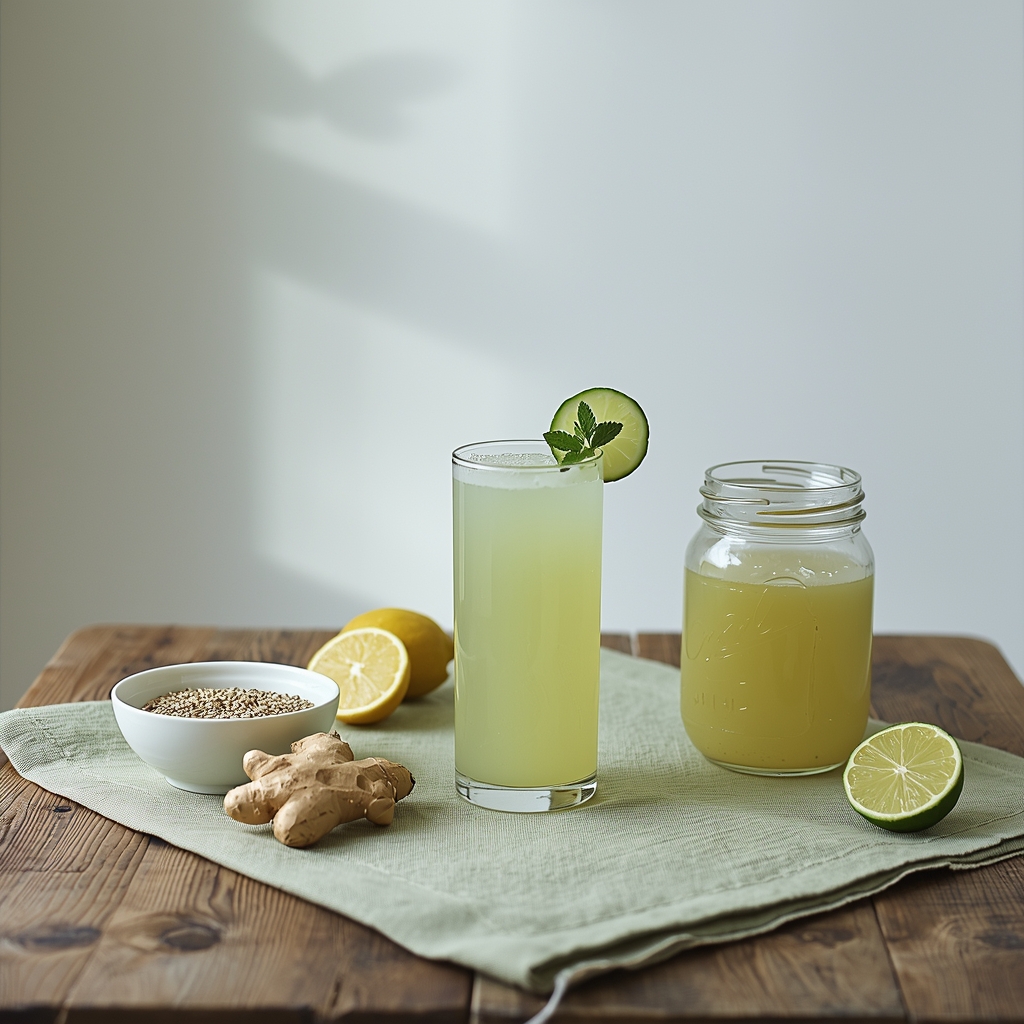
This pale gold morning sip flips the formula. It uses a measured dose of green tea caffeine, hawthorn berry, eleuthero, and a touch of beetroot to gently nudge the cortisol-adrenal-cardiac axis upward — without pushing into tachycardia or arrhythmia territory. It is built for the endurance runner with a stubborn 45 bpm, the vagally-overactive office worker who feels lightheaded standing up, or the person whose Holter monitor came back “unremarkable” while they still felt anything but.
The Athletes Who Already Knew
Walk into the kitchen of any long-distance cyclist, marathon runner, or cross-country skier the morning of a hard session and you’ll see a version of this drink. Not because they read about it in a journal — but because they learned through ten thousand training mornings that black tea or weak green tea, paired with a little salt and something earthy, was the difference between a dialed-in workout and a flat one.
Endurance athletes are the largest population on earth with chronic asymptomatic bradycardia, and they have spent decades reverse-engineering how to wake a slow heart kindly. The 2010s wave of cardiology research on hawthorn (Crataegus) and Siberian eleuthero finally caught up with what athletes already knew: the slow heart doesn’t need stimulation, it needs orchestration. Caffeine wakes the rate. Hawthorn steadies the rhythm. Eleuthero supports the adrenals that drive both. Together, they form a quiet trio — and the science behind why they work is now, finally, on paper.
Why This Cocktail Works (According to Science)
Each ingredient is chosen for one mechanism — and the doses are deliberately gentle. This is not a stimulant drink. It is a calibrated nudge.
- Green tea caffeine (mild dose): A short, low-temperature steep delivers roughly 25–35 mg of caffeine — enough for measured sympathetic stimulation, not enough to spike blood pressure. The Cleveland Clinic specifically lists mild caffeine as appropriate for symptomatic bradycardia not yet requiring a pacemaker.
- Hawthorn berry (Crataegus): Cochrane reviews on hawthorn extract describe support for cardiac output without the pro-arrhythmic risk seen in many heart-rate stimulants. The flavonoids appear to act on contractility rather than directly on rate — which is exactly what a slow but rhythmic heart needs.
- Eleuthero (Siberian ginseng): Phytotherapy Research has documented its mild adaptogenic effect on the adrenal-cardiac axis. Translation: it helps the adrenals do their morning job, so the heart doesn’t get left behind.
- Beetroot nitrates: Hypertension (the journal) reports that dietary nitrates improve cardiac efficiency — meaning the heart pumps more blood per beat, reducing the symptomatic burden of a slow rate.
| 💡 Did You Know? Roughly 50–80% of well-trained endurance athletes meet the technical definition of bradycardia at rest. For most, it’s a sign of a strong, efficient heart — not disease. The symptomatic minority are the ones this sip was built for: people who feel the slowness, even if their cardiologist calls it “normal for you.” |

Recipe: Gentle Pulse Lift
Ingredients
- 6 oz brewed green tea (1 bag steeped 90 seconds at 175°F, then cooled)
- 2 oz filtered water
- ⅛ tsp pink Himalayan salt
- 15 drops hawthorn berry tincture
- 15 drops eleuthero (Siberian ginseng) tincture
- ½ tsp beetroot powder
- 1 tsp fresh lemon juice
- 1 drop liquid stevia (optional)
- For garnish: a thin lemon twist or a single rose hip
Instructions
- Brew the green tea gently. Steep one bag in 8 oz of 175°F water for exactly 90 seconds — short and cool, so it stays smooth and never bitter. Pour off 6 oz and let it cool five minutes.
- Build the base. In a 10 oz tall glass, dissolve the pink salt in 2 oz of filtered water, then add the cooled green tea. The salt is small but essential: it tells the body’s volume sensors to wake up alongside the pulse.
- Add the actives. Drop in the hawthorn tincture, the eleuthero tincture, the beetroot powder, and the lemon juice. Stir gently — you want suspension, not aeration.
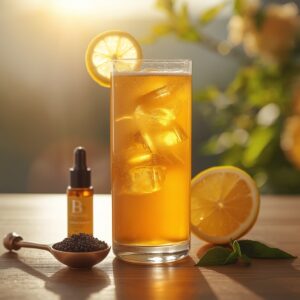
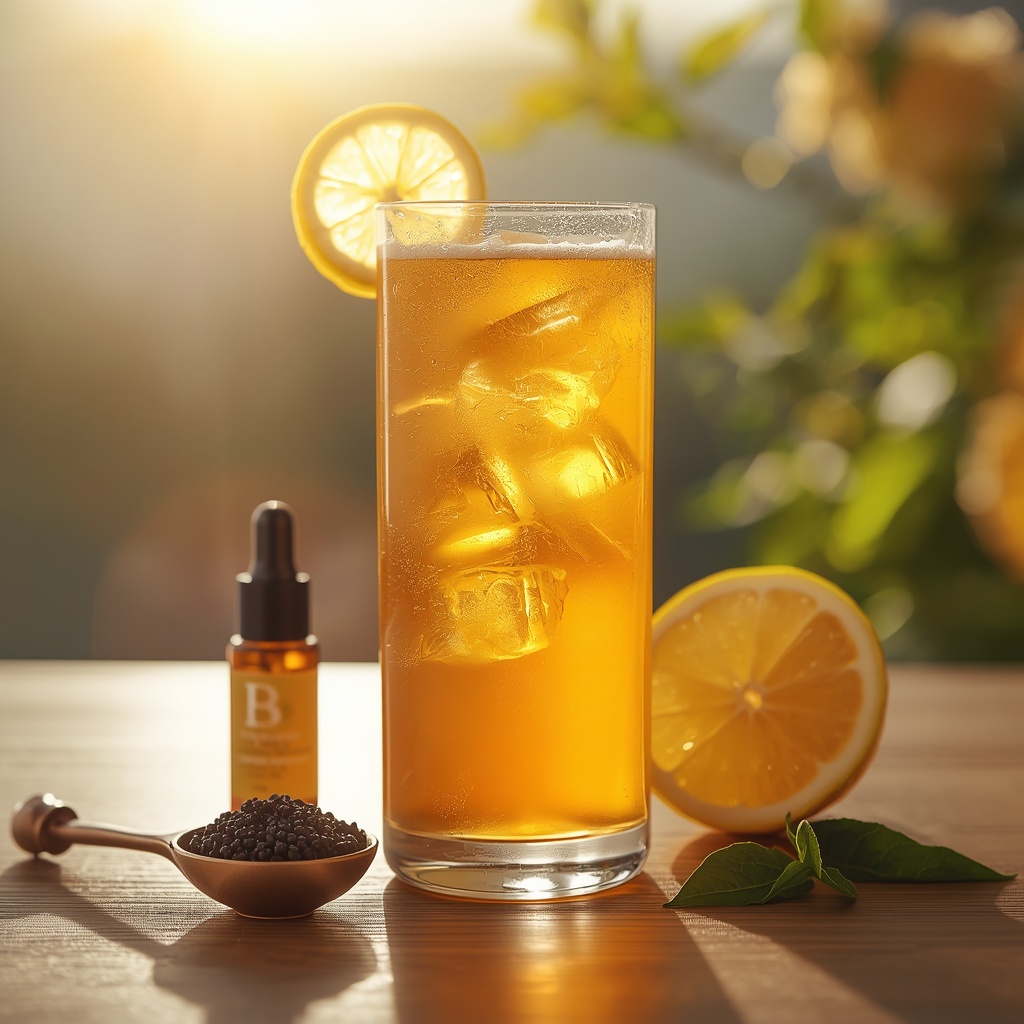
- Adjust the sweetness. Add a single drop of stevia only if the bitterness of the hawthorn feels too sharp. The color should land on a pale gold-amber.
- Sip slowly upon waking. Drink it across 5–10 minutes, ideally before any food. Use daily for 4–6 weeks, then reassess your subjective rate and energy.
| 💡 Tip If you wear a heart-rate monitor, log your morning resting rate before and 30 minutes after the sip for two weeks. Most users see a quiet 5–10 bpm shift, not a spike. That’s the goal. |
Variations
| 🌿 Caffeine-free | Replace green tea with rooibos — but note that removing the caffeine also removes the main therapeutic lever. Not recommended for symptomatic mornings. |
| 🥛 Vegan | Already 100% plant-based as written. |
| ❄️ Iced | Add a single ice cube once mixed. Adapts well to summer mornings. |
| 💪 Boosted | Add 200 mg licorice root extract (full glycyrrhizin, NOT DGL) for additional pressure-pulse support — physician approval required if on cardiac medications. |
Try It Tomorrow Morning
If you have lived with a quietly slow heart for years, give this sip two weeks before you decide. Most people notice the change not in the first morning, but in the second week — when the standing-up dizziness softens and the mid-morning crash gets shorter.
📌 Save this recipe on Pinterest for later — your future self will thank you.
| ⚠️ Disclaimer: This article is for informational and educational purposes only and does not constitute medical advice. It is NOT intended to diagnose, treat, cure, or prevent any disease. Do NOT use this drink if your resting heart rate is below 40 bpm, if you have a documented conduction block, or if you are on rate-control or rate-modifying medications without first consulting your cardiologist. Always coordinate with a qualified healthcare professional before making dietary changes, especially during pregnancy, breastfeeding, or active medical treatment. |