

The herb that matched minoxidil. A 3-layer DHT blockade. Seven minutes in the morning.
Most hair-loss supplements miss the real problem entirely. They pile on biotin and hope for the best — but for people experiencing androgenic alopecia, the culprit is dihydrotestosterone (DHT), a potent androgen that binds to follicle receptors and slowly miniaturizes them. This tonic does something different: it targets DHT at three separate points in its production and binding pathway, using clinically studied herbs and oils. If you’ve been frustrated by supplements that don’t address the hormonal root cause, this drink is for you.
| ⏱ Prep7 min | 👥 Serves1 | 💚 GoalDHT Reduction & Hair Density | ⭐ DifficultyEasy |
When Rosemary Surprised Dermatologists
In 2015, Turkish dermatologist Dr. Mehmet Arca and colleagues published a randomized controlled trial in the journal Skinmed that quietly shook assumptions in the hair-loss world. The trial set rosemary oil head-to-head against 2% minoxidil — one of the most widely prescribed topical hair treatments — over six months. The result? Equivalent hair count improvement in both groups, with one notable difference: the rosemary arm reported significantly less scalp itching and irritation than the minoxidil arm (PMID 25842469).
The mechanism behind rosemary’s effect is carnosic acid, a diterpenoid that stimulates the local production of insulin-like growth factor 1 (IGF-1) in scalp tissue — a known promoter of the anagen (active growth) phase in hair follicles. The 2015 trial wasn’t the only data point, but it was the clearest clinical signal that botanical compounds could operate at the same level of efficacy as pharmaceutical agents in androgenic hair loss.
That finding opened a broader question: if rosemary could match minoxidil topically, what happens when you combine it systemically with other evidence-backed botanicals that target DHT at different steps in its pathway? This tonic is the answer — a drinkable hair-care ritual built on the science, not the marketing.
The 3-Layer DHT Defense Behind This Hair Tonic (And Why Most Supplements Miss the Point)
Androgenic alopecia follows a predictable biochemical pathway: testosterone is converted into DHT by the enzyme 5α-reductase → DHT circulates in the bloodstream → DHT binds to androgen receptors on follicle cells → follicles miniaturize progressively. Most hair supplements don’t touch any of these steps. This tonic addresses all three.
Layer 1 — Saw Palmetto (5α-Reductase Inhibitor, Type II)
A 2018 systematic review of seven clinical trials found that saw palmetto extract (standardized to 85–95% fatty acids) significantly increased hair count and density in patients with androgenic alopecia, with a favorable tolerability profile (PMID 30561249). Its active fraction competitively inhibits 5α-reductase, reducing the conversion of testosterone to DHT at the source.
Layer 2 — Rosemary Water (IGF-1 Stimulation & Follicle Reactivation)
Beyond the 2015 RCT data, rosemary’s carnosic acid has been shown in vitro to promote dermal papilla cell differentiation — a key step in anagen phase initiation. Preparing a simmered rosemary infusion extracts the active polyphenols directly into the base of this tonic.
Layer 3 — Pumpkin Seed Oil (Second 5α-Reductase Blockade via Delta-7 Sterols)
A 24-week double-blind, placebo-controlled RCT found a 40% increase in hair count in the pumpkin seed oil group vs. 10% in placebo (PMID 24864154). Delta-7 sterols in pumpkin seed oil inhibit 5α-reductase through a different binding site than saw palmetto — making their combination additive rather than redundant.
Bonus Layer — Nettle Root (DHT Receptor Competition)
Even after reducing DHT production, residual DHT can still bind to follicle receptors. Nettle root binds to sex hormone-binding globulin (SHBG) and competes with DHT at the follicle receptor level, providing a downstream safety net in the cascade (PMID 10069605).
| 💡 Did You Know?Biotin supplements are heavily marketed for hair growth — but the evidence only supports them in people with a diagnosed biotin deficiency, which is rare. The real culprit behind androgenic hair loss is DHT (dihydrotestosterone), a potent androgen that binds to hair follicle receptors and shrinks them over time. Targeting DHT at multiple points in its pathway — production, binding, and follicle-level competition — is the strategy backed by clinical evidence. |
Nutritional yeast rounds out the formula: it contributes biotin (critical for keratin protein synthesis), vitamin B5 (which moderates adrenal androgen production), and zinc (a natural 5α-reductase co-regulator, per NIH Office of Dietary Supplements data on zinc and androgen metabolism).
Recipe: Nettle & Saw Palmetto Root Defense
Quick Facts
| Prep Time | 7 minutes |
| Servings | 1 |
| Difficulty | Easy |
| Category | Beauty From Within |
| Goal | DHT Reduction & Hair Density Support |
| Accent Color | Rose Gold #D4A0B0 |
Ingredients
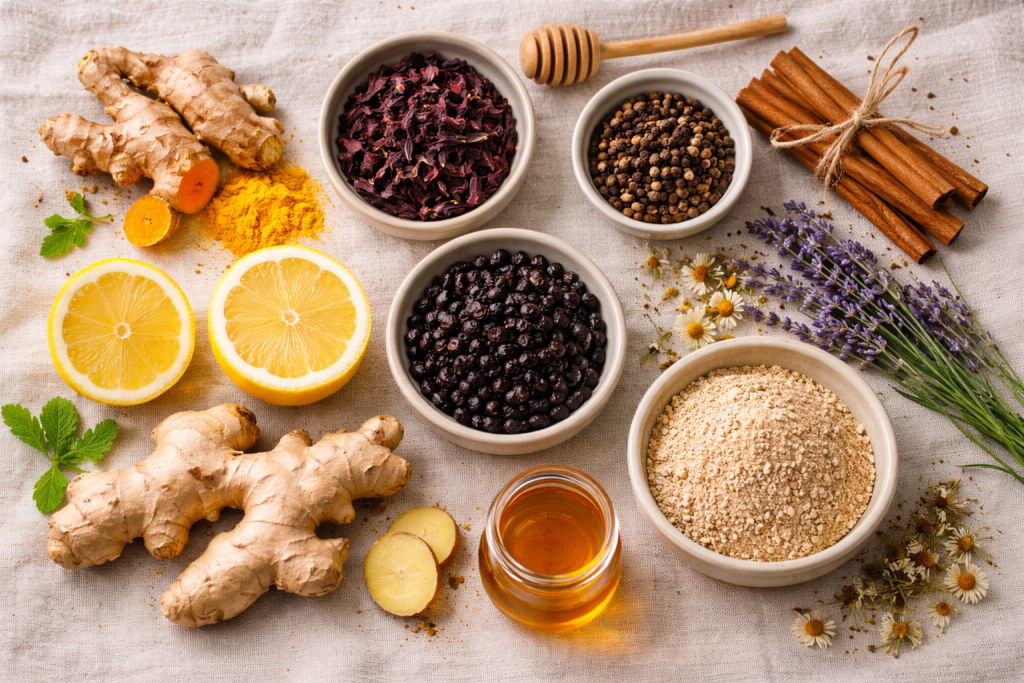
- ½ tsp saw palmetto extract powder (standardized to 85–95% fatty acids)
- ½ tsp nettle root extract powder
- 7 oz (210 ml) rosemary water — 2 fresh rosemary sprigs simmered in 7 oz filtered water for 5 min, strained
- 1 tbsp nutritional yeast
- 1 tsp pumpkin seed oil (cold-pressed)
- 1 tbsp fresh lemon juice
- 2 drops liquid monk fruit (to taste)
Instructions
- Simmer 2 rosemary sprigs in 7 oz filtered water for 5 minutes. Strain through a fine-mesh sieve and cool to warm (not hot). This is your base.
- Whisk saw palmetto extract powder and nettle root extract powder into the warm rosemary water until fully dissolved — about 30 seconds.
- Add nutritional yeast and pumpkin seed oil. Whisk vigorously for 30 seconds, or use a 10-second burst with an immersion blender to emulsify the oil into the liquid.
- Add fresh lemon juice and monk fruit drops. Stir to combine.
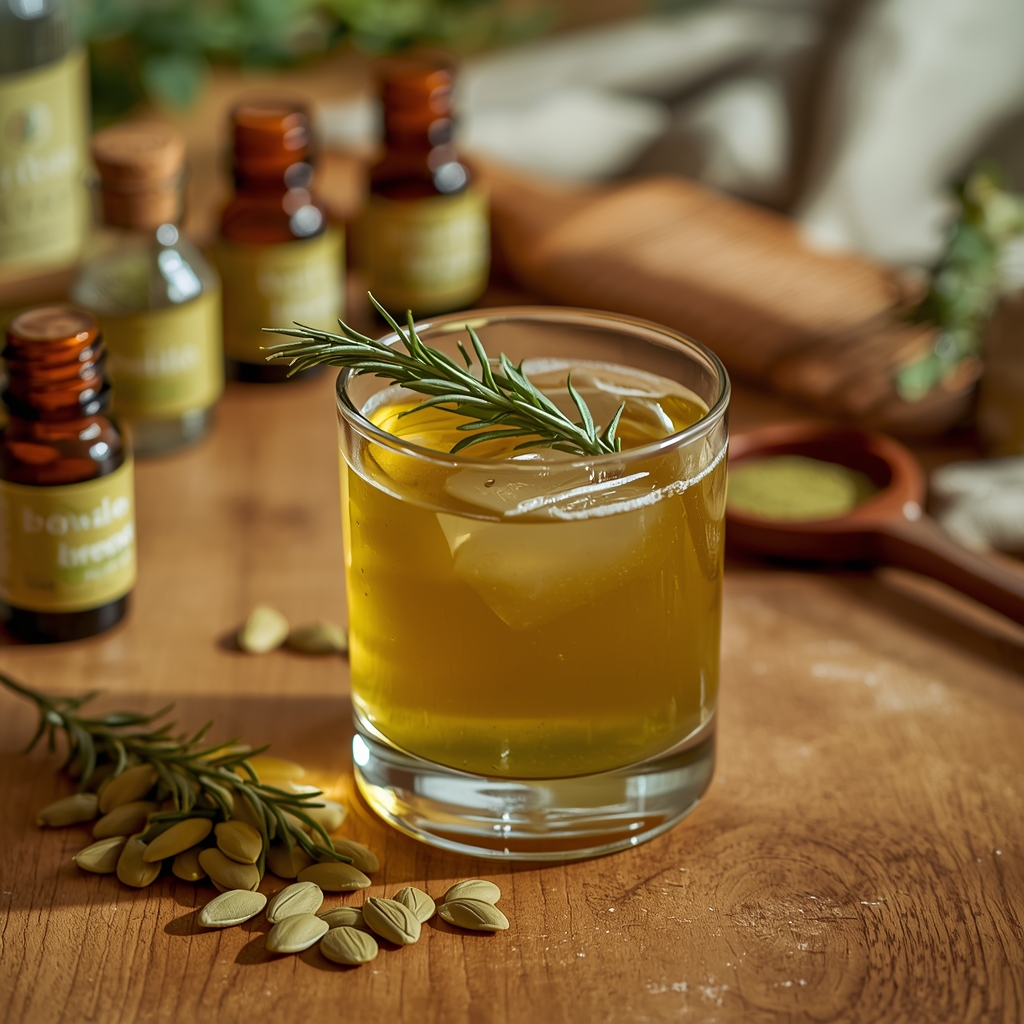
- Pour into a short wide glass tumbler, garnish with a small rosemary sprig if desired, and consume immediately. Emulsions separate on standing — drink fresh.
Variations
| Variation | Modification | Notes |
| Vegan | Already 100% plant-based ✅ | No changes needed |
| Sugar-Free | Omit monk fruit drops | Naturally bitter-herbaceous profile |
| Cold Version | Cocktail shaker with ice | Shake 15 sec; strain over ice into wide glass |
Ready to Give It a Try?
Give it 90 days — hair growth cycles are long, and the anagen phase takes time to respond. Many readers notice less shedding within the first four to six weeks and visible density changes after three months of consistent daily use. Consistency is the active ingredient here.
📌 Save this recipe to Pinterest and share it to your hair growth board — it helps other people dealing with hormonal hair thinning find this resource.
| ⚠ Medical DisclaimerThis content is for informational purposes only and does not constitute medical advice. Saw palmetto may interact with anticoagulant medications (e.g., warfarin, aspirin therapy). If you are taking blood thinners or any prescription medication, consult your healthcare provider before use. Hair thinning can have multiple causes; this tonic is a nutritional support tool, not a replacement for dermatological evaluation or prescribed treatment. |
Sources
PMID 30561249 — Saw Palmetto Systematic Review — https://pubmed.ncbi.nlm.nih.gov/30561249/
PMID 10069605 — Nettle Root & SHBG/DHT Receptor Binding — https://pubmed.ncbi.nlm.nih.gov/10069605/
PMID 25842469 — Rosemary Oil vs. 2% Minoxidil RCT (Skinmed 2015) — https://pubmed.ncbi.nlm.nih.gov/25842469/
PMID 24864154 — Pumpkin Seed Oil 24-Week Double-Blind RCT — https://pubmed.ncbi.nlm.nih.gov/24864154/
NIH ODS — Biotin Fact Sheet — https://ods.od.nih.gov/factsheets/Biotin-HealthProfessional/