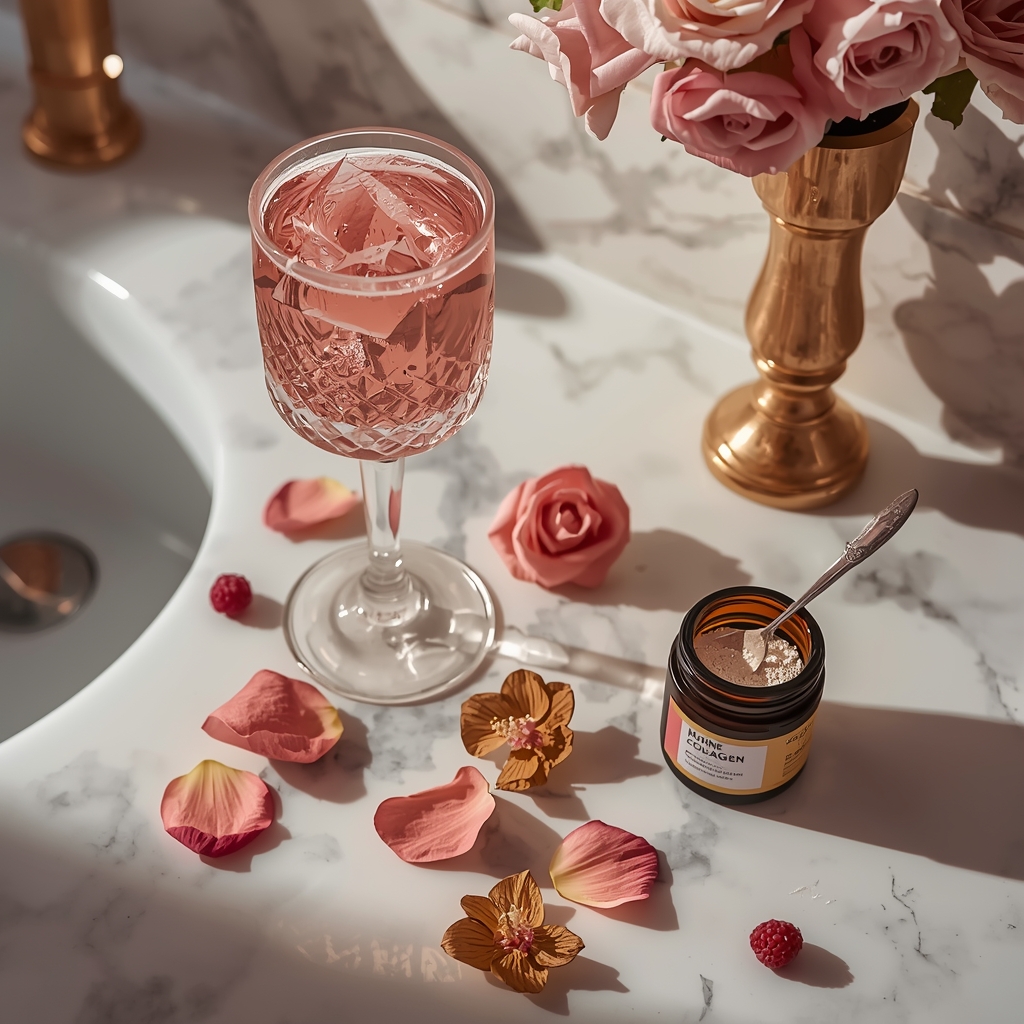
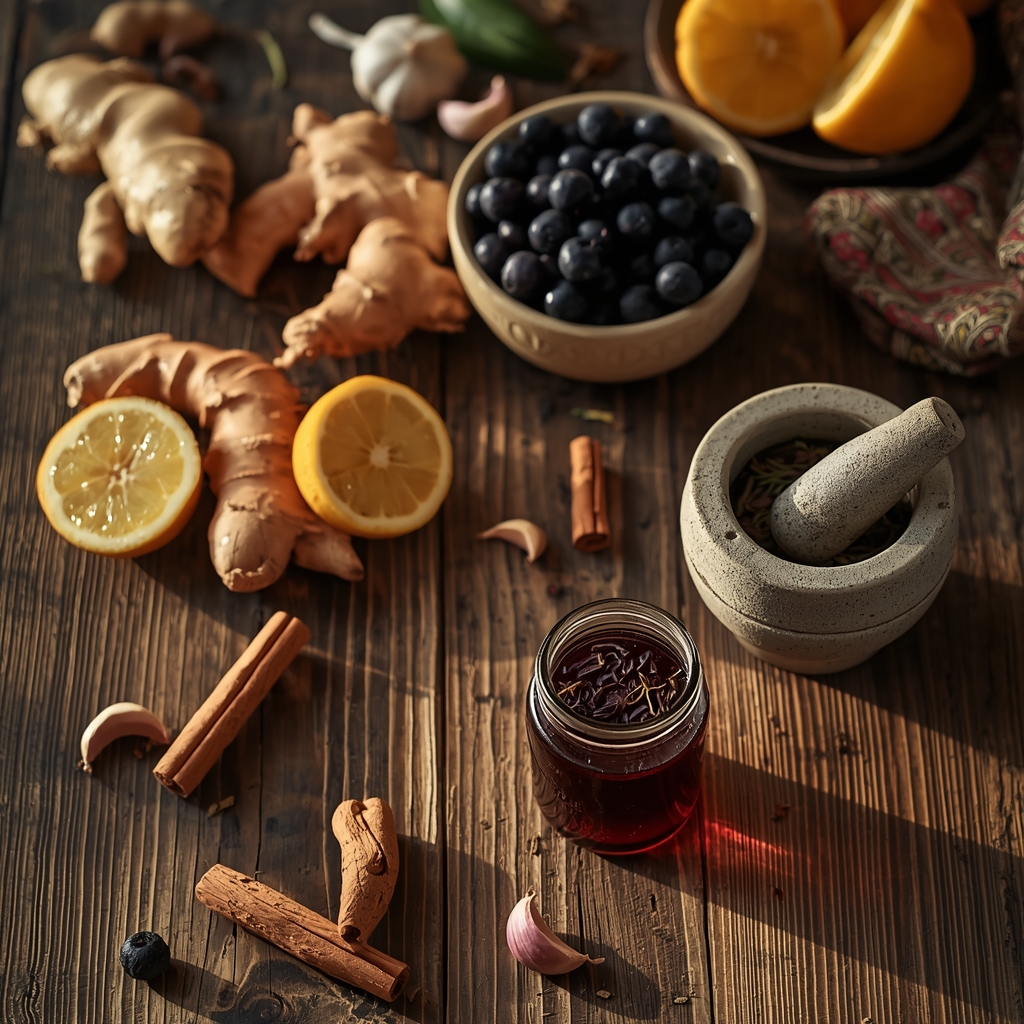
When your neck nodes finally stopped hurting and the fevers stopped — but the fatigue lingered for months — this gentle daily sip was built for the long quiet recovery.
| ⏱ Prep 5 min | 👥 Serves 1 | 💚 Goal Recovery & immune modulation | ⭐ Difficulty Easy |
Kikuchi-Fujimoto disease is one of the strangest entries in any internal medicine textbook. It produces tender, swollen lymph nodes (most often in the neck), persistent low-grade fevers, and sometimes night sweats and weight loss — exactly the way a serious lymphoma would. Patients are often biopsied and worked up extensively before the diagnosis becomes clear: a benign, self-limiting form of histiocytic necrotizing lymphadenitis that affects mostly young women, particularly of Asian descent, and resolves on its own within one to four months.
What the textbooks don’t always emphasize is the tail. Even after the lymph nodes shrink and the fevers stop, many patients describe weeks or months of lingering fatigue, low-grade malaise, and a vague sense of being not-quite-right. This deep amber sip is built specifically for that quiet recovery window — not for the active phase, never as a treatment — combining curcumin, algae omega-3, vitamin D3 with K2, and quercetin in a nettle-and-pomegranate base. The goal is simple: support the immune system gently while it finishes its own work.
The Disease Named After Two Japanese Pathologists
Kikuchi-Fujimoto was first described in 1972 by two Japanese pathologists working independently — Masahiro Kikuchi and Y. Fujimoto — both of whom noticed the same unusual lymph node histology in young women. The disease is rare in Western populations and far more common in Asia, particularly Japan, Korea, and Taiwan. For decades it was misdiagnosed as lymphoma, tuberculosis, or systemic lupus erythematosus — and in fact, a small but real subset of KFD patients later go on to develop lupus, which is part of why follow-up matters.
Because KFD typically self-resolves, no specific treatment is established. Most patients receive supportive care — hydration, NSAIDs for fever, occasional steroids for severe cases. What the patient community has quietly built up, and what published reviews (in journals like Modern Rheumatology and Internal Medicine) have begun to validate, is a list of supportive nutritional adjuncts that may shorten the recovery tail: anti-inflammatory polyphenols, omega-3, vitamin D, and mast-cell stabilizers like quercetin. None of these treats KFD. All of them, taken consistently during recovery, may make the lingering weeks easier.
Why This Cocktail Works (According to Science)
Each ingredient was chosen because it modulates one specific arm of the immune-inflammatory cascade that runs hot in the recovery window after KFD.
- Curcumin with black pepper (500 mg + tiny pinch piperine): Phytotherapy Research has documented curcumin’s reduction of multiple inflammatory cytokines, including TNF-α and IL-6. Black pepper boosts bioavailability roughly 20-fold. Relevant in any post-inflammatory recovery, including KFD.
- Algae-based omega-3 (1000 mg): Current Medicinal Chemistry has documented omega-3’s modulation of inflammatory eicosanoids — directly relevant to a still-quieting immune system. Algae-based omega-3 is a clean, low-fat option.
- Vitamin D3 with K2 (5,000 IU): Modern Rheumatology and several KFD case series have documented low vitamin D in patients during and after the disease. Supplementation supports immune modulation; K2 directs calcium appropriately.
- Quercetin (500 mg): The Journal of Allergy and Clinical Immunology has documented quercetin as a mast-cell stabilizer. Useful in any post-inflammatory state, particularly for the lingering low-grade malaise that follows KFD.
| 💡 Did You Know? Roughly 7–30% of patients diagnosed with Kikuchi-Fujimoto disease are later diagnosed with systemic lupus erythematosus — sometimes years after the initial KFD episode resolves. This is why ongoing rheumatology follow-up matters, even after the lymph nodes have completely normalized. |
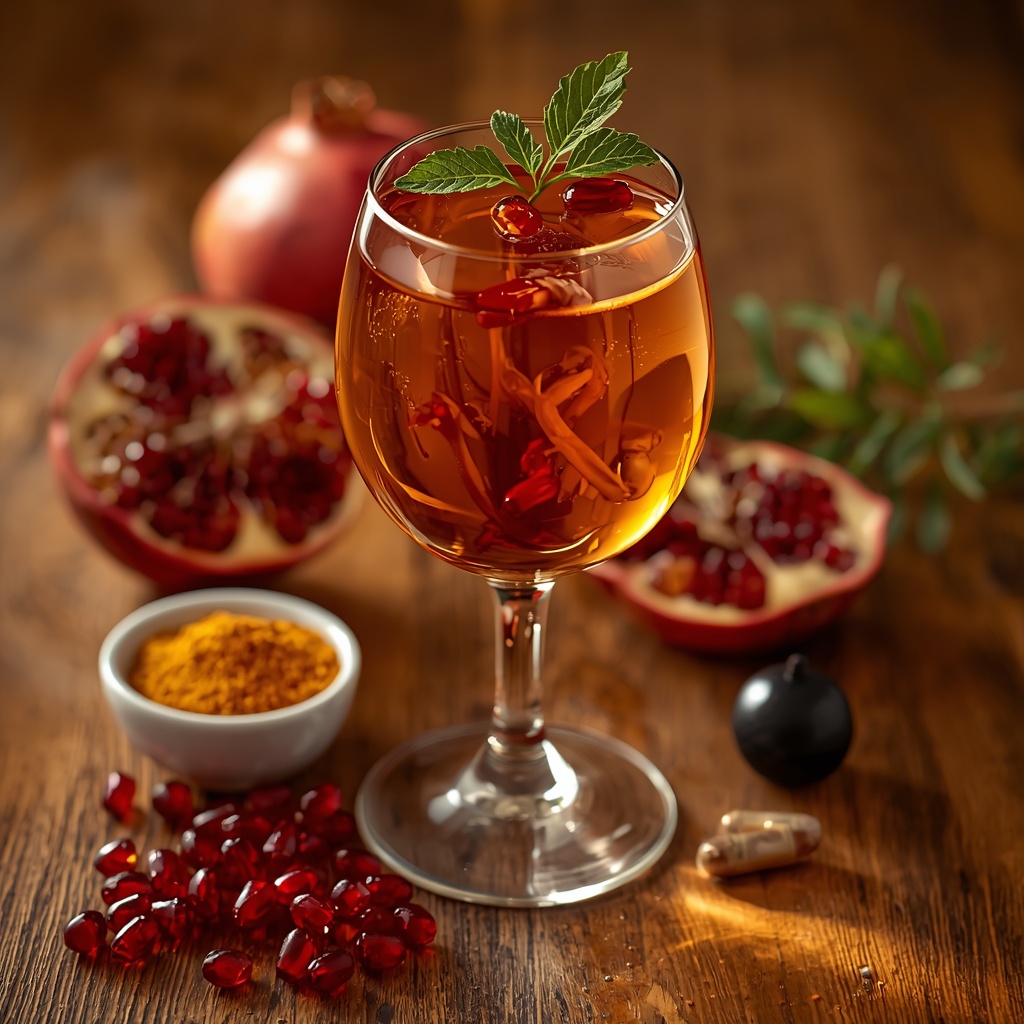
Recipe: Lymph Stillness Bloom
Ingredients
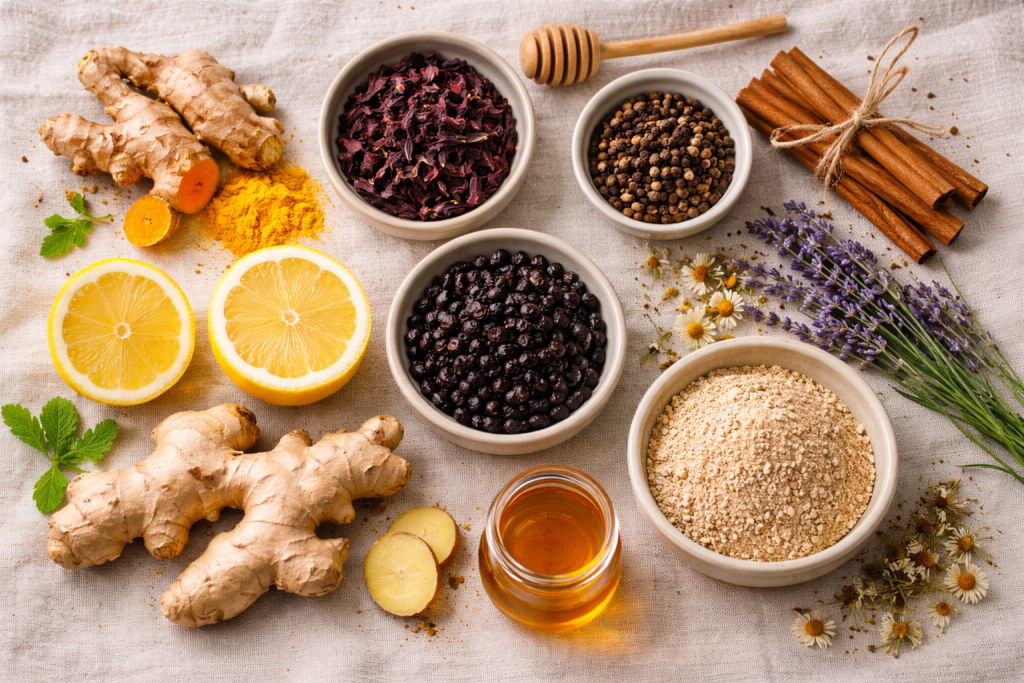
- 6 oz brewed nettle tea (1 bag steeped 12 minutes, cooled)
- 2 oz filtered water
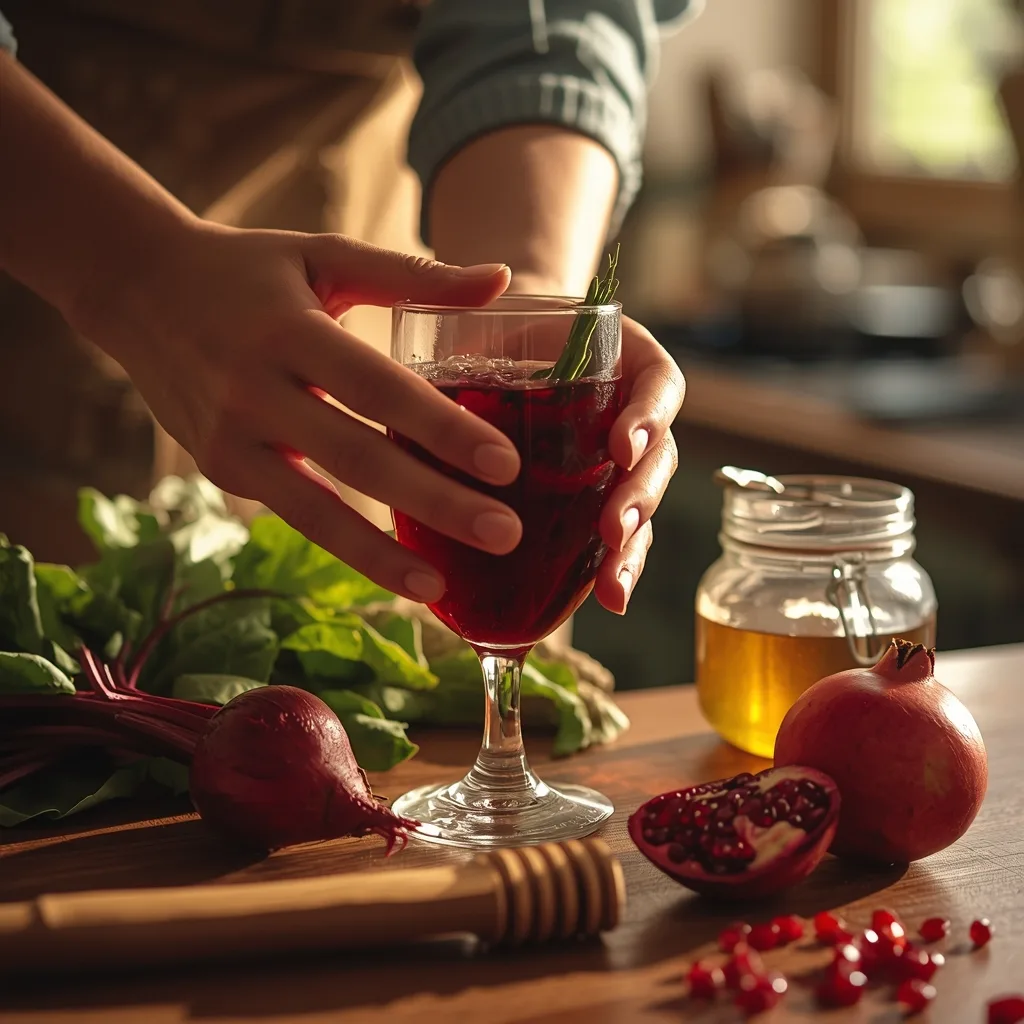
- 1 oz unsweetened pomegranate juice
- 500 mg curcumin (opened capsule)
- 1000 mg algae-based omega-3 (opened capsule)
- 500 mg quercetin powder
- Tiny pinch black pepper (for piperine bioavailability)
- 5,000 IU vitamin D3 with K2 (drops or capsule)
- 1 drop liquid stevia (optional)
- For garnish: a thin lemon coin or a small handful of pomegranate seeds
Instructions
- Brew the nettle gently. Steep one nettle tea bag in 8 oz of hot water for 12 full minutes — the long steep extracts the silica and chlorophyll. Strain, cool 5 minutes, and reserve 6 oz.
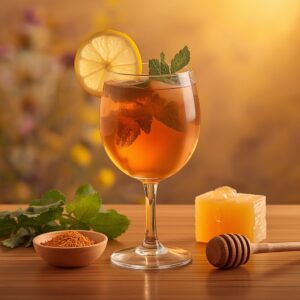
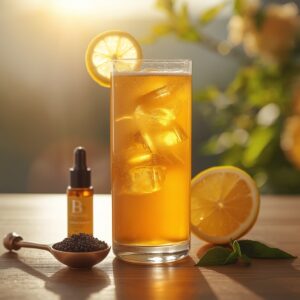
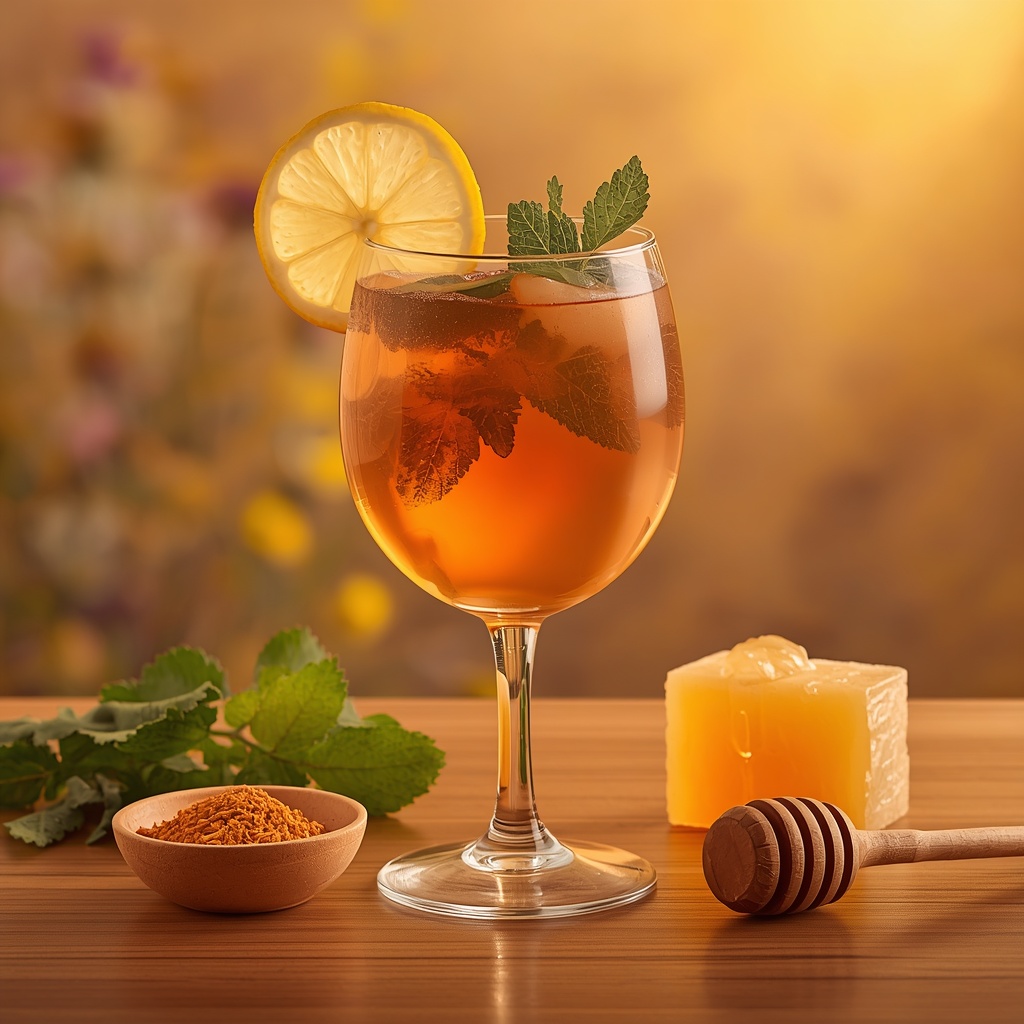
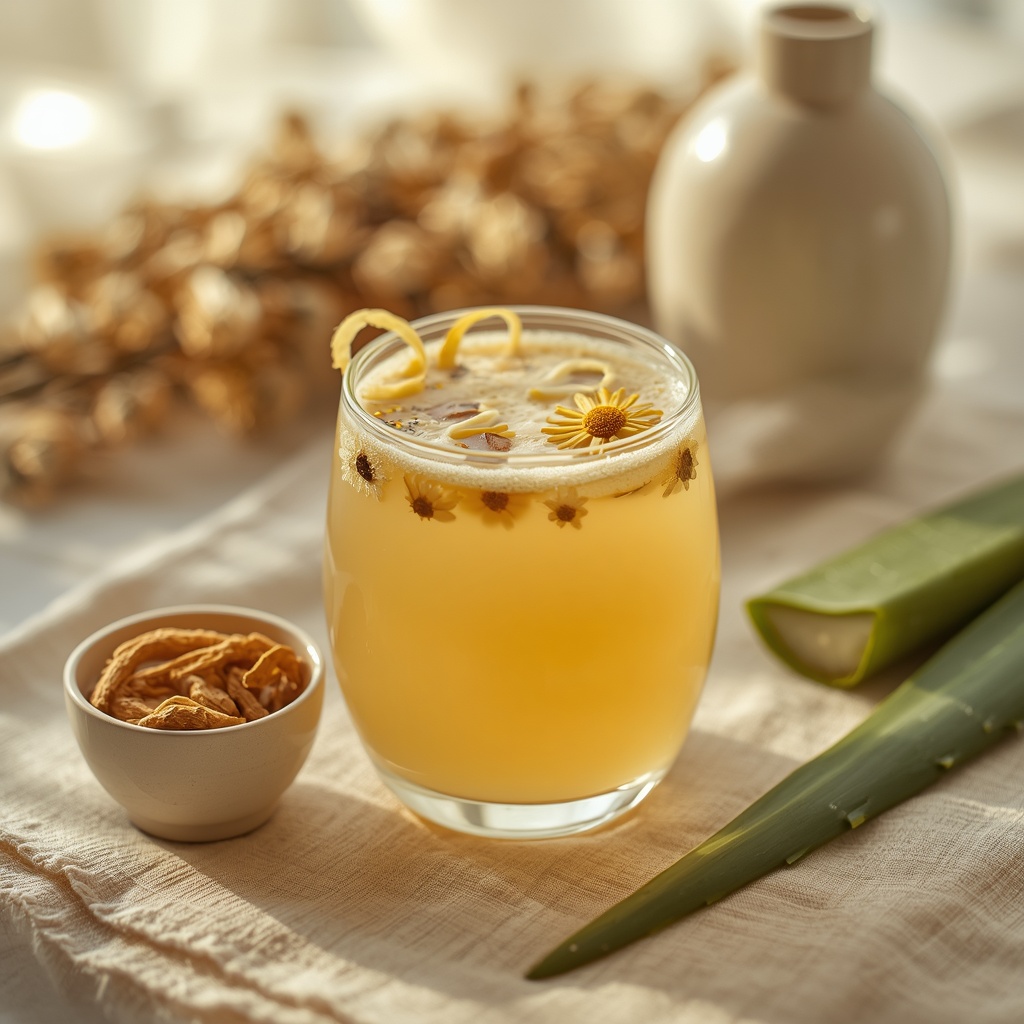
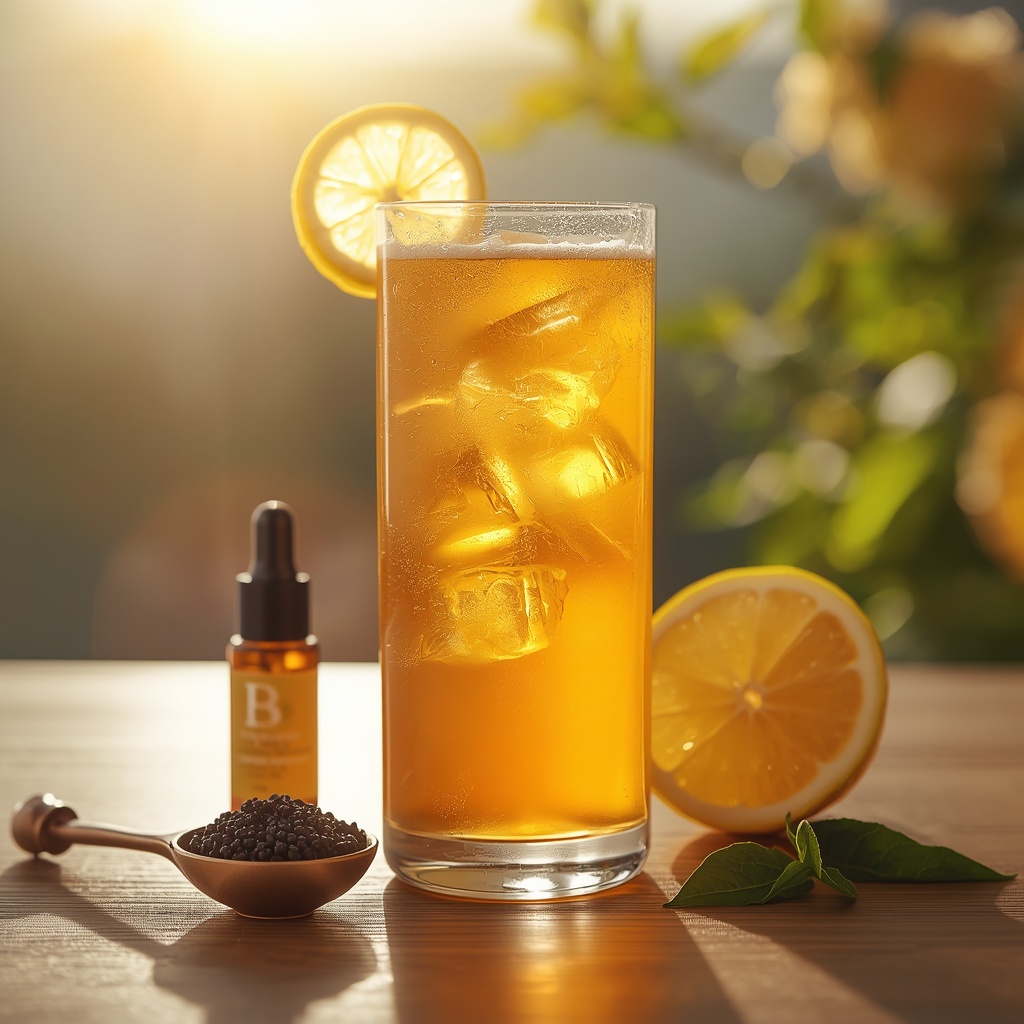
- Build the base. In a 10 oz tall glass, combine the cooled nettle tea, the filtered water, and the pomegranate juice. The color should land on a deep amber.
- Make the slurry. In a small bowl, combine the opened curcumin capsule, the algae omega-3 capsule, the quercetin powder, and a tiny pinch of black pepper. Whisk with 2 tablespoons of warm water until smooth.
- Combine. Stir the slurry into the nettle-pomegranate base. Add the vitamin D3 with K2 drops and the optional drop of stevia. Whisk gently — you want suspension, not foam.
- Sip mid-afternoon, daily, throughout your recovery window — typically 4 to 12 weeks after the lymph nodes have stopped being tender. Track your fatigue level on a simple 1–10 scale; most users see meaningful change between weeks 3 and 6.
| 💡 Tip Save this sip for the recovery window — not the active phase. During active KFD with fevers and tender nodes, follow your physician’s guidance precisely. The drink’s role is gentle support during the long quiet tail, not the storm itself. |
Variations
| 🌿 Strict sugar-free | Use unsweetened pomegranate juice and skip the stevia entirely. |
| 🥛 Vegan | Already 100% plant-based (the omega-3 is algae-derived, not fish). |
| ❄️ Iced | Adapts well — the chilled version can be especially soothing during low-grade fever recovery weeks. |
| 💪 Boosted | Add 200 mg resveratrol for additional polyphenol support, particularly useful during the longer recovery tails. |
Use It For Four to Twelve Weeks During Recovery
KFD recovery is not linear. Some weeks you feel almost fully back; some weeks the fatigue catches up to you again. Stay in conversation with your rheumatologist or internist throughout — particularly because of the small but real lupus association — and let this gentle daily sip be one piece of the slow return to baseline.
📌 Save this recipe on Pinterest for later — KFD is rare enough that recipes built for it are even rarer.
| ⚠️ Disclaimer: This article is for informational and educational purposes only and does not constitute medical advice. It is NOT intended to diagnose, treat, cure, or prevent any disease. Persistent or recurrent lymphadenopathy requires medical evaluation to exclude infection, lymphoma, autoimmune disease, and other causes. KFD has a documented association with systemic lupus erythematosus — ongoing rheumatology follow-up is appropriate. Curcumin can interact with anticoagulants; quercetin can interact with certain chemotherapy agents; high-dose vitamin D requires monitoring. Always consult a qualified healthcare professional before making dietary changes. |