

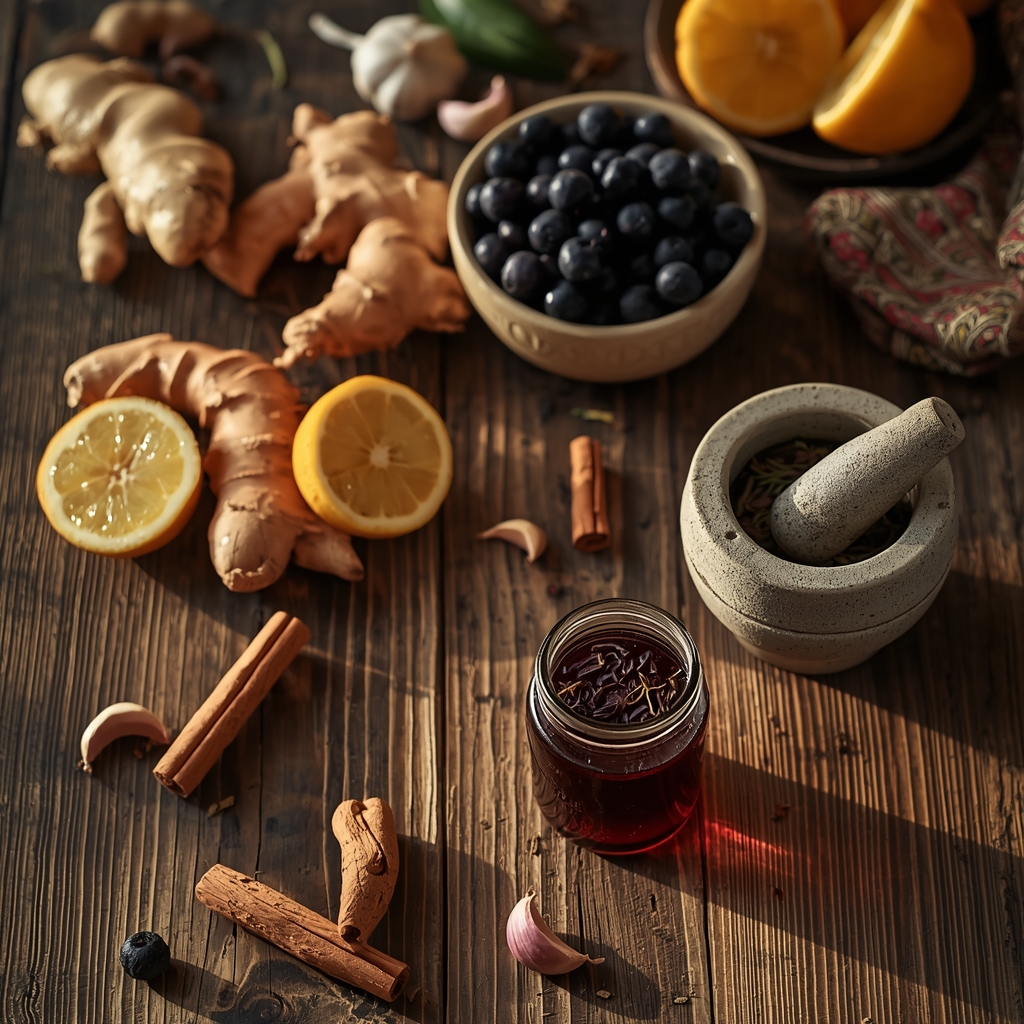

“What if your brain’s attention problem isn’t only about dopamine — but also about blood reaching the right neurons at the right time?”
If you’ve spent years navigating adult ADHD symptoms — the scattered thoughts, the half-finished tasks, the mental fog that sets in by 10 AM — you’ve probably tried everything from morning coffee to productivity apps. But emerging neuroscience points to a subtler culprit: impaired cerebral microcirculation, particularly in the prefrontal cortex. The Ginkgo Focus Stream is a precisely formulated herbal drink designed to address exactly that.
⏱ Prep: 5 min | 👥 Serves: 1 | 💚 Goal: Focus & ADHD Support | ⭐ Difficulty: Easy
The World’s Oldest Living Tree Has Something to Say About Your Focus
Ginkgo biloba is not a trend. It is the oldest tree species on Earth — a botanical relic that has survived unchanged for over 250 million years, outlasting the dinosaurs and multiple mass extinctions. Ancient Chinese physicians called it the “silver apricot” and incorporated its leaves and seeds into traditional medicine for millennia, using it to sharpen the mind, treat respiratory illness, and support circulation to the brain.
Fast forward to the 21st century, and modern pharmacology has finally caught up. Researchers have isolated the bioactive compounds — ginkgolides and bilobalide — that explain those ancient observations. These molecules act directly on cerebral blood vessels, improving microcirculation to the brain’s frontal regions, where attention, planning, and impulse control are regulated.
For the roughly 366 million adults worldwide living with ADHD — a condition far more prevalent than most people realize — this matters enormously. While pharmaceutical stimulants work for many, a growing number of adults are exploring complementary, evidence-informed approaches. The Ginkgo Focus Stream was built for them.
Why This Drink Works (According to Science)
The Ginkgo Focus Stream isn’t a random herbal blend — it’s a synergistic formula in which each ingredient plays a distinct, researched role in the attention cascade.
Ginkgo Biloba — Frontal Lobe Perfusion
Ginkgolides are platelet-activating factor antagonists that relax cerebrovascular walls, increasing blood flow to the prefrontal cortex. A landmark study published in Psychopharmacology (2001) demonstrated that ginkgo significantly improved attention and executive function in healthy adults, while a 2010 study in the Journal of Psychiatric Research confirmed its benefits for ADHD-specific cognitive profiles. Better blood flow = more oxygen and glucose delivered precisely where attention is regulated.
Source: Psychopharmacology (2001) — Ginkgo biloba & cognitive function
Gotu Kola — Synaptic Remodeling & Anxiety Reduction
Gotu kola (Centella asiatica) contains asiatocosides that stimulate BDNF (brain-derived neurotrophic factor), promoting synaptic plasticity and new neural connections. A 2016 randomized trial in the Journal of Ethnopharmacology found that participants showed measurably improved working memory, sustained attention, and reduced anxiety-hyperarousal — all within just 2 hours of consumption. For adults with ADHD, the hyperarousal-reduction effect may be just as important as the memory benefit.
Source: Journal of Ethnopharmacology (2016) — Gotu kola & attention
Peppermint — Acetylcholine & Working Memory
Menthol, the active compound in peppermint, has been shown in a 2016 randomized controlled trial from Northumbria University to improve working memory, long-term memory consolidation, and overall alertness — outcomes attributed to the stimulation of acetylcholine pathways, the neurotransmitter system most directly tied to memory formation. Notably, peppermint achieves this via aroma and bioactive absorption, not caffeine.
Source: Northumbria University RCT (2016) — Peppermint & memory
| 💡 Did You Know?1 in 20 adults worldwide has ADHD — and the majority remain undiagnosed. Adult ADHD often looks different from the childhood presentation: less hyperactivity, more mental fog, executive dysfunction, and emotional dysregulation. If you’ve always felt like your brain works differently, you’re not alone. |
The synergy here is deliberate: ginkgo opens the delivery channels (cerebral blood flow), gotu kola rebuilds and calms the network (synaptic plasticity + reduced hyperarousal), and peppermint sharpens the cholinergic signal (working memory + alertness). Together, they target attention from three independent biological angles simultaneously.
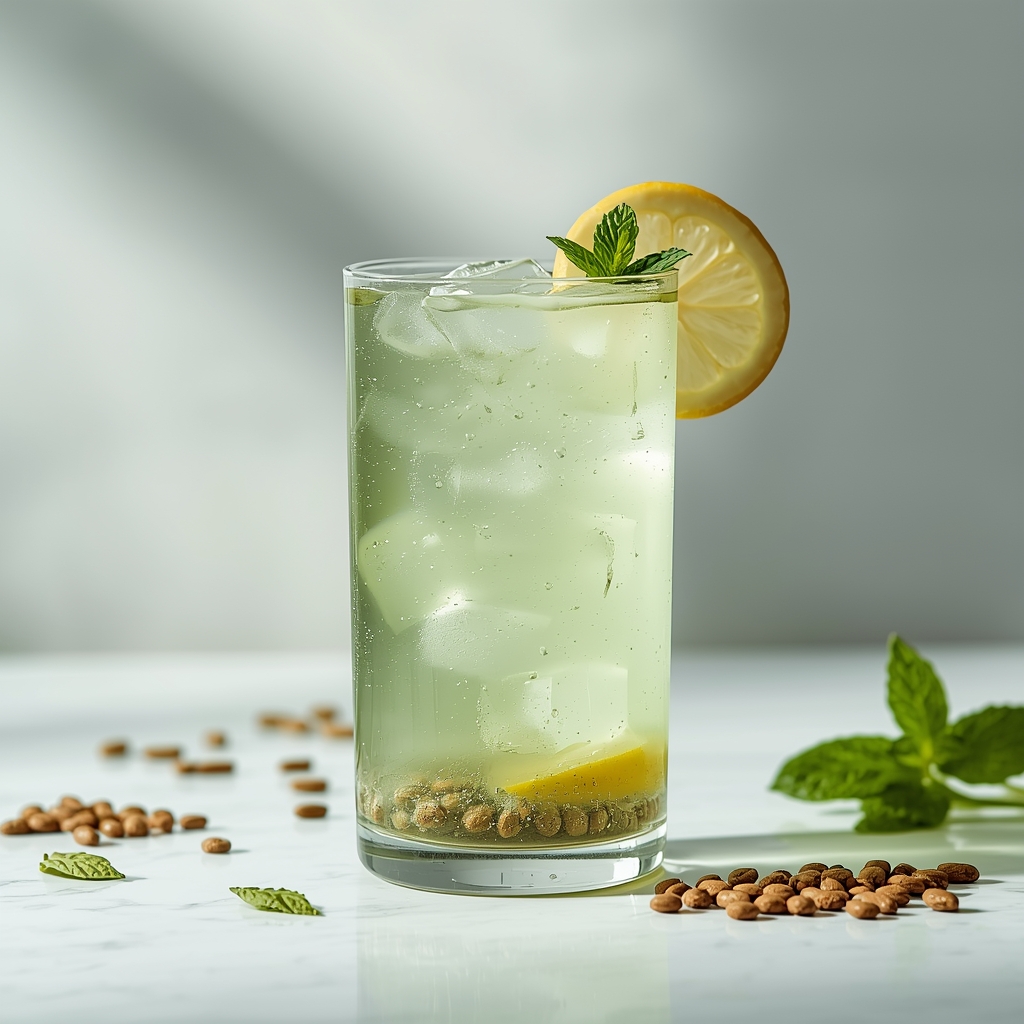
The Complete Ginkgo Focus Stream Recipe
| Prep Time | 5 minutes |
| Serves | 1 |
| Goal | Focus & ADHD Support |
| Difficulty | Easy |
| Best Time | Morning or early afternoon (avoid after 2 PM) |
| Caffeine | None |
| Diet | Sugar-free, Vegan, Gluten-free |
Ingredients:
- 1 tea bag ginkgo biloba — standardized to 24% flavonoid glycosides (important for therapeutic dose consistency)
- 1 tea bag gotu kola (Centella asiatica)
- 5-6 fresh peppermint leaves — or 1 peppermint tea bag if fresh leaves are unavailable
- 8 oz (240 ml) filtered water, heated to 195°F / 90°C (just below boiling)
- 1 tsp fresh lemon juice — enhances bioavailability of polyphenols and brightens flavor
- 2-3 drops pure stevia — zero glycemic impact, does not interfere with cognition
Instructions:
- Steep ginkgo biloba + gotu kola tea bags in 8oz hot water at 195°F for 7 minutes. A lower temperature (not boiling) protects the delicate flavonoids. Remove both bags.
- Add fresh peppermint leaves directly to the hot liquid. Steep for 2 more minutes, then strain — or use a peppermint tea bag added simultaneously from the start.
- Let the tea cool to room temperature, or pour it directly over a glass filled with ice for immediate serving.
- Add 1 tsp fresh lemon juice and 2-3 drops of stevia. Stir gently to combine. The lemon adds brightness and supports polyphenol absorption.
- Serve in a clear tall glass or wide-mouth mason jar over ice. Garnish with a fresh peppermint sprig, a whole ginkgo leaf, and a lemon wheel for presentation. Consume in the morning or early afternoon — avoid after 2 PM to prevent any interference with sleep.
Pro Tips:
- Timing matters: The cognitive effects of gotu kola can appear within 90–120 minutes, so drink about 1.5–2 hours before your most demanding work block.
- Standardization is key: Always use ginkgo biloba standardized to 24% flavonoid glycosides and 6% terpene lactones. Generic herbal teas may not reach therapeutic concentrations.
- Freshness for peppermint: Fresh peppermint releases more volatile menthol oils than dried — tear the leaves gently before steeping to release maximum aroma.
Variations:
- Sugar-free
- Vegan
- Boosted Focus Edition:
- Cold-Brew Overnight Batch:
Ready to Give Your Brain the Blood Flow It Deserves?
Focus isn’t just a mindset — it’s a biology. The Ginkgo Focus Stream puts three of the most rigorously studied cognitive herbs in one elegant, caffeine-free glass. Make it part of your morning ritual and give your prefrontal cortex what it needs to show up.
📌 Save this recipe to your Pinterest board “Natural ADHD Remedies” so you can come back to it anytime.
| ⚠️ Medical DisclaimerThis article is for informational and educational purposes only. It is not intended to diagnose, treat, cure, or prevent any medical condition, including ADHD. The statements in this post have not been evaluated by the Food and Drug Administration (FDA). Always consult a qualified healthcare provider before beginning any herbal supplement regimen, particularly if you are pregnant, nursing, taking prescription medications, or managing a medical condition.IMPORTANT — Ginkgo Biloba & Drug Interactions: Ginkgo biloba may interact with blood-thinning medications (anticoagulants) such as warfarin, aspirin, and clopidogrel, potentially increasing the risk of bleeding. Do not use ginkgo biloba if you are taking blood thinners without explicit medical supervision. Also use caution if you have a history of seizures or are taking MAOIs or SSRIs. |