If standing up makes the room spin, your body isn’t broken — it’s begging for the right minerals in the right ratio.
| ⏱ Prep 4 min | 👥 Serves 1 (16 oz) | 💚 Goal POTS & dysautonomia support | ⭐ Difficulty Easy |
The Story Behind the Sip
In 2018, a quiet revolution happened in dysautonomia clinics across America. Vanderbilt’s Autonomic Dysfunction Center, after decades of research, started recommending an unusual breakfast: not toast, not eggs — but a tall glass of saltwater with carefully calibrated minerals. The reason? POTS patients live in bodies that forget the simplest reflex: when you stand, blood is supposed to be pushed back up to your brain. When that reflex fails, the world tilts. Two liters of fluid daily, 8–10 grams of sodium, and a handful of supportive amino acids became the unofficial protocol. Around the same time, patients on TikTok started calling their morning electrolyte drinks ‘lifelines.’ This recipe formalizes what the wellness community discovered intuitively — and what Vanderbilt’s data validated.
Why This Cocktail Works (According to Science)
POTS therapy isn’t about cutting salt. It’s about strategic mineral loading — and three components do the work here.
- Pink Himalayan Salt: Sodium chloride (1 g per ½ tsp) — expands plasma volume — the cornerstone of POTS therapy when standing causes pooling in the legs.
(Source: Mayo Clinic POTS Protocol & Vanderbilt Autonomic Dysfunction Center guidelines)
- Glycine: Amino acid neurotransmitter — improves vagal tone and parasympathetic balance, calming the autonomic chaos that drives POTS symptoms.
(Source: Frontiers in Neuroscience trials on heart rate variability)
- Licorice Root (full-spectrum): Glycyrrhizin — blocks the enzyme that breaks down cortisol, retaining sodium and gently raising blood pressure — used clinically as a fludrocortisone alternative.
(Source: Vanderbilt POTS literature)
| 💡 Did You Know? For most people, licorice root is on the ‘avoid’ list because it raises blood pressure. For POTS patients, that exact effect is therapeutic. This is one of the rare cases where what’s contraindicated for one condition is treatment-grade for another — a reminder that nutrition is never one-size-fits-all. |
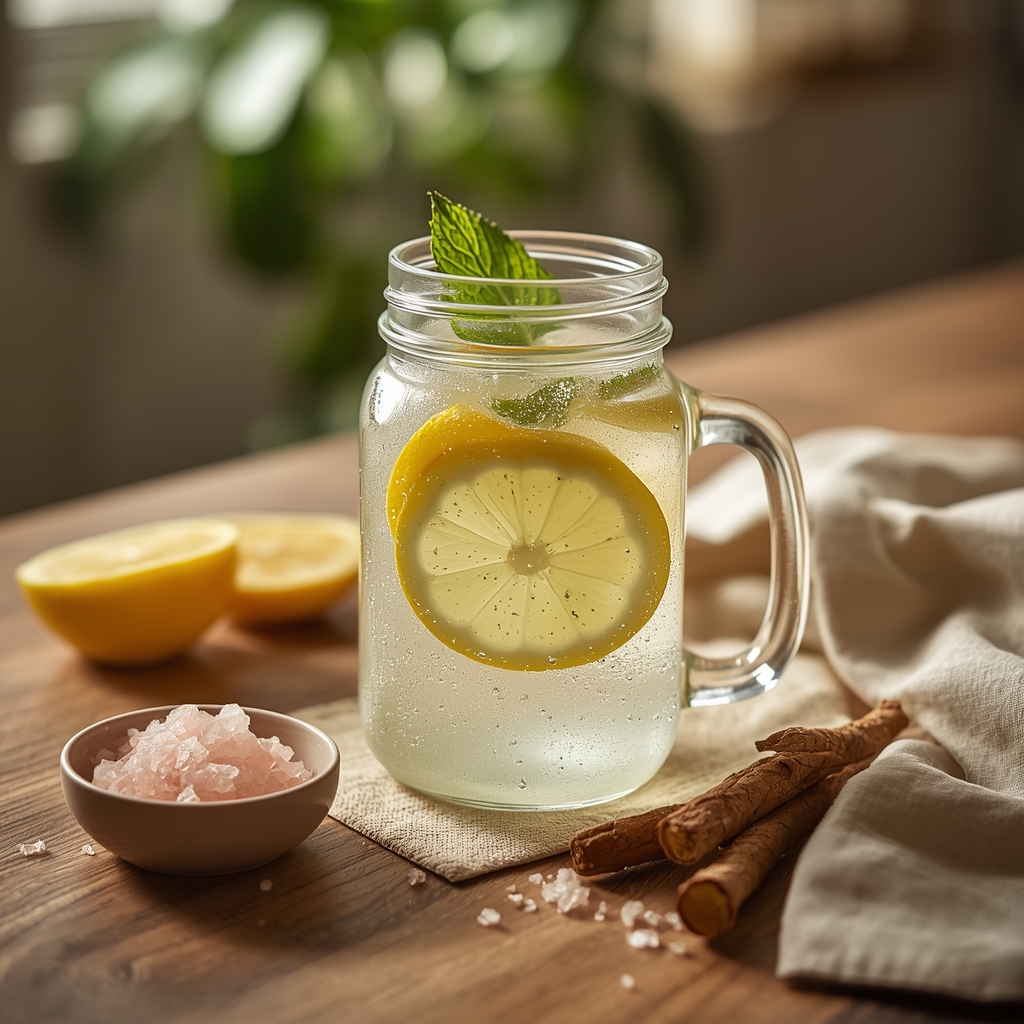
Recipe: Orthostatic Anchor Tonic
| ⏱ Prep 4 min | 👥 Serves 1 (16 oz) | 💚 Goal POTS & dysautonomia support | ⭐ Difficulty Easy |
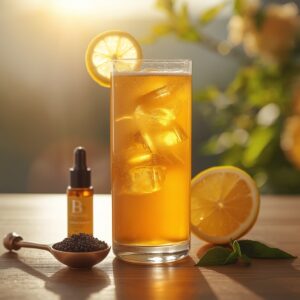
Ingredients
- 14 oz filtered cold water
- ½ tsp pink Himalayan salt (~1 gram of sodium)
- 2 oz unsweetened coconut water
- 1 tbsp fresh lemon juice
- 2 g glycine powder (about ½ tsp)
- 5 drops full-spectrum licorice root extract (NOT DGL — this protocol needs glycyrrhizin)
- 1 drop stevia (optional)
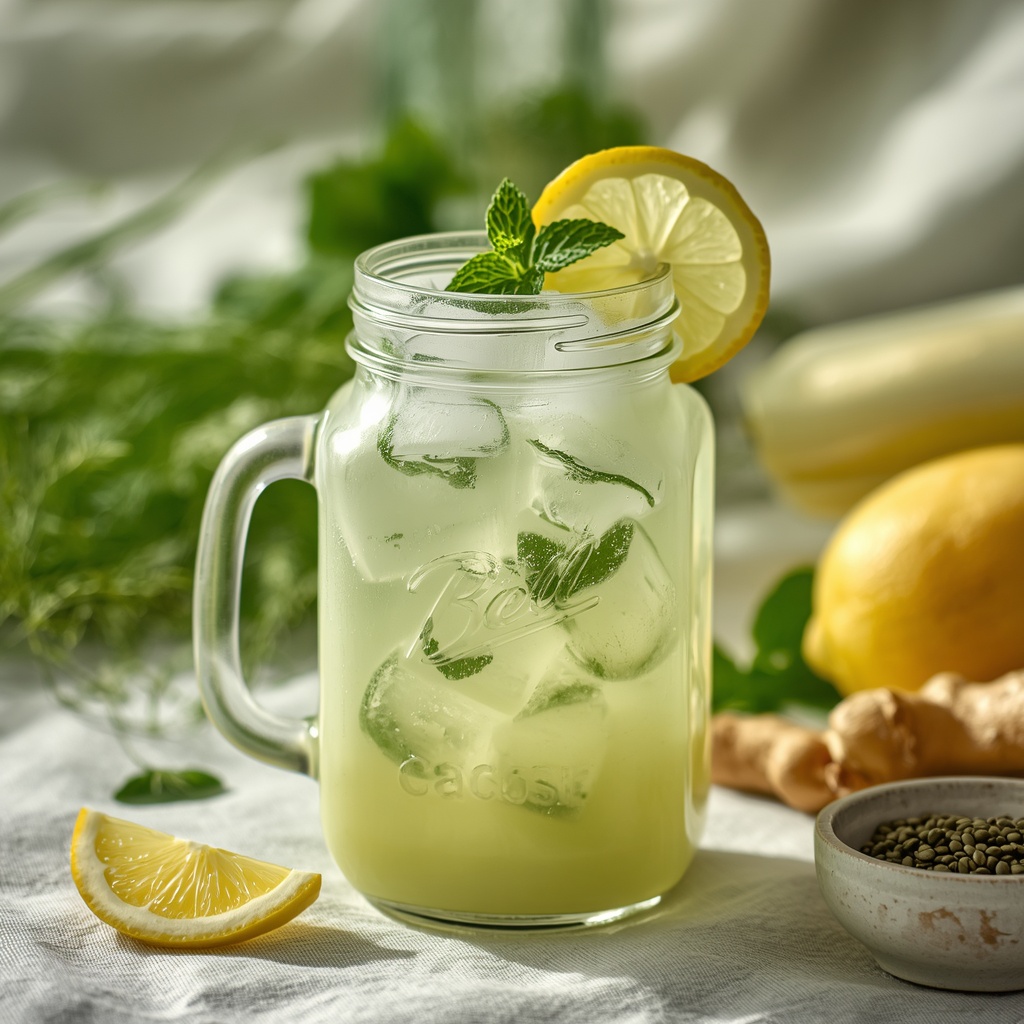
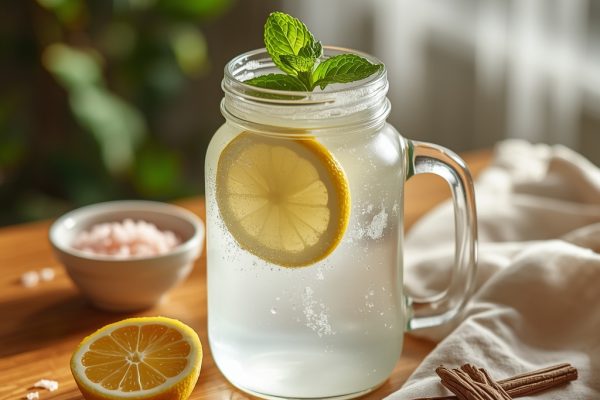
- For garnish: Lemon wheel + a small Himalayan salt rim on the glass
Instructions
- In a 16 oz mason jar, combine 14 oz filtered water with ½ tsp pink Himalayan salt and stir vigorously until fully dissolved (about 30 seconds — it should taste like a mild sea breeze).
💡 Tip: If the salt taste is too strong at first, your body is signaling it’s been deficient. Most POTS patients adapt within a week.
- Add 2 oz unsweetened coconut water and the fresh lemon juice; stir to combine.
- Add 2 g glycine powder and 5 drops of full-spectrum licorice root extract. Important: this is NOT the deglycyrrhizinated (DGL) form — for POTS, you want the glycyrrhizin intact.
- Add 1 drop of stevia if you prefer; close the jar and shake gently for 15 seconds.
- Sip steadily over 30–60 minutes upon waking — best taken seated, then stand slowly. Consistent daily intake matters more than perfect freshness.
Variations
| Vegan | 100% plant-based as written |
| Caffeine-free | Already caffeine-free — perfect for sensitive nervous systems |
| Boosted | Add 200 mg magnesium glycinate for additional autonomic stabilization |
Try It Tonight
Try this for one week and notice the difference between bracing for the day and actually starting it grounded — your blood volume will thank you.
📌 Save this recipe on Pinterest for later!
| ⚠️ Medical Disclaimer: This article is for informational purposes only and does not constitute medical advice. The recipes shared are intended to support general wellness, not to diagnose, treat, cure, or prevent any disease. Always consult a qualified healthcare professional before making dietary changes, especially if you have a medical condition, are pregnant or breastfeeding, or are taking medications. |