More than half of Americans over 60 have diverticulosis. Most don’t know it — until something goes wrong.
| ⏱ Prep: 6 min | 👥 Serves: 1 | 💚 Goal: Colon wall & prevention | ⭐ Easy |
Diverticulosis — those small pouches that bulge out of the colon wall — affects more than half of Americans over 60. Most people never feel a thing. But for the unlucky 10–25%, those pouches eventually inflame into diverticulitis, an emergency-room-grade abdominal crisis.
The standard advice is “eat more fiber.” That’s not wrong — but it skips a crucial detail: not all fibers do the same job for the colon wall. Fiber Bloom Tonic is built specifically around soluble fibers, the type with the strongest data on stool softening and intracolonic pressure reduction. It’s a 6-minute pre-meal drink designed to keep diverticula quiet.
The “Eat More Fiber” Advice That Misses the Real Mechanism
Diverticulosis was extraordinarily rare in the 1900s — almost a medical curiosity. By the 1970s, British surgeon Denis Burkitt noticed something striking while practicing in rural Africa: the condition simply didn’t exist there. His hypothesis, now widely accepted, was that the modern Western diet — refined, low-fiber, high-pressure on the colon — was creating the pouches in the first place.
A landmark 2020 meta-analysis pooling prospective studies confirmed it quantitatively: people consuming 30 grams of dietary fiber per day had a 41% lower risk of diverticular disease compared to those eating around 7.5 grams. At 40 g/day, the risk dropped 58%.
But here’s the nuance: during an active diverticulitis flare, fiber should actually be reduced — the colon needs to rest. Fiber Bloom Tonic is a prevention and post-flare maintenance drink, not an acute-flare drink. If you’re currently in a flare, save this for after recovery and follow your gastroenterologist’s low-residue protocol.
Why This Drink Works (According to Science)
Three principles drive this recipe: maximize soluble fiber load (the kind with the strongest pressure-reduction data), keep the formula gentle enough for post-flare colons, and avoid the irritant ingredients (whole seeds, nuts, popcorn) that some patients still react to.
- Psyllium husk (Plantago ovata) — The American Gastroenterological Association explicitly recommends a high-fiber diet for diverticulosis, with psyllium frequently highlighted as well-tolerated and effective. Mechanism: psyllium gels with water, softens stool, increases its bulk, and lowers intraluminal colonic pressure — directly addressing what creates pouches in the first place.
- Acacia senegal fiber — Acacia is one of the best-tolerated soluble fibers in the IBS and post-diverticulitis literature. It’s prebiotic, feeds beneficial colonic bacteria, and produces less gas than other soluble fibers — important for sensitive guts.
- Vitamin C (from lemon + cucumber juice) — Vitamin C is a required cofactor for collagen synthesis. Colonic wall integrity is fundamentally a connective-tissue question, and collagen is the structural scaffold that keeps the wall strong against intraluminal pressure.
- Mint (Mentha species) — A 2014 NIH-indexed meta-analysis confirmed peppermint as an evidence-based intestinal antispasmodic, useful in functional bowel disorders that overlap with diverticular disease.
| 💡 Did You Know? A 2020 meta-analysis of prospective studies found that 30 grams of fiber per day reduces diverticular disease risk by 41% compared to a low-fiber baseline. At 40 g/day, the risk drops by 58%. Most Americans get only 10–15 g/day. |
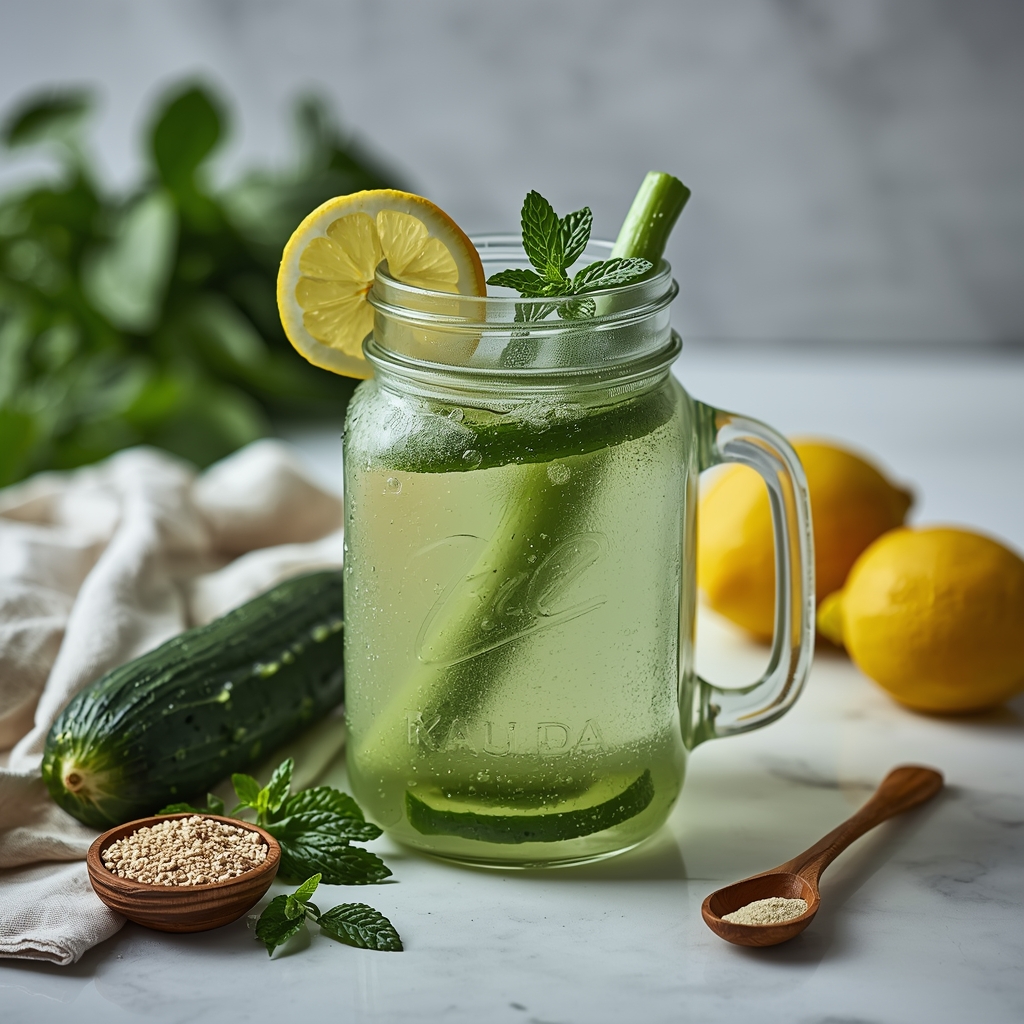
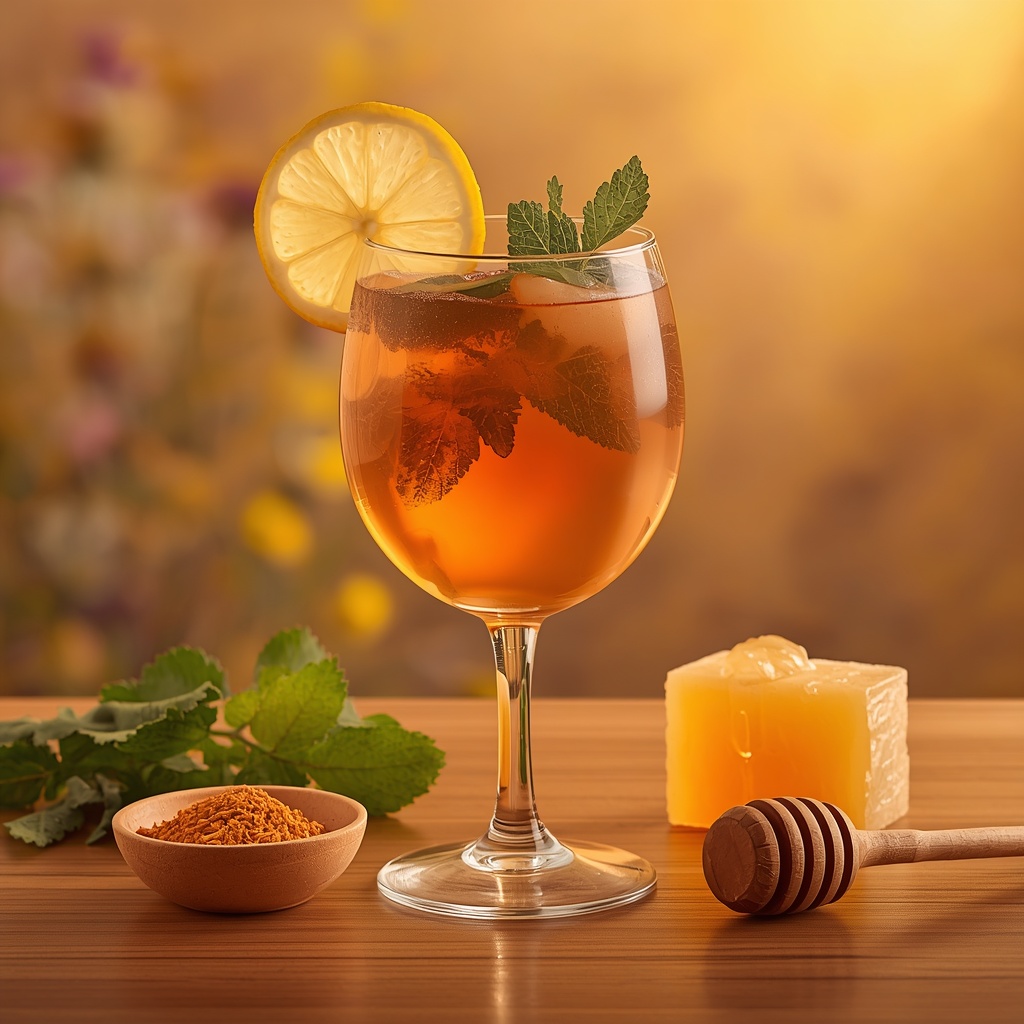
Recipe: Fiber Bloom Tonic
| ⏱ Prep: 6 min | 👥 Serves: 1 | 💚 Goal: Colon wall & prevention | ⭐ Easy |
Ingredients
- 1 tsp psyllium husk powder (fine, not whole — NOW Foods, Konsyl)
- 1 tsp acacia senegal fiber (NOW Acacia, on Amazon)
- 12 oz cold filtered water
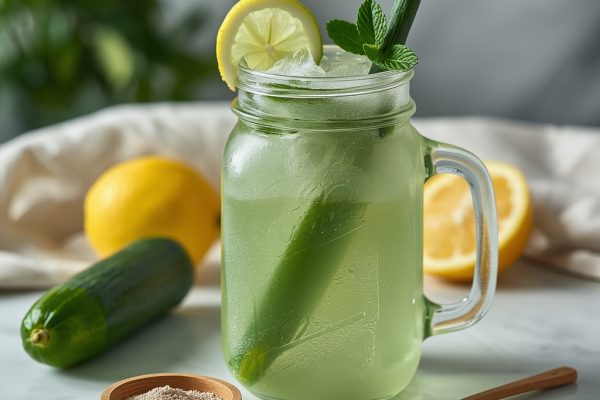
- 2 oz fresh cucumber juice (peeled, juiced or blended + strained)
- 1 tsp fresh lemon juice
- 4 fresh mint leaves, lightly torn
- 2 drops stevia extract
Instructions
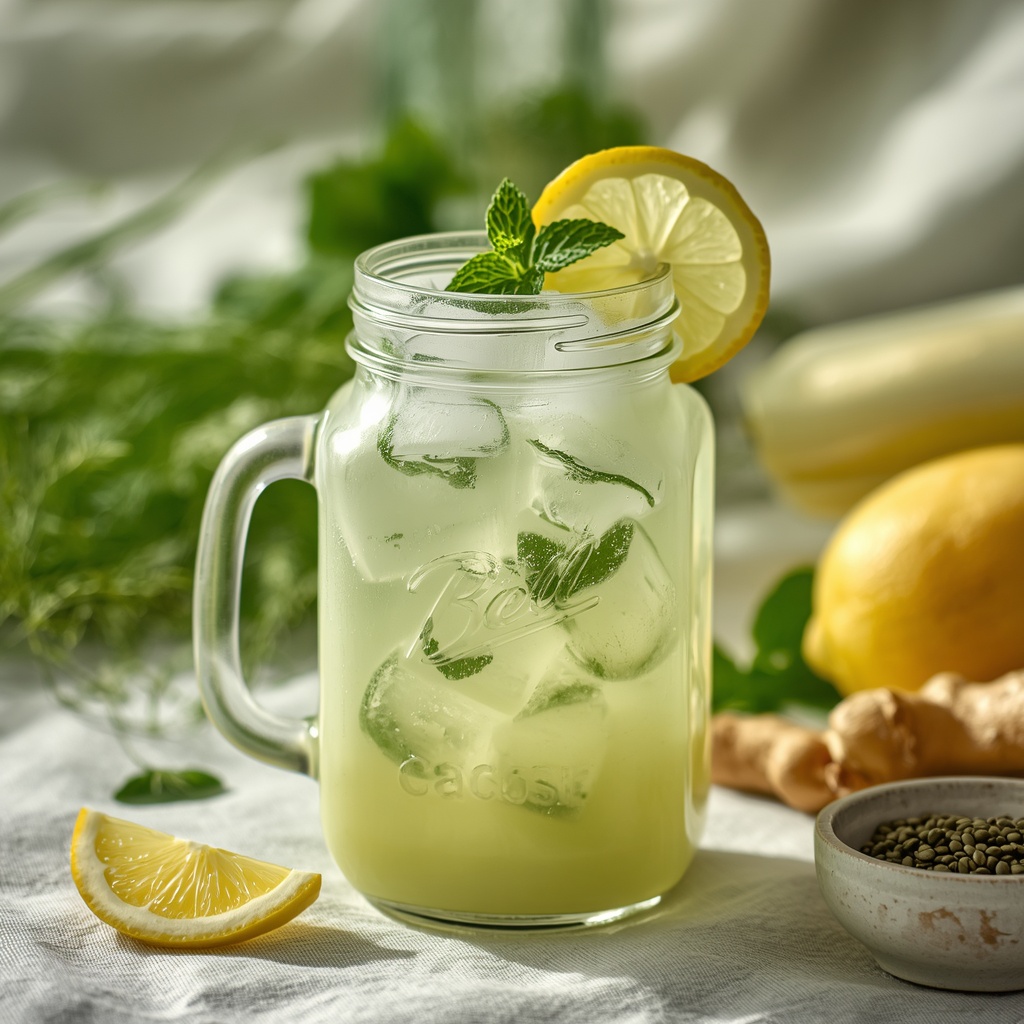
- Juice or finely blend the cucumber and pour 2 oz into a tall mason jar.
- Add 12 oz of cold filtered water, the psyllium husk, and the acacia fiber powders.
- Tear the mint leaves and drop them in. Add the lemon juice and stevia drops.
- Stir vigorously for 30 seconds with a spoon or shake the sealed jar — but do not let it sit. Psyllium gels in seconds and turns into pudding texture if you wait.
- Drink immediately within 60 seconds. Then chase with another 8 oz of plain water within 10 minutes — fiber without enough water is counterproductive.
| ⏱ Time-saving tip Pre-juice 3 days of cucumber on Sunday and store it in a sealed glass bottle in the fridge. Morning prep drops to 90 seconds. Always shake-and-drink — never sit-and-stir. |
Variations
| 🌿 Already vegan | Every ingredient is plant-based. |
| 🚨 Active flare version | Skip cucumber and mint. Keep only psyllium + acacia + water + a tiny squeeze of lemon — minimum residue, gentlest version. Always defer to your GI doctor in an active flare. |
| ❄️ Frozen version | Blend with 4 ice cubes for a thicker, pre-meal “fiber smoothie” texture. |
| 💪 Boosted | Add 1 tsp partially hydrolyzed guar gum (Sunfiber) — the third soluble-fiber pillar with clinical validation in diverticular disease. |
| 🍋 Citrus-free | Replace lemon with 1 tsp apple cider vinegar if citrus triggers your gut. |
Try It Tonight
Drink this once a day, ideally before lunch or dinner, on top of a fiber-rich diet (vegetables, legumes, whole grains). The goal is the 30 g/day total fiber target — this drink contributes 4–5 g of high-quality soluble fiber, the rest comes from food. Track your intake for a week — most people are shocked at how short they are.
📌 Save this recipe on Pinterest for tomorrow morning.
| ⚠️ Disclaimer This article is for informational purposes only and does not constitute medical advice. Always consult a qualified healthcare professional before making dietary changes, especially if you have a medical condition, are pregnant, breastfeeding, or taking medications. |