
The Oncology Support & Immune Resilience Tonic
| ⏱ Prep Time | 👥 Serves | 💚 Goal | ⭐ Difficulty |
| 8 minutes | 1 | Immune Support During Oncological Care | Intermediate |
| ⚠️ IMPORTANT MEDICAL NOTICE This recipe is designed as supportive wellness alongside conventional oncological care — never as a replacement for prescribed treatment. Always consult your oncology team before adding any herbal supplement to your care plan. |
There’s a quiet determination that comes with navigating cancer treatment — the search for every safe, evidence-informed tool that may help the body hold its ground. The Astragalus Phoenix Brew is not a cure. It is not a treatment. It is a warm, carefully researched herbal tonic designed to sit alongside your oncology team’s prescribed care — one small act of nourishment that research suggests may support immune resilience during one of life’s most demanding journeys.
From Ancient Wei Qi Tonics to Modern Immunology Labs
Astragalus membranaceus — known in Traditional Chinese Medicine as Huang Qi, or ‘Yellow Leader’ — has been used for over 2,000 years to tonify the Wei Qi: the protective vital energy that guards the body’s surface and defends against external pathogenic forces. Classical TCM texts described Huang Qi as ‘the senior herb’ — specifically employed after severe illness or profound depletion to rebuild what had been lost.
Modern immunology is now beginning to understand exactly why ancient healers valued it so highly. The polysaccharides (APS) in astragalus root directly activate NK cells and T-lymphocytes — the same immune cells that cancer and some cancer treatments suppress. Meanwhile, Reishi mushroom (Ganoderma lucidum), a revered TCM companion herb, contributes beta-glucan compounds that may further amplify immune signaling. Paired with ginger’s well-documented anti-nausea properties and curcumin’s anti-inflammatory action via the NF-κB pathway, this brew brings together ancient wisdom and emerging clinical research in a single warm cup.
As always: this tonic is supportive wellness, never medicine. Read the full science below — and please share this article with your oncology team before trying any new supplement.
What the Research Says About These Ingredients
Every ingredient in the Astragalus Phoenix Brew was selected based on peer-reviewed research. Here is a summary — all language reflects supportive, preliminary or adjunctive evidence only. None of the below constitutes a claim that these ingredients treat, cure, or prevent cancer.
Astragalus membranaceus (APS) — NK Cell Activation & T-Cell Modulation
A 2024 review in Cancer Management & Research confirms that Astragalus polysaccharides (APS) may stimulate NK cell activation through MICA/MICB upregulation, enhance CD4+/CD8+ T-cell activity, and may improve sensitivity to cisplatin in non-small cell lung cancer (NSCLC) models. A companion 2024 study in Pharmaceuticals found that APS upregulates NK activation markers IFN-γ, granzyme-B, and perforin — key components of the immune system’s tumor surveillance mechanism. Multiple studies confirm an immunomodulatory role in NSCLC. This research is preliminary and does not establish APS as a standalone cancer treatment.
Reishi Mushroom (Ganoderma lucidum) — Beta-Glucans & Quality of Life
The Cochrane Database Systematic Review (2016) found that patients taking G. lucidum alongside chemo- or radiotherapy were 1.27× more likely to respond positively to treatment, with significantly increased CD3+, CD4+, and CD8+ T-lymphocyte percentages. Improved quality of life was reported in 4 included studies, and no significant hepatological or hematological toxicity was observed. A randomized controlled trial in Foods (2023) found that Reishi beta-glucan supplementation significantly enhanced NK cell cytotoxicity by 83.1% versus placebo. These findings are promising but do not support use of Reishi as a primary cancer therapy.
Ginger — Chemotherapy-Induced Nausea and Vomiting (CINV)
A meta-analysis of 35 RCTs (PubMed, 2024) found that combining ginger supplementation with standard antiemetics significantly reduced grade 3 acute nausea (RR 0.19). A 2024 review in the Journal of Ayurveda & Integrative Medicine found that all 4 included trials demonstrated significant reductions in both acute and delayed CINV, with a number needed to treat (NNT) of 2–4 and no adverse effects reported. Fresh ginger juice — as used in this recipe — may provide similar benefits, though these findings apply primarily to ginger capsule formulations studied in research settings.
Curcumin (Turmeric) — NF-κB Inhibition & Mucositis Support
Curcumin, the active compound in turmeric, has demonstrated safety at 4–8 g/day in Phase I/II clinical trials. It functions as an inhibitor of the NF-κB inflammatory signaling pathway and may help reduce treatment-associated mucositis and inflammation. Research is ongoing regarding its role as an adjunct to conventional cancer care. Importantly, black pepper (piperine) in this recipe is included to significantly enhance curcumin bioavailability — without it, curcumin is poorly absorbed.
| 💡 Did You Know? The ‘Phoenix’ in this brew’s name isn’t accidental. In TCM, Astragalus (Huang Qi) was historically called ‘the senior herb’ — used specifically to rebuild vitality after severe illness or depletion. Modern immunology now understands that its polysaccharides (APS) directly stimulate the NK cells and T-lymphocytes that many cancer treatments suppress. Ancient wisdom, modern validation. |
| ⚠️ DRUG INTERACTION ALERT Important: Curcumin may affect CYP3A4 metabolism (relevant for some chemotherapy drugs). Reishi may interact with anticoagulants. Astragalus may interact with immunosuppressants. Inform your oncologist and pharmacist about ALL supplements you take. Do not begin any herbal regimen without your oncology team’s explicit knowledge and approval. |

Recipe: Astragalus Phoenix Brew
Yields: 1 serving | Prep: 8 min | Budget: $6–9 per serving
Ingredients
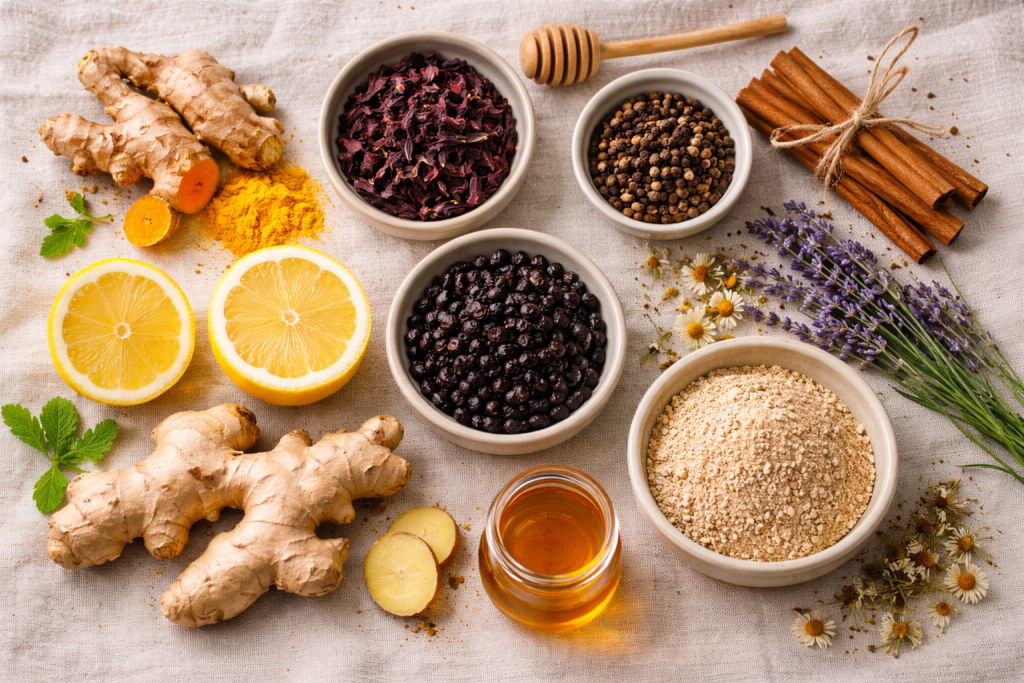
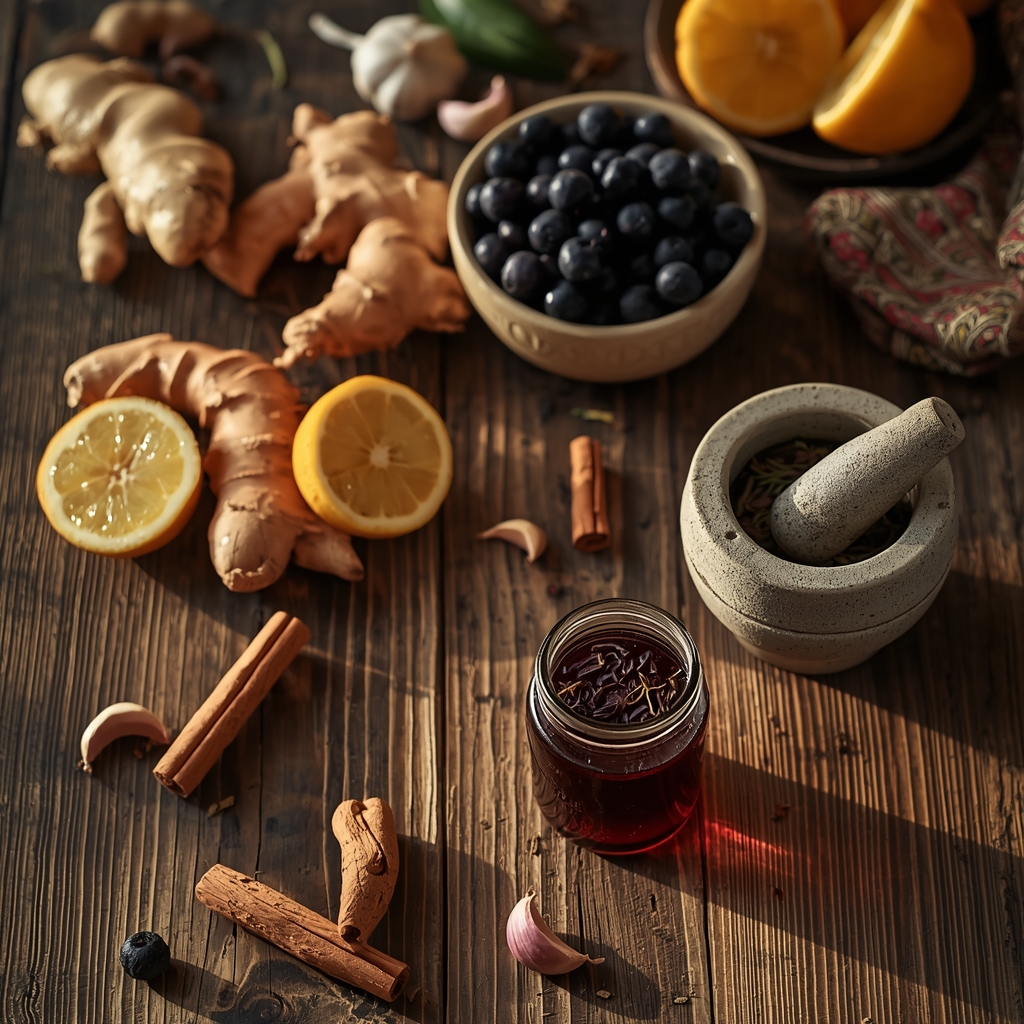
- 2 tsp dried Astragalus root OR 2 Astragalus tea bags (Huang Qi, Astragalus membranaceus) — available at Amazon, Whole Foods, or Asian health grocery stores
- ½ tsp Reishi mushroom powder (Ganoderma lucidum) — Amazon, Whole Foods
- ¼ tsp turmeric powder — Amazon, Whole Foods, Walmart
- Pinch of black pepper (piperine) — any grocery store
- 8 oz filtered warm water — any source
- ½ tsp fresh ginger juice (grated and pressed) — any grocery store
- 2–3 drops pure liquid stevia — Amazon, Walmart
Instructions
- Decoct the astragalus: Place astragalus root (or tea bags) in 8 oz water. Bring to a gentle simmer and decoct for 10 minutes — astragalus root requires longer extraction than standard tea. Alternatively, steep tea bags for 8–10 minutes in very hot (not boiling) water.
- Strain: Pour the decoction through a fine-mesh strainer into a clean mug. Discard root pieces or remove tea bags. Add reishi powder and whisk until fully dissolved.
- Add anti-inflammatory spices: Whisk in turmeric and black pepper. The piperine in black pepper significantly enhances curcumin bioavailability.
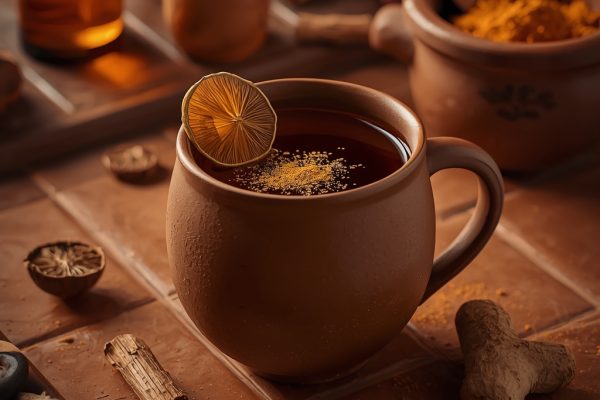
- Finish the brew: Add fresh ginger juice and stevia drops. Stir gently to combine.
- Serve and sip slowly while warm. ⚠️ Consult with your oncology team before incorporating any new herbal supplement into your care plan. This tonic is for general wellness support alongside — NEVER instead of — prescribed oncological treatment.
⏱ Time-Saving Tip: Decoct a larger batch of astragalus tea (4 cups) at once and refrigerate in a sealed container for up to 4 days. Each morning, warm a single portion and add the fresh spices, ginger juice, and stevia. This reduces daily prep to under 2 minutes.
Variations
| Variation | Notes |
| Sugar-Free | Already sugar-free as written. Stevia is a zero-calorie sweetener with no known glycemic impact. |
| Vegan | Fully vegan as written. No animal-derived ingredients. |
| Cold/Hot | Best consumed warm. Warmth supports digestive tolerance, which may be compromised during treatment. Cold versions are not recommended for those experiencing GI sensitivity. |
| ⚡ Boosted | Add ½ tsp of a medicinal mushroom blend (shiitake + maitake + turkey tail) for additional beta-glucan immune modulation. Always with explicit physician knowledge and approval before adding additional immunomodulatory herbs. |
A Note of Warmth and Caution
If you’re on this page, you or someone you love is navigating something genuinely hard. The Astragalus Phoenix Brew is offered as one small, research-informed act of self-care — a warm, nourishing ritual that research suggests may support immune resilience alongside your prescribed care. We hope it brings some comfort.
📌 Save this recipe to your Pinterest board: “Immunity & Inflammation Drinks” or “Cancer Support Wellness” to revisit anytime.
| ⚠️ MEDICAL DISCLAIMER — PLEASE READ This recipe and all content on DrinkHealer.com is for general wellness and informational purposes ONLY. It is NOT intended to diagnose, treat, cure, or prevent any disease, including cancer. The information presented here does not constitute medical advice and should NEVER be used as a substitute for professional medical care, diagnosis, or treatment prescribed by a qualified healthcare provider. ALWAYS consult your oncologist, physician, and pharmacist before adding ANY herbal supplement to your care plan. Some herbs may interact with chemotherapy drugs, immunotherapy agents, targeted therapies, anticoagulants, immunosuppressants, or other medications. What is safe for one person may not be safe for another. This content has not been evaluated by the US Food and Drug Administration (FDA). © DrinkHealer.com — All rights reserved. |
Sources & References
1. Cancer Management & Research (2024) — APS immunomodulatory role in NSCLC: https://pmc.ncbi.nlm.nih.gov/articles/PMC11287463/
2. Pharmaceuticals (2024) — APS NK activation markers: https://pmc.ncbi.nlm.nih.gov/articles/PMC11124422/
3. Cochrane Database Systematic Review (2016) — G. lucidum with chemo/radiotherapy: https://pmc.ncbi.nlm.nih.gov/articles/PMC6353236/
4. Foods RCT (2023) — Reishi beta-glucan NK cell cytotoxicity: https://pmc.ncbi.nlm.nih.gov/articles/PMC9914031/
5. Meta-analysis 35 RCTs — Ginger and CINV (PubMed, 2024): https://pubmed.ncbi.nlm.nih.gov/38625733/