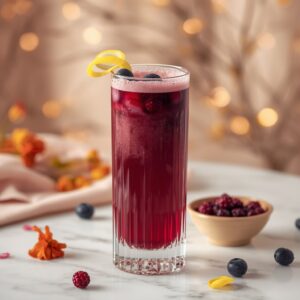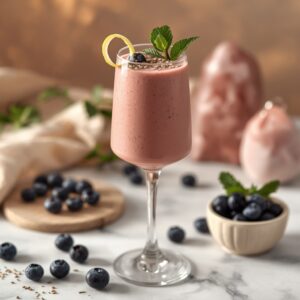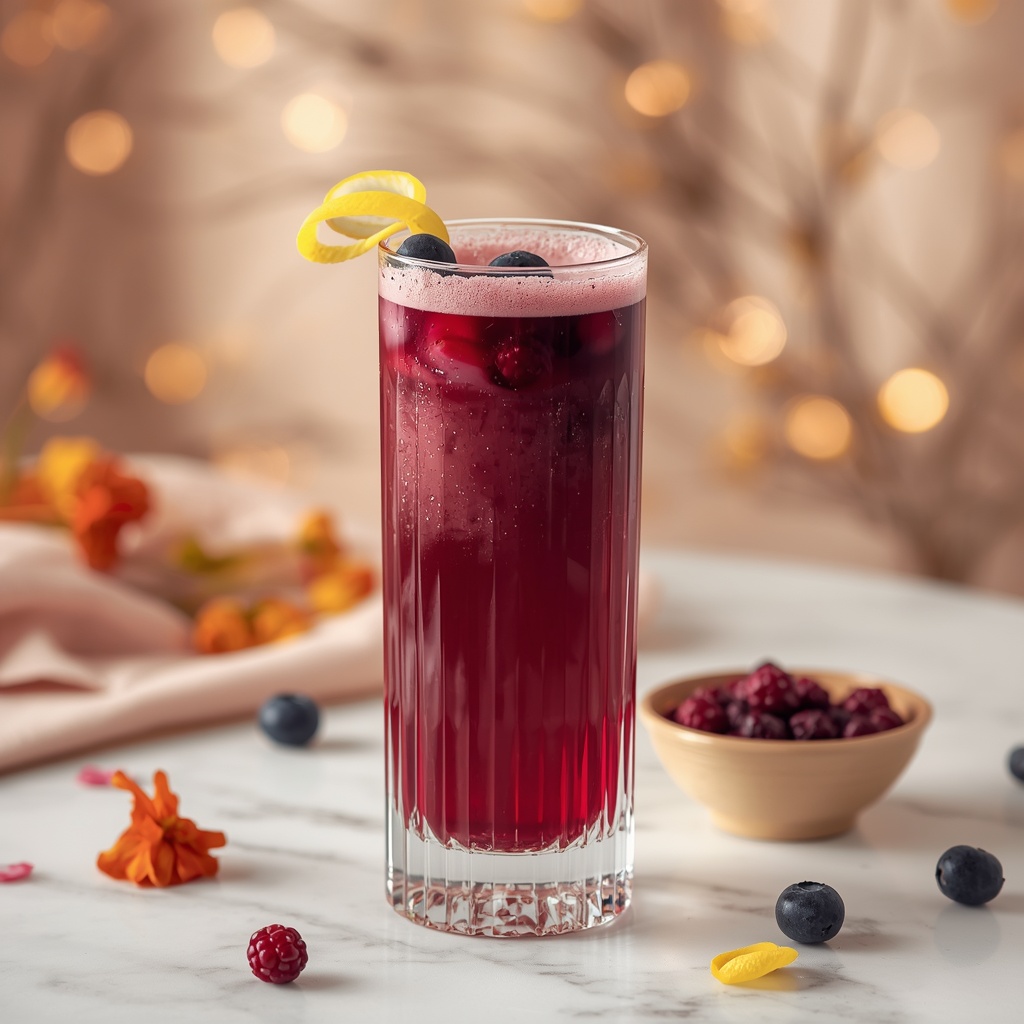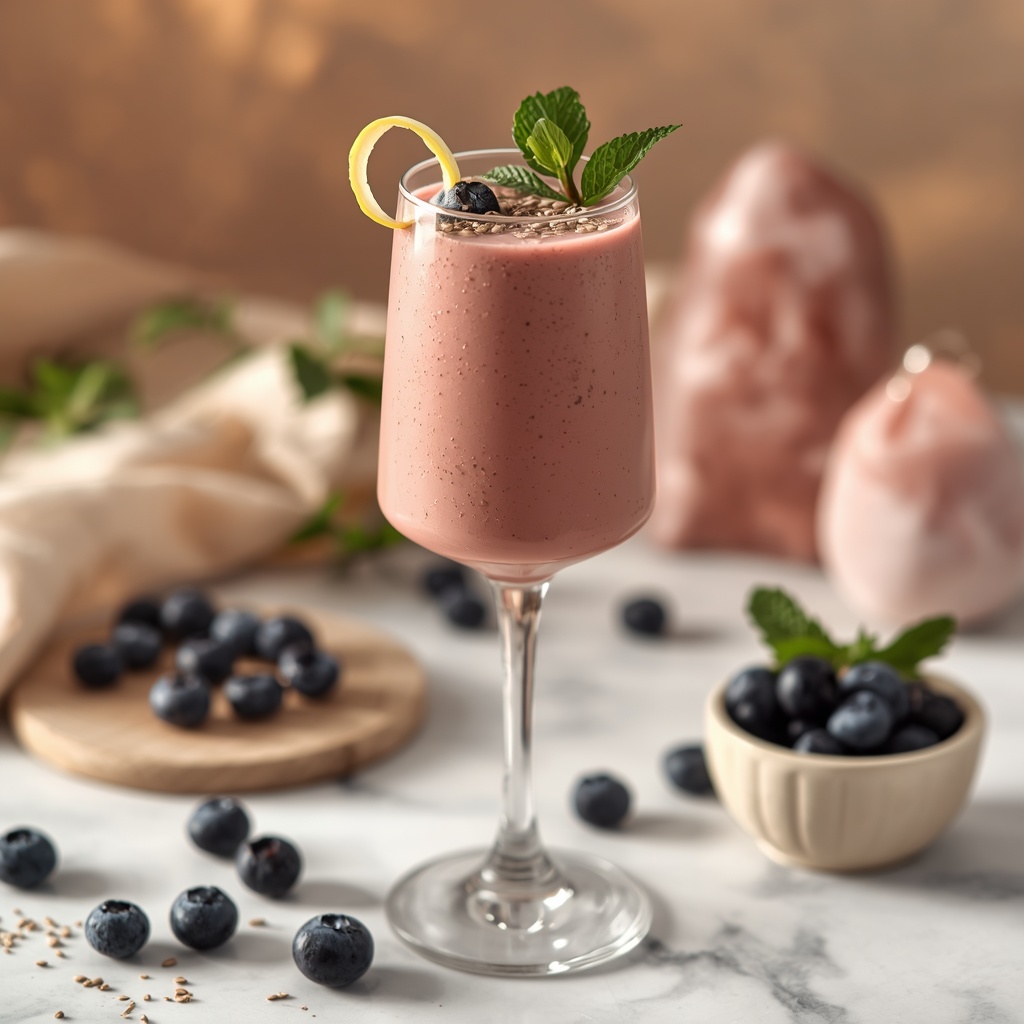
Alopecia areata is the immune system attacking your follicles. This deep rose-purple smoothie supports the four nutrient pillars dermatologists routinely test for — quietly, alongside your treatment plan.
| ⏱ Prep 5 min | 👥 Serves 1 (12 oz) | 💚 Goal Autoimmune & follicular support | ⭐ Difficulty Easy |
One day there’s a coin-sized smooth patch where hair used to be. A few weeks later, another. Alopecia areata is autoimmune attack on hair follicles, and it can come on overnight in patches, in waves, or — for some patients — in a near-total wipe. JAK inhibitors are changing the landscape, but the slow nutrient work in the background still matters: vitamin D, zinc, omega-3, and quercetin all show up repeatedly in dermatology AA literature. This deep rose-purple smoothie threads them together in a single 12 oz afternoon ritual.
When the Immune System Attacks the Follicle
When dermatologists at university hospitals from Boston to Seoul started measuring serum nutrient levels in alopecia areata patients, two deficiencies kept appearing: vitamin D and zinc. The pattern was so consistent that several research groups began publishing routine screening recommendations in dermatology journals. Around the same time, immunology labs were investigating the role of mast cells in peri-follicular inflammation — and quercetin, the humble flavonoid found in onions and apples, kept showing up as a stabilizer of those mast cells. None of these nutrients cure alopecia areata. But the dermatology consensus is increasingly clear: optimizing them is supportive, well-tolerated, and worth doing alongside whatever medical treatment you’re on.
Alopecia areata is one of the most psychologically charged dermatological conditions, partly because hair carries identity in ways most other tissues don’t. The arrival of JAK inhibitors has genuinely changed the prognosis for many patients. The slow, supportive nutrient work in the background still matters — particularly the nutrients dermatology AA panels routinely test for. This deep rose-purple smoothie threads them together in a single afternoon ritual that pairs naturally with whatever your dermatologist has prescribed, from topical steroids to oral immunomodulators to JAKs.
Why This Cocktail Works (According to Science)
Vitamin D3 (with K2): Calciferol with menaquinone — Low vitamin D is documented in alopecia areata patients; supplementation supports immune balance, particularly the Treg-Th17 axis.
Source: Skin Appendage Disorders
Zinc: Essential trace mineral — Multiple studies document zinc deficiency in AA and benefit of supplementation for follicular signaling.
Source: Journal of Korean Medical Science
Omega-3 (algae-based DHA/EPA): Long-chain omega-3 fatty acids — Reduces autoimmune inflammatory cytokines in AA models.
Source: Cells
Quercetin: Flavonoid mast-cell stabilizer — Stabilizes peri-follicular mast cells — an emerging line of inquiry in alopecia areata research.
Source: Journal of Investigative Dermatology
| 💡 Did You Know? Roughly 2–5% of alopecia areata patients also have undiagnosed celiac disease — which is why dermatology AA workups increasingly include a celiac screen alongside the standard thyroid and vitamin D panel. |
Built For This Body — Not Against It
Every ingredient supports the autoimmune body without provoking it. There’s no dairy, because IGF-1 in dairy can be pro-inflammatory in alopecia areata. There’s no added refined sugar, because insulin spikes worsen autoimmune flares. There’s no gluten in the matrix — concomitant celiac disease shows up in 2-5% of AA patients and quietly amplifies the autoimmune drive. There’s no alcohol. The vitamin D3 dose of 5000 IU paired with K2 is standard in autoimmune protocols and supports the Treg-Th17 balance that AA research keeps pointing at. The smoothie is vegan-default because animal proteins can trigger flares in some patients.
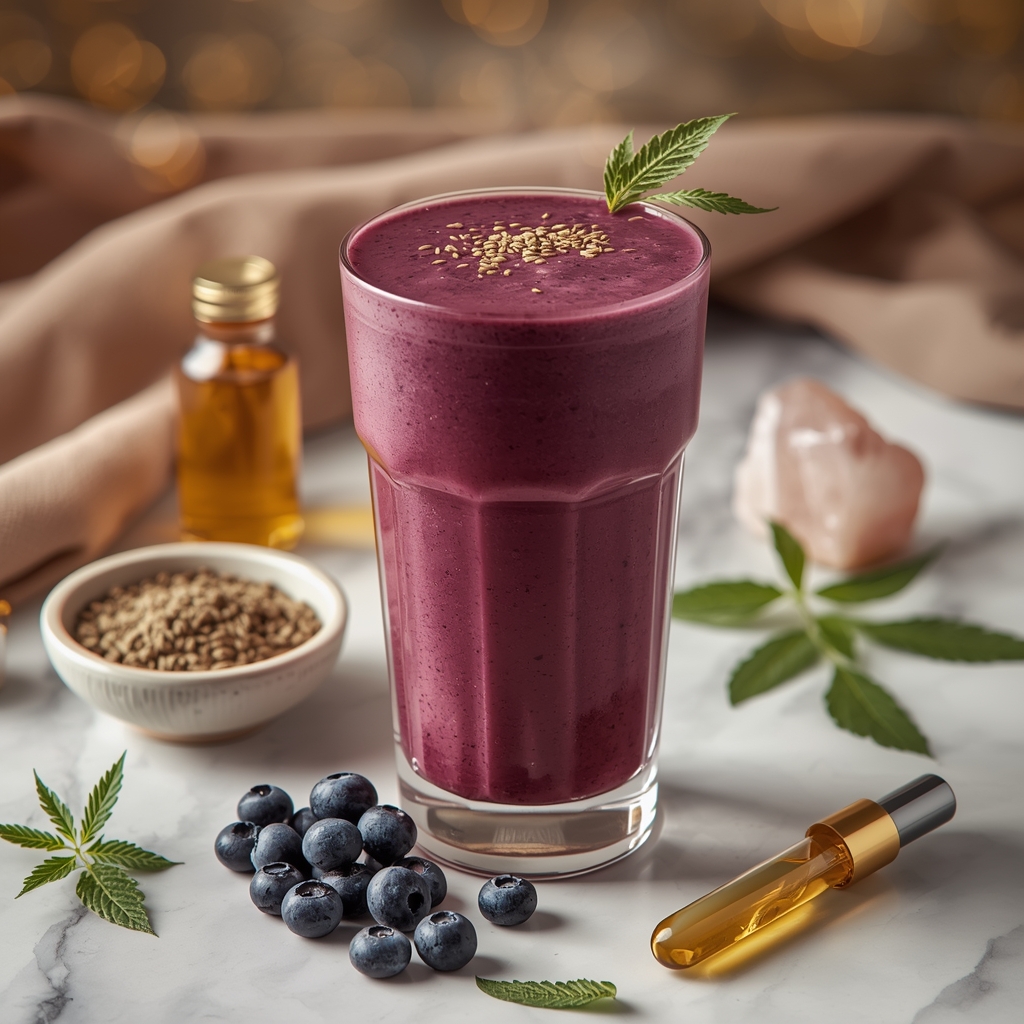
Recipe: Patch Bloom Revival
| ⏱ Prep 5 min | 👥 Serves 1 (12 oz) | 💚 Goal Autoimmune & follicular support | ⭐ Difficulty Easy |
Ingredients
- 6 oz cooled nettle leaf tea (Traditional Medicinals)
- ⅓ cup frozen wild blueberries
- 1 tbsp hemp seeds
- 15 mg liquid zinc gluconate (Standard Process)
- 5000 IU vitamin D3 + 90 mcg K2 (Thorne)
- 500 mg quercetin powder (NOW Foods)
- 500 mg algae omega-3 capsule, opened (Ovega-3)
- 1 tsp fresh lemon juice
- 2 drops liquid stevia (optional)
- For garnish: small fresh nettle leaf or blueberry
Instructions
- Steep 2 nettle tea bags in 8 oz hot water for 12 minutes; strain, cool 5 minutes. Reserve 6 oz.
💡 Tip: The matrix is intentionally dairy-free and gluten-free — both can quietly worsen autoimmune flares in AA-prone patients.
- In a blender, combine the cooled nettle tea, frozen blueberries, hemp seeds, and lemon juice.
- Add the liquid zinc, vitamin D3 with K2, quercetin powder, and the contents of the opened omega-3 capsule.
- Add stevia. Blend for 30 seconds until smooth and silky-rose.
- Pour into a 12 oz wellness glass. Drink mid-afternoon, daily, for 12+ weeks alongside your dermatology treatment.
Variations
| 🥛 Vegan version | Already 100% plant-based — algae omega-3 covers EPA/DHA without fish. |
| 🚫🍬 Sugar-free version | Skip stevia — blueberries provide enough natural sweetness. |
| 💪 Boosted version | Add 5 mg biotin (5000 mcg) to support hair regrowth phase. |
Try It Tonight
Make this drink today and watch how your body responds over the next four to twelve weeks. Chronic conditions move slowly, and consistency — not perfection — is what shifts the curve. Pair this ritual with whatever your specialist has put you on; this drink is designed as an adjunct, never a replacement. Track one symptom, one number, or one note in a small notebook. The ones who win the long game are the ones who notice.
📌 Save this recipe on Pinterest for later — and add it to a board you actually open.
| ⚠️ Disclaimer: This article is for informational purposes only and does not constitute medical advice. It is not intended to diagnose, treat, cure, or prevent any disease. Always consult a qualified healthcare professional before making dietary changes, especially if you have a medical condition, are pregnant or breastfeeding, or are taking medications. |