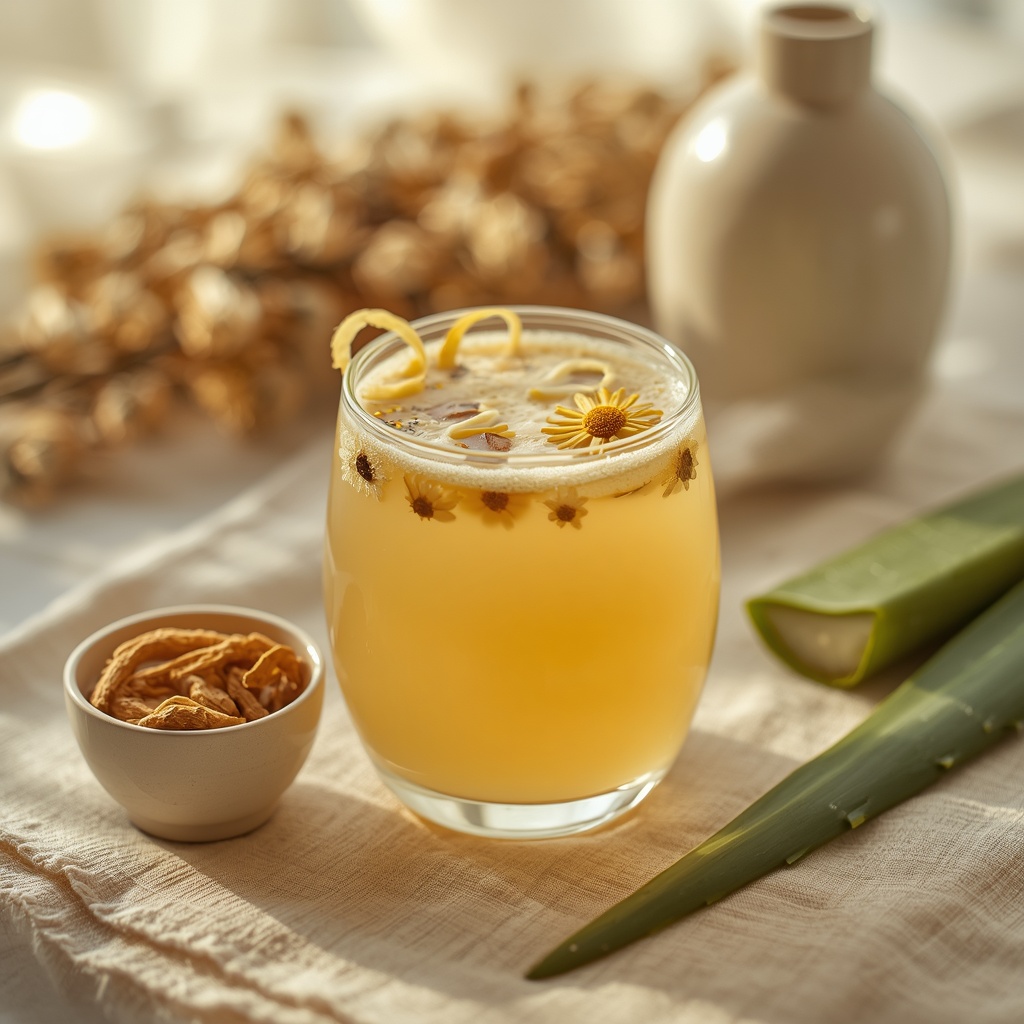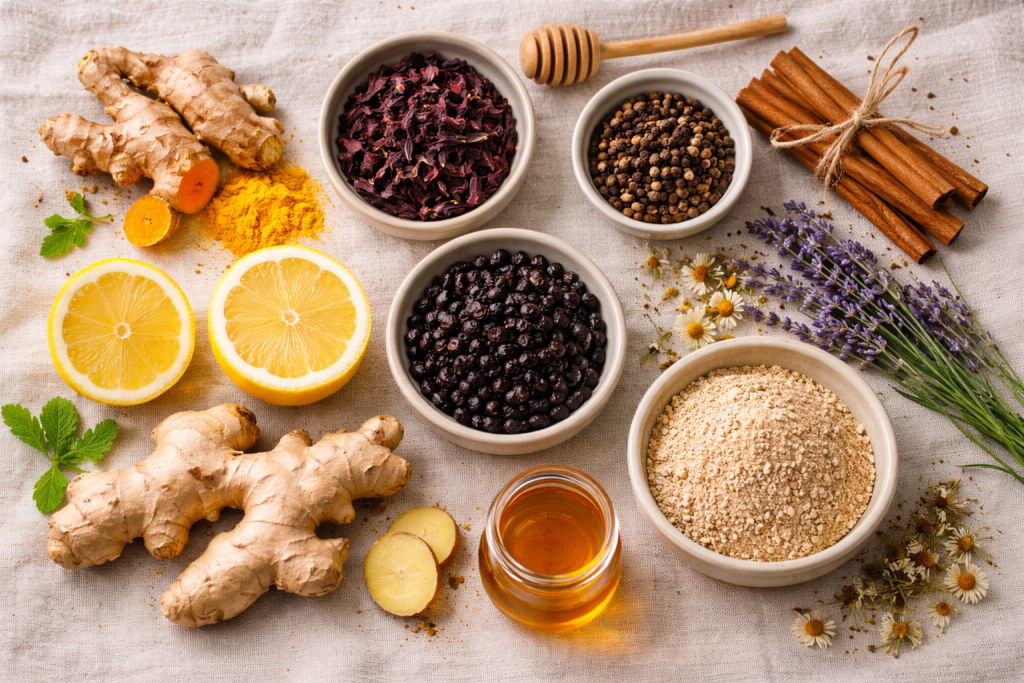

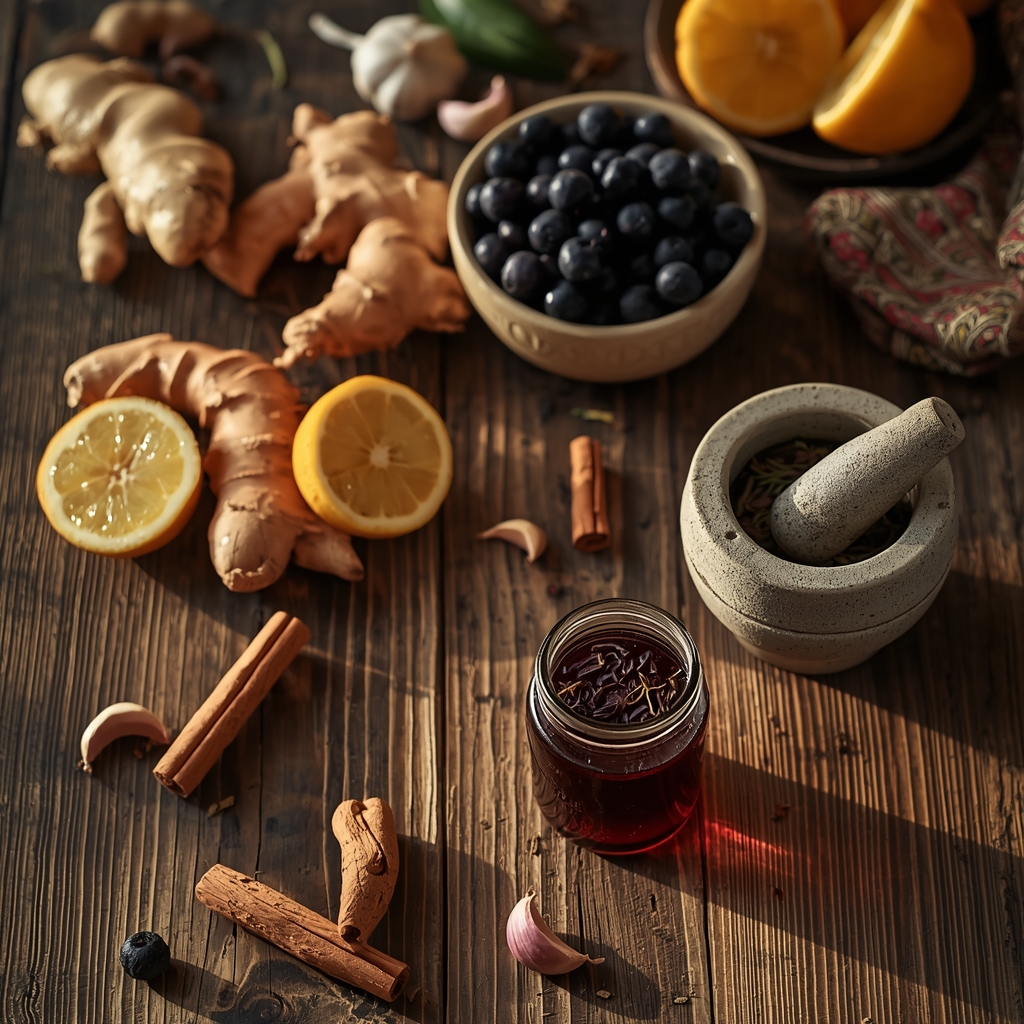

What if the secret to a healthier gut wasn’t adding more bacteria — but feeding the ones already living inside you? Meet the Prebiotic Roots Brew: four fibers, one cozy mug, and a strategy backed by some of the most compelling gut microbiome research of the last decade.
| ⏱ Prep6 min | 👥 Serves1 | 💚 GoalGut Microbiome | ⭐ DifficultyEasy |
The Gut Garden That Nobody Is Watering
In 1995, a team of Belgian researchers studying chicory root noticed something unexpected. The inulin fiber extracted from the root didn’t just pass through the gut — it selectively fed specific bacteria, multiplying Bifidobacterium colonies at a rate that shocked the team. They had accidentally discovered what we now call the prebiotic effect: the idea that fiber isn’t just bulk, it’s food for our inner ecosystem.
Fast-forward to today: we know the human gut hosts over 38 trillion bacteria across hundreds of species — a living garden more complex than a rainforest canopy. And just like a garden, it doesn’t thrive on one food. It thrives on diversity. A 2024 review published in Food Science and Biotechnology (PMC11315840) confirmed what that Belgian team first glimpsed: different fibers feed different bacterial populations at different locations in the colon. No single fiber can do it all.
That’s the insight behind this recipe. Instead of one prebiotic, we use four — each with a different fermentation speed, each feeding a different community. The result is what gut researchers are now calling a “prebiotic cascade”: a stratified feeding system that travels the full length of your colon, leaving no beneficial bacteria behind.
Why This Brew Works (According to Science)
The science here isn’t about one miracle ingredient. It’s about the synergy between four fibers operating on different timelines:
| Chicory Root Inulin (FOS)Fructooligosaccharides (FOS) in chicory inulin are the fastest-fermenting fiber in this recipe. They reach Bifidobacterium and Lactobacillus colonies in the upper colon within hours of consumption. Multiple randomized controlled trials confirm significant increases in Bifidobacterium counts and reduced intestinal permeability markers (zonulin) with regular inulin intake. (Source: Nutrients, 2017 — PMID 28244666) |
| Acacia Fiber (Gum Arabic)Acacia ferments more slowly than inulin — which is actually a feature, not a bug. This slower rate reaches deeper into the colon where it nourishes Bacteroides and a broader spectrum of beneficial species. An RCT showed superior tolerance versus inulin alone in IBS patients, making it the “gentle” prebiotic of this blend. (Source: Journal of Nutrition, 2009 — PMID 19721774) |
| Green Banana Flour (Resistant Starch RS2)Resistant starch is the slowest-fermenting fiber in this blend — it survives all the way to the distal colon. There, Faecalibacterium prausnitzii and Roseburia intestinalis ferment it into butyrate, the short-chain fatty acid that literally fuels your colonocytes and reinforces the tight junctions that prevent leaky gut. A 2024 Food Chemistry review (PMC10819196) confirmed RS as the most potent natural butyrate precursor available through diet. |
| Psyllium Husk — The Gut Lining GuardianPsyllium forms a gel-like mucilage layer along the intestinal wall — a physical protective barrier that slows absorption, stabilizes transit time, and reduces gut permeability. A 2015 meta-analysis (PMID 25623312) confirmed its significant impact on stool consistency and intestinal transit across populations. |
| 💡 Did You Know?Butyrate produced by your gut bacteria is the primary energy source for the cells lining your colon. Without it, those cells literally starve — leading to increased gut permeability (“leaky gut”) and systemic inflammation. Feeding butyrate-producing bacteria with resistant starch is one of the most direct things you can do through diet to support your gut lining. |

Recipe: Prebiotic Roots Brew
| ⏱ Prep6 min | 👥 Serves1 | 💚 GoalGut Microbiome | ⭐ DifficultyEasy |
Ingredients
- 1 tsp chicory root inulin powder
- 1 tsp acacia fiber (gum arabic)
- 1 tsp green banana flour
- ½ tsp psyllium husk powder
- 8 oz (240 ml) warm rooibos tea, brewed (170°F)
- ¼ tsp Ceylon cinnamon
- 2 drops liquid monk fruit sweetener
- For garnish: Ceylon cinnamon stick + pinch of cinnamon powder on top
Instructions
- 1. Brew your rooibos.
Steep 1 rooibos tea bag in 8 oz of boiling water for 5 minutes. Let cool slightly to 170°F — hot enough to dissolve the fibers, cool enough not to destroy the antioxidant aspalathin in the rooibos.
- 2. Combine the four fibers.
Add chicory inulin, acacia fiber, green banana flour, psyllium husk, and Ceylon cinnamon to a blender cup or wide-mouth mason jar.
💡 Pre-mix a large batch of these four dry ingredients in a “Microbiome Blend” jar (4 tsp each). Scoop 4½ tsp each morning — one jar lasts about 2 weeks.
- 3. Blend or froth.
Pour the warm rooibos over the dry blend. Blend on low for 20 seconds OR stir vigorously with a milk frother for 30 seconds. The psyllium will create a slightly viscous, artisan-chai-like texture — this is intentional and beneficial.
- 4. Sweeten and stir.
Add 2 drops of liquid monk fruit sweetener and stir to combine. Taste and adjust — this brew is naturally earthy and warm, not sweet.
- 5. Garnish and drink immediately.
Place a Ceylon cinnamon stick in the mug, dust the surface with a pinch of cinnamon. Drink within 5 minutes — psyllium thickens fast. Follow with an additional 8 oz of plain water to activate the full fiber benefit.
Variations
| 🌿 Vegan | Fully vegan as written — all plant-based ingredients |
| 🚫🍬 Sugar-Free | Omit monk fruit for a fully unsweetened version (already zero added sugar) |
| ❄️ Iced Summer | Brew, cool to room temp, pour over ice — consume immediately before psyllium thickens |
| 💪 SIBO-Safe Boost | Add 1 tsp partially hydrolyzed guar gum (PHGG) for gut rebuilding phase post-antibiotics |
Your Gut Garden Starts Tomorrow Morning
Try this brew for 7 days straight — one mug each morning — and notice the difference in your digestion, bloating, and energy levels. Your microbiome doesn’t change overnight, but it responds faster than you think when you consistently feed it the right fibers.
| ⚠️ Disclaimer:This article is for informational purposes only and does not constitute medical advice. Scientific references cited reflect current research findings and do not replace the advice of a qualified healthcare professional. Always consult your physician before making changes to your diet, especially if you are managing a chronic condition or taking medications. If you are new to prebiotic fibers, start with half doses and increase gradually over 2 weeks to allow your microbiome to adapt and avoid digestive discomfort. |